
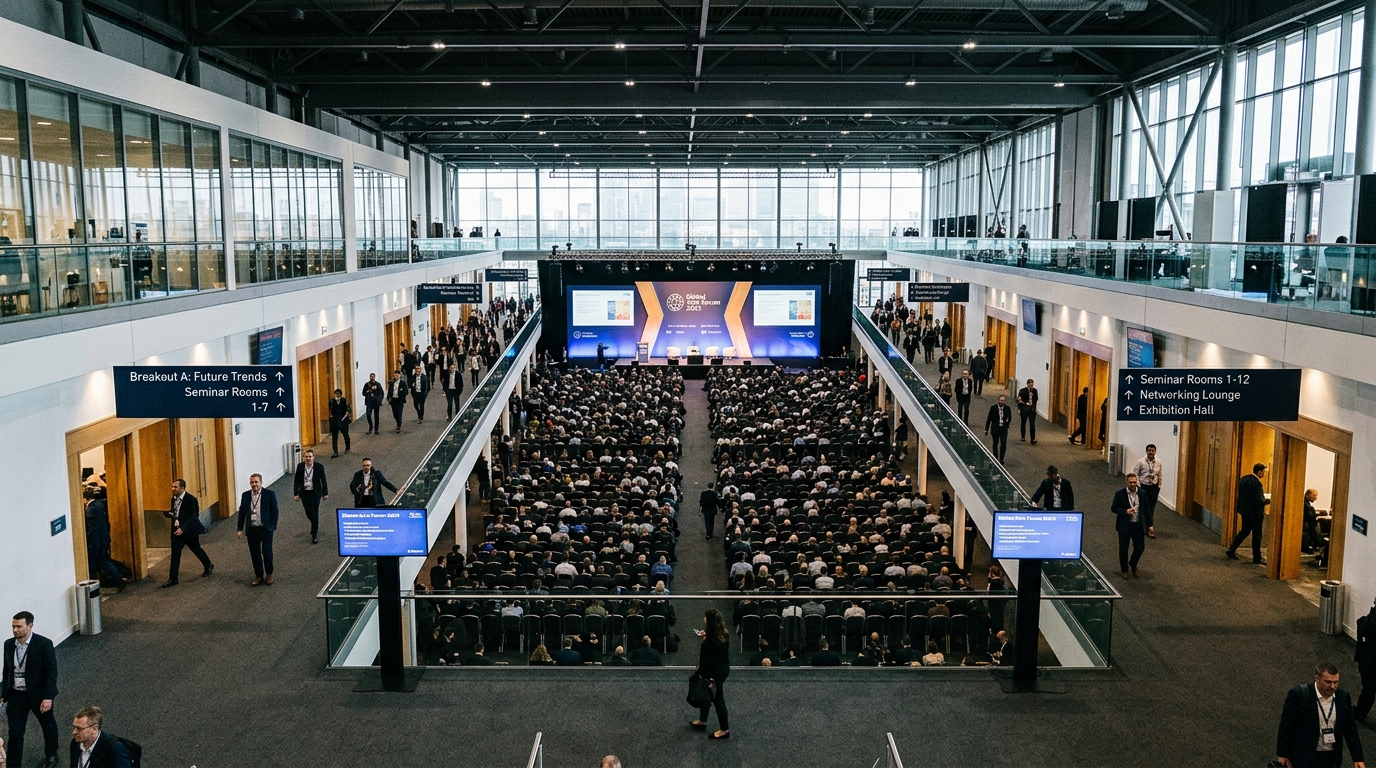
A multi-session conference is the most logistically demanding photography commission I take on. I have covered two-day events in London with five simultaneous breakout streams, a main plenary stage, an exhibition floor, a networking lounge, and a gala dinner in the evening. Without a proper coverage plan agreed in advance, a photographer at an event like that is constantly in the wrong place. The sessions that needed coverage are happening while they are in transit. The speakers who needed portraits have already left the stage.
Planning event photography coverage for a multi-session conference is not complicated once you understand the decisions involved. But those decisions need to be made before the event, not on the morning of it. This guide walks through every element of a coverage plan for a large corporate conference, from the initial prioritization conversation to the on-the-day logistics that determine whether the finished library covers everything it needs to.
Why Multi-Session Conferences Require a Coverage Plan, Not Just a Shot List
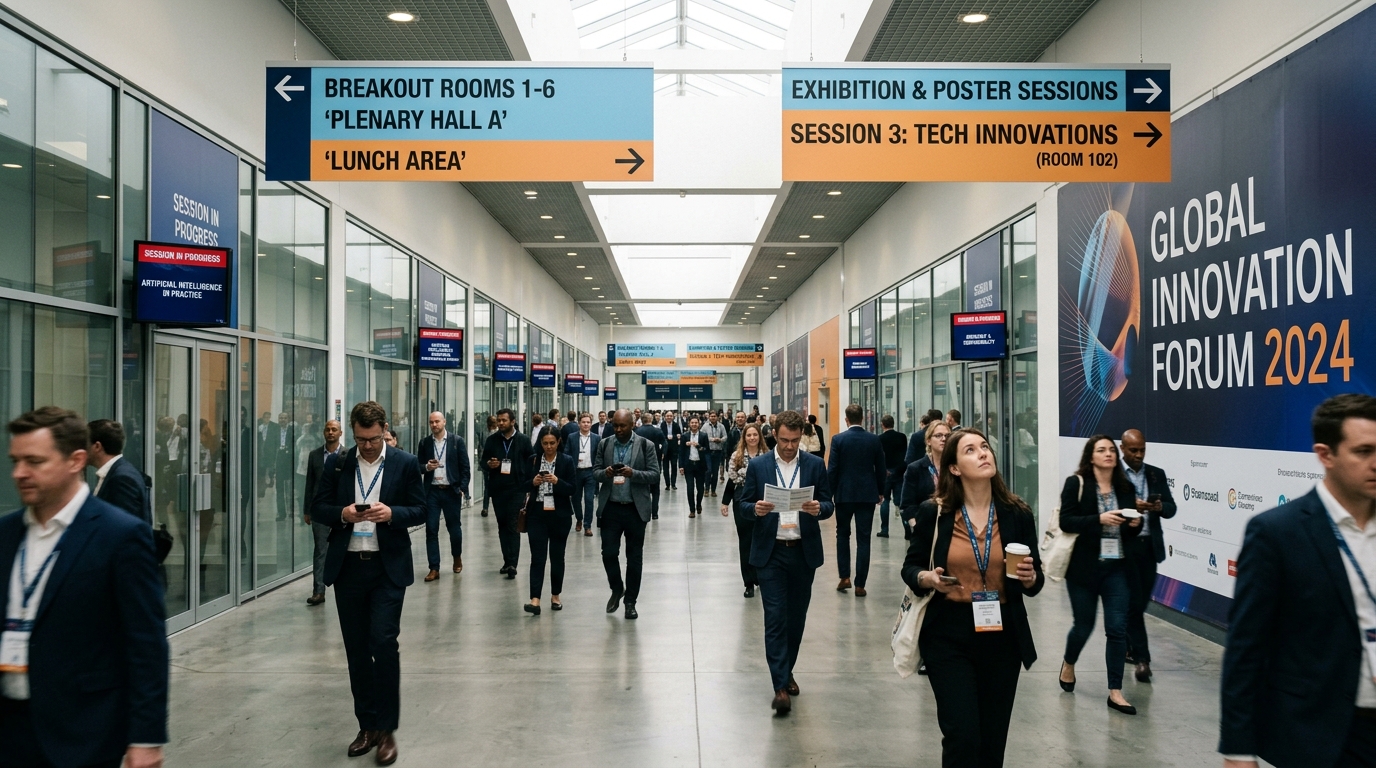
Most event organisers think about conference photography in terms of a shot list: a list of images that must be captured on the day. For a single-room, single-stream conference, a shot list is sufficient. For a multi-session event with simultaneous content in different rooms, a shot list without a coverage plan is like a packing list without a schedule. You know what you need. You have no way of ensuring you are in the right place to get it.
As Retines Photography’s 2025 guide to professional event photography strategy1 identifies, large-scale conference photography requires a fundamentally different approach from single-session event coverage. The key challenge is not technical. It is logistical. A photographer covering a multi-room conference must make constant decisions about where to be, how long to stay in each space, when to move, and what to prioritise when two important moments are happening simultaneously in different rooms. Without a plan that addresses all of these decisions in advance, those choices are made on the fly under time pressure, and the result is a library with gaps that are only discovered after the event.
A coverage plan for a multi-session conference answers four questions that a shot list alone cannot address. Which sessions are priorities and which are secondary. Who is covering what if a second photographer is on site. How transitions between spaces are managed around the schedule. And what happens when the schedule changes, which it always does.
The First Step: Prioritising Sessions Before You Build the Schedule
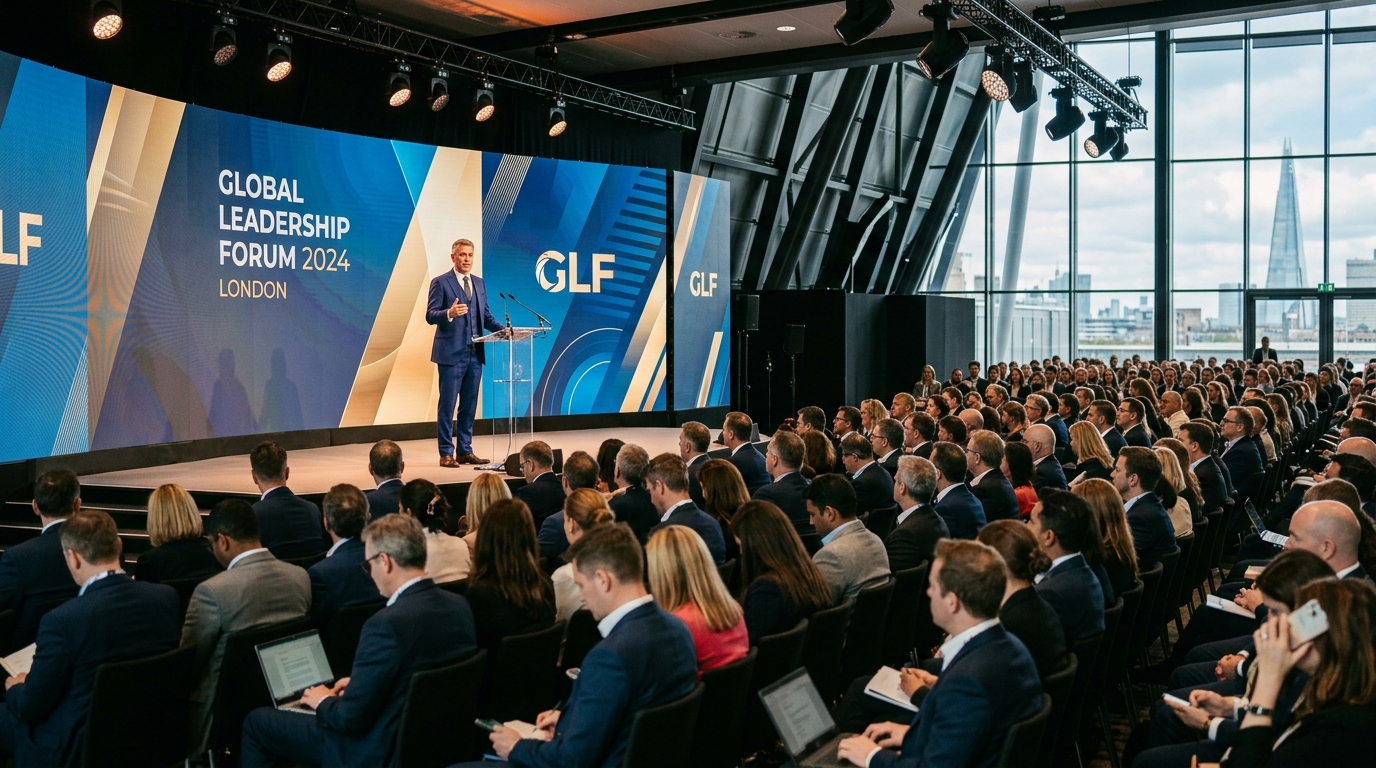
In practice, the first conversation I have with any client planning a multi-session conference is not about the shot list. It is about priority. I need to know, before I build any schedule, which sessions matter most and which ones can receive lighter coverage or be skipped entirely if the timing becomes tight.
As Bernardson Photography’s guide to event coverage planning and prioritisation2 confirms, effective event photography coverage for large conferences depends on a clear hierarchy of importance established before the event day. Without this hierarchy, a photographer defaults to equal coverage of everything, which almost always means inadequate coverage of the things that matter most and unnecessary time spent in sessions that could have been covered more briefly.
The prioritization process works as follows:
Tier one: Non-negotiable moments
These are the moments where the photographer must be present regardless of what else is happening. They include the opening keynote, the closing address, any award presentations or recognition moments, any session featuring a high-profile speaker or external guest, and any group photograph that involves specific named individuals. These moments go into the schedule first and everything else is built around them. A multi-room conference photography plan that does not protect tier-one moments above all else is not a plan.
Tier two: Important but flexible moments
These are sessions and moments that should be covered but where a degree of flexibility is acceptable. Standard breakout sessions, panel discussions with no high-profile guests, networking breaks, and exhibition floor coverage typically fall into this tier. The photographer aims to cover these but can adjust the timing and duration of coverage based on what is happening in tier-one spaces.
Tier three: Coverage if time allows
These are elements of the event that would be nice to have in the library but are not essential. Workshop breakouts, informal networking moments, catering and logistics details, and secondary exhibition stands often fall here. A second photographer on site makes tier-three coverage possible. With a single photographer at a large conference, tier three is aspirational rather than guaranteed.
Building the Event Photographer Schedule Around the Conference Programme
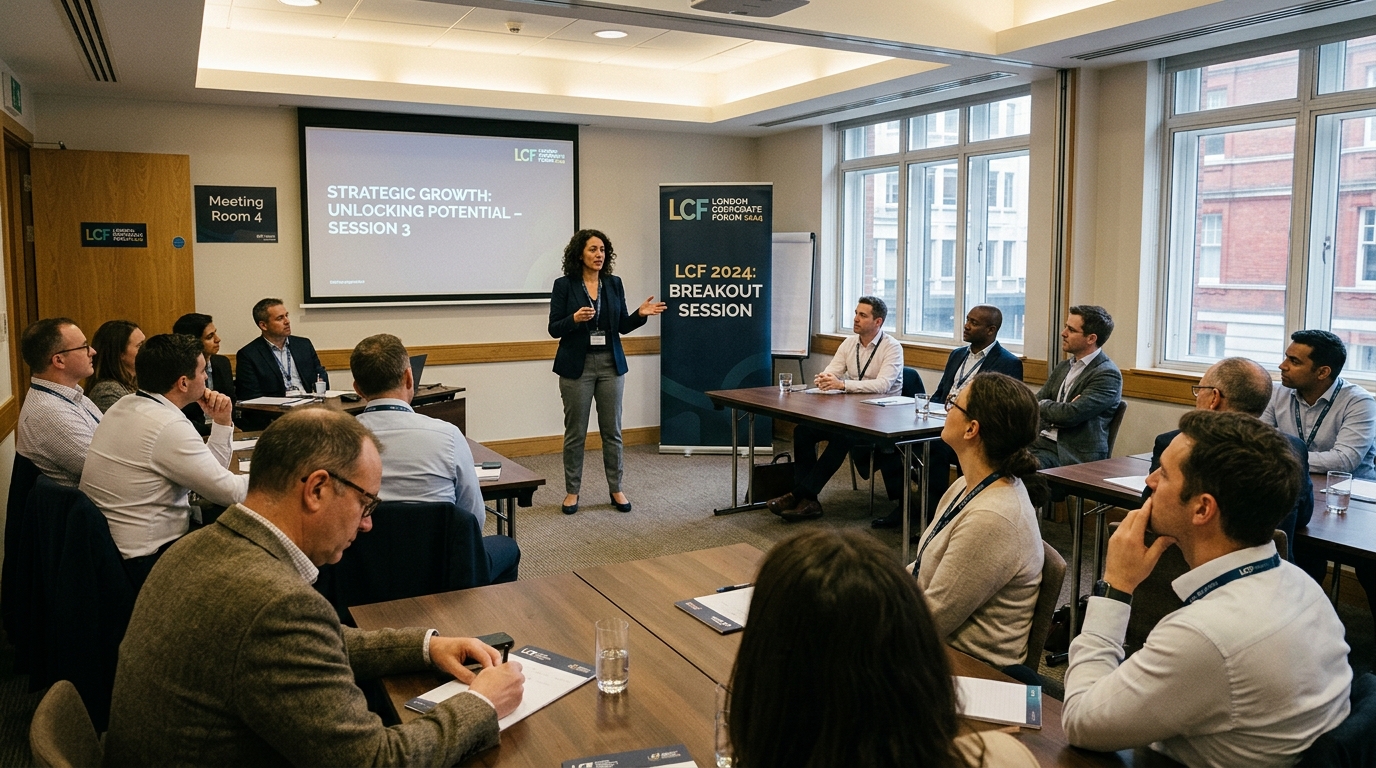
Once the priority tiers are established, the schedule can be built. I work through the conference program session by session and allocate a photography position and duration to each one. This sounds straightforward, but in practice it requires thinking about transition times between rooms, lighting conditions in each space, whether a room requires time to set up a position before the session begins, and where the natural breaks are in the day that allow the photographer to move without missing priority content.
As Social Tables’ guide to event photographer scheduling for large events³ confirms, the most common mistake in conference photography scheduling is underestimating transition time between spaces. A photographer moving from the main plenary hall on the ground floor of a large London conference venue to a breakout room on the third floor needs five to seven minutes of transition time, not two. A schedule that does not account for this consistently produces a photographer who arrives at tier-one sessions late and misses the opening moments.
The key scheduling decisions to make for each session include:
- Arrival time relative to session start. For tier-one sessions, the photographer should be in position before the session begins, typically five minutes before the scheduled start. For tier-two sessions, arriving two to three minutes into the session is usually acceptable. Knowing this in advance allows the schedule to be built with realistic transition windows.
- Duration of coverage per session. Not every session needs to be photographed in its entirety. A keynote of sixty minutes may need thirty minutes of coverage to produce a complete set of speaker portraits, audience engagement shots, and branded wide images. A breakout session of forty-five minutes may need fifteen minutes. Allocating realistic coverage durations rather than full session lengths creates flexibility in the day.
- Exit point for each session. The photographer needs to leave each session with enough time to arrive at the next priority space without rushing. Identifying the natural exit point for each session, typically a slide transition, a Q&A handover, or a natural pause, means the photographer can leave without disrupting the session and arrive at the next space on time.
- Buffer time between major moves. For large London venues where the distance between spaces is significant, build explicit buffer time into the schedule rather than assuming transitions will happen instantly. Ten minutes of buffer time at the midday break is enough to catch up if the morning ran late and to confirm the afternoon priority moments with the on-site contact.
When to Bring a Second Photographer to a Conference
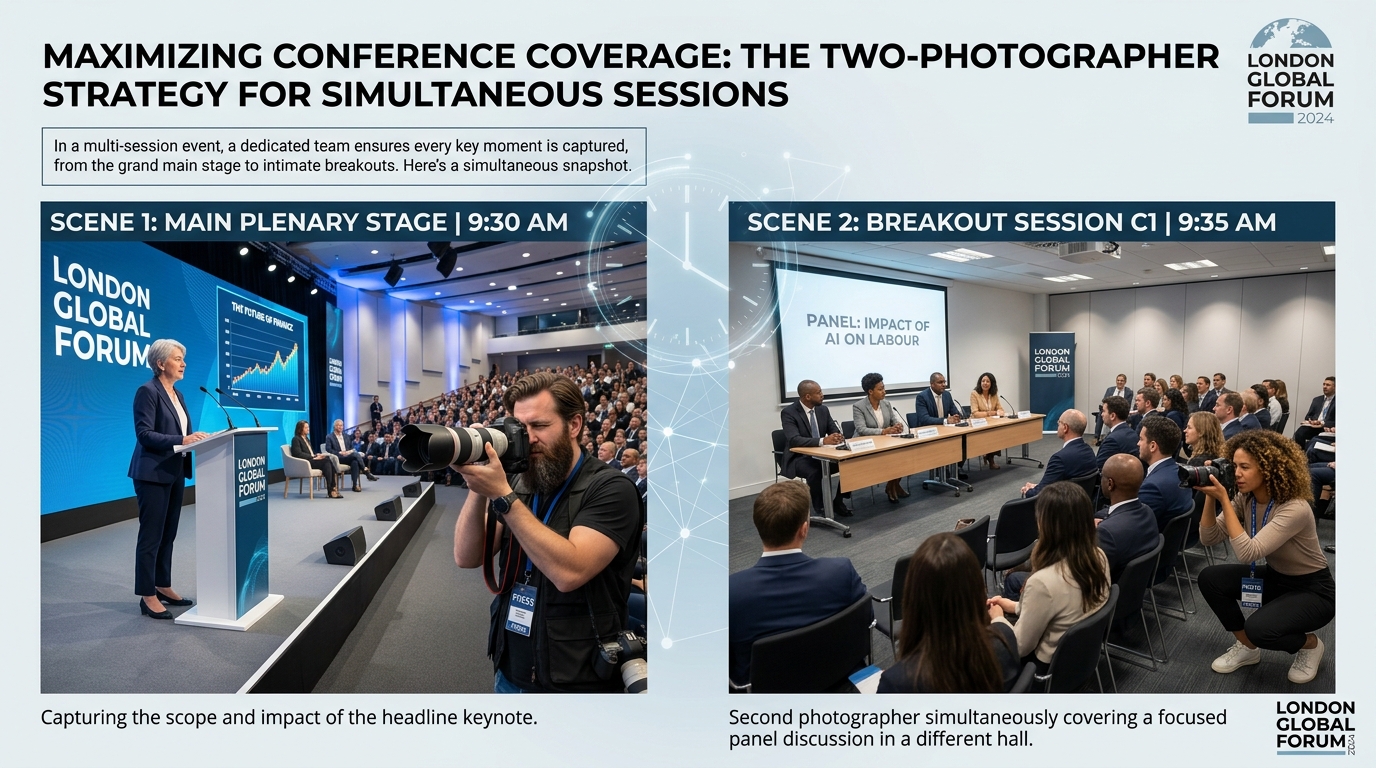
One of the most consistent conversations I have with clients planning large multi-session conferences is whether a second photographer is necessary. My honest answer is always the same: if you have three or more simultaneous sessions running at any point during the day and all of them matter to you, a single photographer cannot cover the event to a standard you will be satisfied with.
As Neurapix’s guide to staffing and equipment for professional event photography4 identifies, the decision to commission a second photographer for a conference is primarily a function of simultaneous session count and priority tier distribution. A conference with one main plenary and two breakout streams running concurrently can typically be covered by a single experienced photographer who moves between spaces strategically. A conference with five simultaneous breakout streams, all of which have sponsor or stakeholder visibility requirements, cannot. The threshold in practice is usually three or more simultaneous spaces with tier-one or tier-two coverage requirements.
What a second photographer adds
A second photographer at a multi-room conference does not simply double the coverage. It changes the nature of what is possible. With two photographers, tier-one moments in different rooms can be covered simultaneously without compromise. One photographer can remain in the main plenary for the full duration of a keynote while the other covers a concurrent session that would otherwise be missed entirely. The networking breaks, which are often the most valuable candid coverage of the day, can be covered comprehensively rather than in the brief window when the single photographer is not needed in a session space.
Coordinating a two-photographer team
A two-photographer conference photography planning setup requires the same briefing process as a single photographer commission, with one additional element: a clear division of responsibilities. Before the event, both photographers should know which spaces each is covering at each point in the day, who is responsible for each tier-one moment, and how they will communicate during the event if the schedule changes. A shared messaging group with the client’s on-site contact included is the most reliable setup for managing real-time changes across a two-photographer team at a large London conference.
Frequently Asked Questions
How far in advance should coverage planning begin for a large conference?
For a single-day conference with multiple sessions, conference photography planning should begin at least two weeks before the event. This gives enough time to share the full programme with the photographer, work through the priority tiers together, build a coverage schedule, and identify any access or logistics issues with the venue before the day. For multi-day conferences or events with particularly complex programmes, four to six weeks is more appropriate. The later the planning starts, the less the photographer can do to prepare, and the more decisions end up being made under pressure on the day itself.
What happens when two priority moments clash?
With a single photographer, a clash between two simultaneous tier-one moments is a genuine problem that needs to be resolved before the event. The resolution is almost always one of three things: accepting that one of the moments will be covered late or briefly, adjusting the priority tier of one of the clashing moments based on what can realistically be achieved, or commissioning a second photographer to eliminate the clash entirely. The worst outcome is discovering the clash on the day and making an improvised decision under time pressure. The best outcome is identifying it at the planning stage and making a considered decision in advance.
Should the photographer attend a pre-event site visit?
For large multi-session London conferences, a pre-event site visit is one of the most valuable investments in the quality of the finished photography. A photographer who has walked the venue before the event knows the lighting conditions in each room, understands the transition routes and the time they take, has identified the best positions for each session type, and has raised any access or logistics questions with the venue team before the day begins. As Photier’s guide to conference venue assessment and preparation5, photographers who conduct site visits consistently produce stronger coverage than those who arrive on the event day without prior venue knowledge, particularly for complex multi-room events at large London venues.
How does the coverage plan change for a multi-day conference?
A multi-day conference requires a separate coverage plan for each day, built around the specific priority moments and session structures of each day’s programme. In practice, day one of a multi-day conference typically has the strongest priority density, with opening sessions, keynotes, and high-profile speakers concentrated at the start of the event. Day two often has more flexibility for candid and networking coverage as the formal program is lighter. The photographer should receive the full program for all days before the event and should build a day-by-day plan that reflects the different priorities and pace of each day.
What should the on-site contact do on the day?
The on-site contact is one of the most important elements of a well-run multi-room conference photography commission and one of the most consistently overlooked. Their role is to communicate schedule changes to the photographer as they happen; to confirm access if any spaces have restrictions that are not in the advance plan; to introduce the photographer to speakers or delegates who need individual portraits; and to be the decision-maker if the photographer needs to choose between two simultaneous priority moments. The on-site contact should have the photographer’s mobile number and should expect to exchange messages throughout the day. Browse the full conference photography portfolio at eventphotographer. photos to see examples of multi-session event coverage in practice, then get in touch via the contact page to discuss your conference.
Plan Your Conference Photography Coverage with an Experienced Specialist
The difference between a multi-session conference photography library that covers everything and one that has gaps is almost entirely a function of planning. A well-built coverage plan turns a complex event into a manageable set of priorities and positions. A poorly planned shoot turns a professional photographer into someone spending the day in the wrong room.
Joel Knight is a London-based conference and corporate event photographer with extensive experience covering multi-session, multi-day, and multi-room events across London and the UK. Every large conference commission begins with a coverage planning conversation designed to build a schedule that protects every priority moment before the day begins. Browse the full conference photography portfolio and the corporate and awards photography portfolio at eventphotographer. photos, then get in touch via the contact page to discuss your event.
REFERENCES & CITATIONS
- Retines Photography (2025). The 2025 Guide to Event Photography: Large-Scale Conference Coverage Strategy. retines.fr. Cited in H2 Section 1. [Large-scale conference photography requires a fundamentally different approach from single-session event coverage, with the key challenge being logistical rather than technical.]
- Bernardson Photography (2025). Event Coverage Planning and Prioritisation: Building a Hierarchy for Multi-Session Conferences. bernardson.com. Cited in H2 Section 2. [Effective event photography coverage for large conferences depends on a clear hierarchy of importance established before the event day.]
- Social Tables (2025). Event Photographer Scheduling for Large Events: Transition Time and Session Planning. socialtables.com. Cited in H2 Section 3. [Most common mistake in conference photography scheduling is underestimating transition time between spaces, consistently causing late arrivals at priority sessions.]
- Neurapix (2025). Staffing and Equipment for Professional Event Photography: When to Commission a Second Photographer. neurapix.com. Cited in H2 Section 4. [Decision to commission a second photographer for a conference is primarily a function of simultaneous session count and priority tier distribution.]
- Photier (2025). Conference Venue Assessment and Preparation: The Value of Pre-Event Site Visits. photier.com. Cited in H2 Section 5 FAQs. [Photographers who conduct site visits consistently produce stronger coverage than those who arrive on the event day without prior venue knowledge, particularly for complex multi-room events.]