
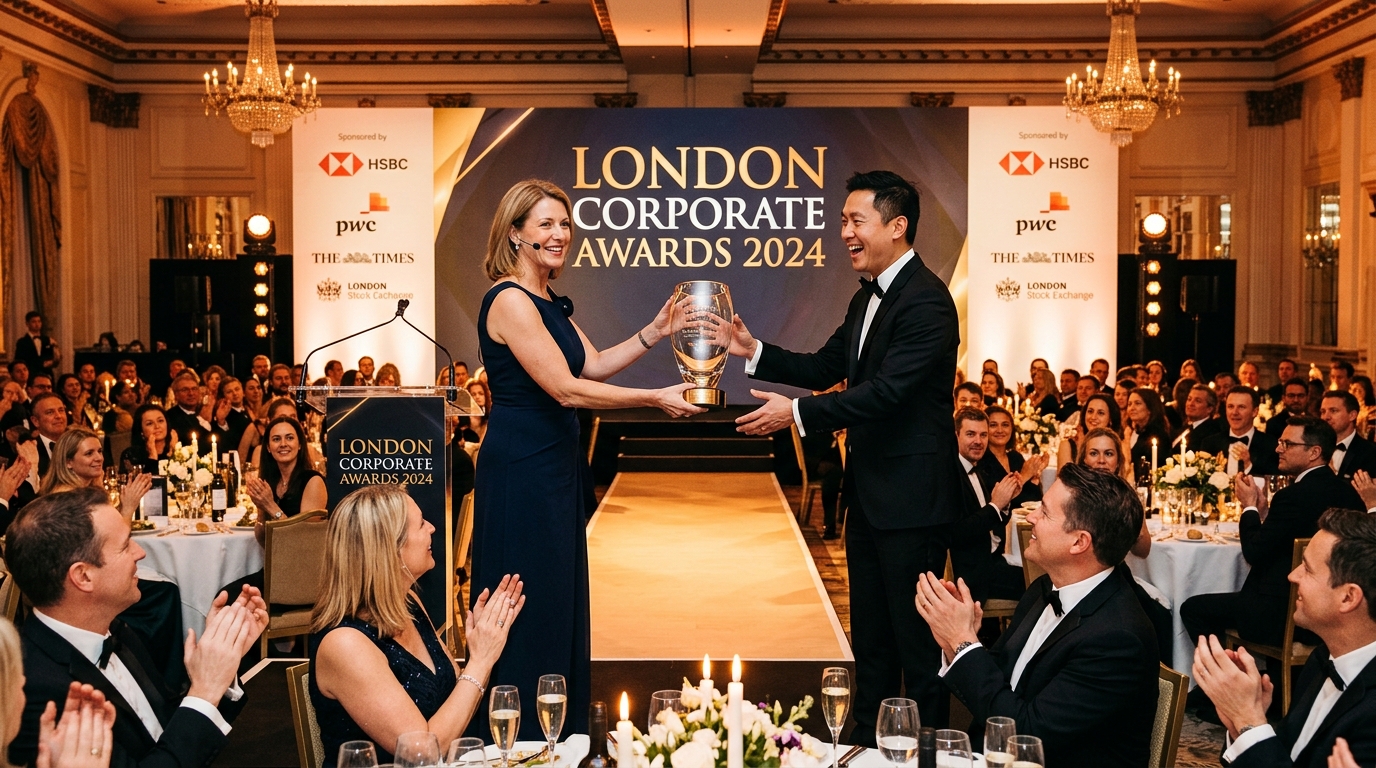
Award nights are one of the most compressed and demanding shoots in corporate event photography. I have covered evenings where the entire awards programme ran in under ninety minutes, with fifteen separate categories, thirty individual winners, and a room of four hundred guests all needing to be covered without flash disrupting the ceremony. Every shot matters. There is no going back to reshoot a winner’s reaction or a trophy handover that lasted three seconds.
Most clients who commission an awards photographer for the first time have a clear picture of one or two images they want: the trophy handover, the group photograph at the end. What they often do not realise is that a complete awards night photography library covers ten to fifteen distinct shot types, each serving a different purpose and each requiring a different position, timing, and technical approach. This guide covers all of them, in the order a specialist awards photographer thinks about them, so you know exactly what to expect from a well-briefed shoot.
The Pre-Event Setup: What Gets Photographed Before the Guests Arrive
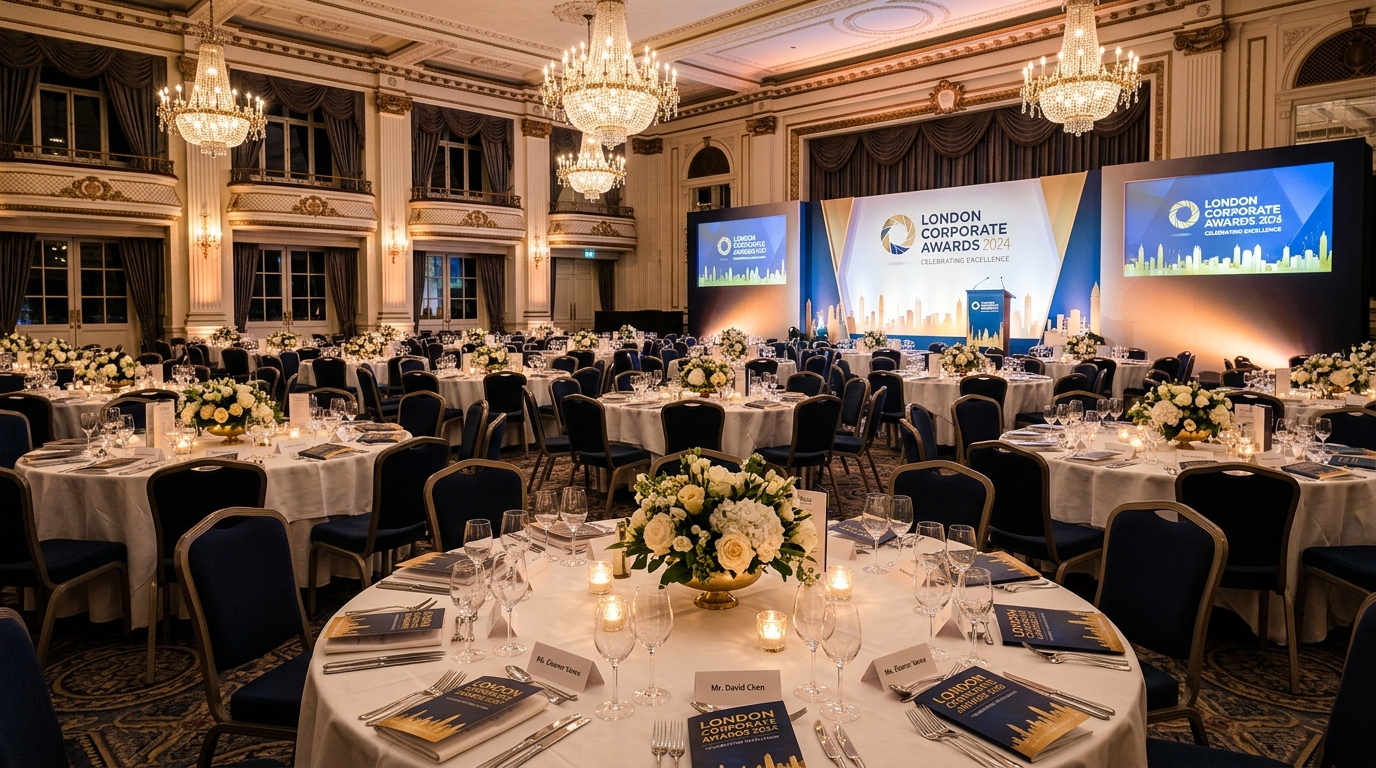
In my experience, the images that get used most consistently in the weeks after an awards evening are not always the award presentations themselves. They are often the room setup shots taken before a single guest has arrived. These images appear on the event recap page, in next year’s promotional materials, in sponsor reports, and in venue showcase content. They communicate the quality and scale of the event with a clarity that a room full of people cannot always provide.
As Bernardson Photography’s guide to event photography narrative and staging1 identifies, pre-event room photography is one of the most undervalued elements of an awards evening shoot and one of the first things an experienced awards photographer will plan time for before guests are admitted. The specific pre-event images a specialist corporate awards photographer in London will capture include:
- The full room from an elevated position. A wide shot from the back of the room or from a balcony showing the full scale of the setup, every table, the stage, and the overall design of the space. This is the image that appears in venue reports, sponsor decks, and event marketing for years.
- Table detail close-ups. Individual table settings showing the quality of the centerpieces, the branded menus, the name placards, and the glassware. These images matter to the event designer, the venue, and any sponsors whose branding appears on the table materials.
- The stage and branded backdrop. A clean wide shot of the stage set with the event logo and sponsor branding clearly visible. This is a sponsor deliverable and should be captured before any presenter or award stands in front of it.
- Awards display and trophies.
A detailed shot of the trophy table or awards display before the ceremony begins. This image serves the awards body, the trophy supplier, and the event organizer’s post-event documentation.
The Arrival and Drinks Reception: Candid Connection and First Impressions
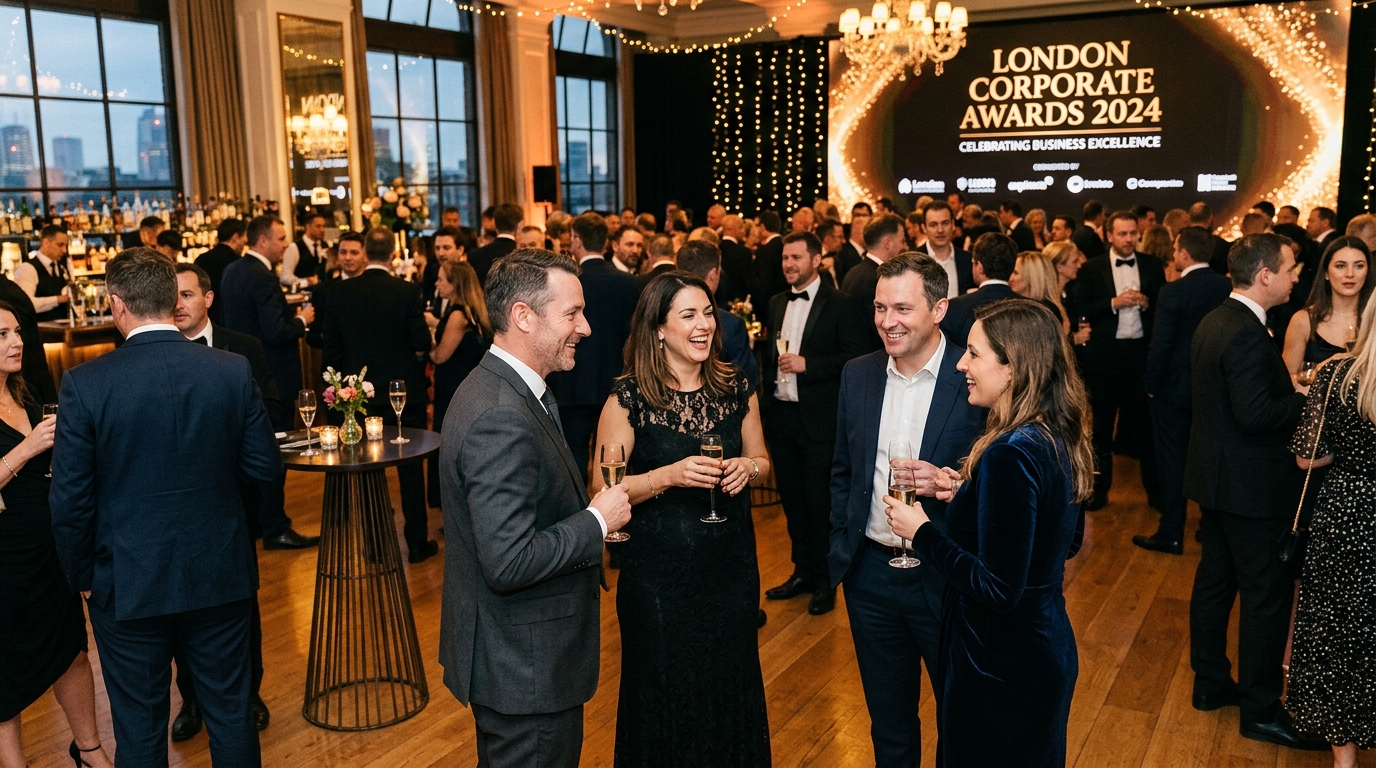
The drinks reception is one of the most photographically productive periods of an awards evening and the one that is most often underestimated in the brief. In practice, this is where the natural, unguarded connection moments happen. People have not yet sat down, the formality of the dinner has not started, and the social energy of the room is at its most visible.
As Retines Photography’s 2025 guide to event photography storytelling2 confirms, the arrival and reception period of a corporate event produces some of the most commercially useful candid imagery of the evening, precisely because the subjects are relaxed, engaged with each other, and not yet aware that the formal event has begun. The specific awards photography moments to target during this period include:
- Arrival portraits. Clean individual or paired portraits of key guests, sponsors, and senior leadership taken as they arrive. These are often the images that end up on LinkedIn and in the press release as representative portraits of the event’s attendees.
- Group conversation moments. Candid images of small groups in natural conversation. The best of these feel like they were not taken at all: no subject is posing, everyone is engaged with each other, and the image communicates the genuine social energy of a room full of people who are pleased to be there.
- Sponsor and host networking. Images of the event’s key sponsors or organisers working the room, greeting guests, and representing their brand in the social context of the evening. These images serve both the sponsor’s own communications and the event organiser’s relationship management.
- Environmental details. Drinks, flowers, centerpieces, branded glassware, and directional signage captured in the reception context. These images contribute to the design story of the evening and are particularly valued by event designers, florists, and venue teams for their own portfolios.
The Awards Ceremony: The Core Coverage Every Awards Photographer Plans Around
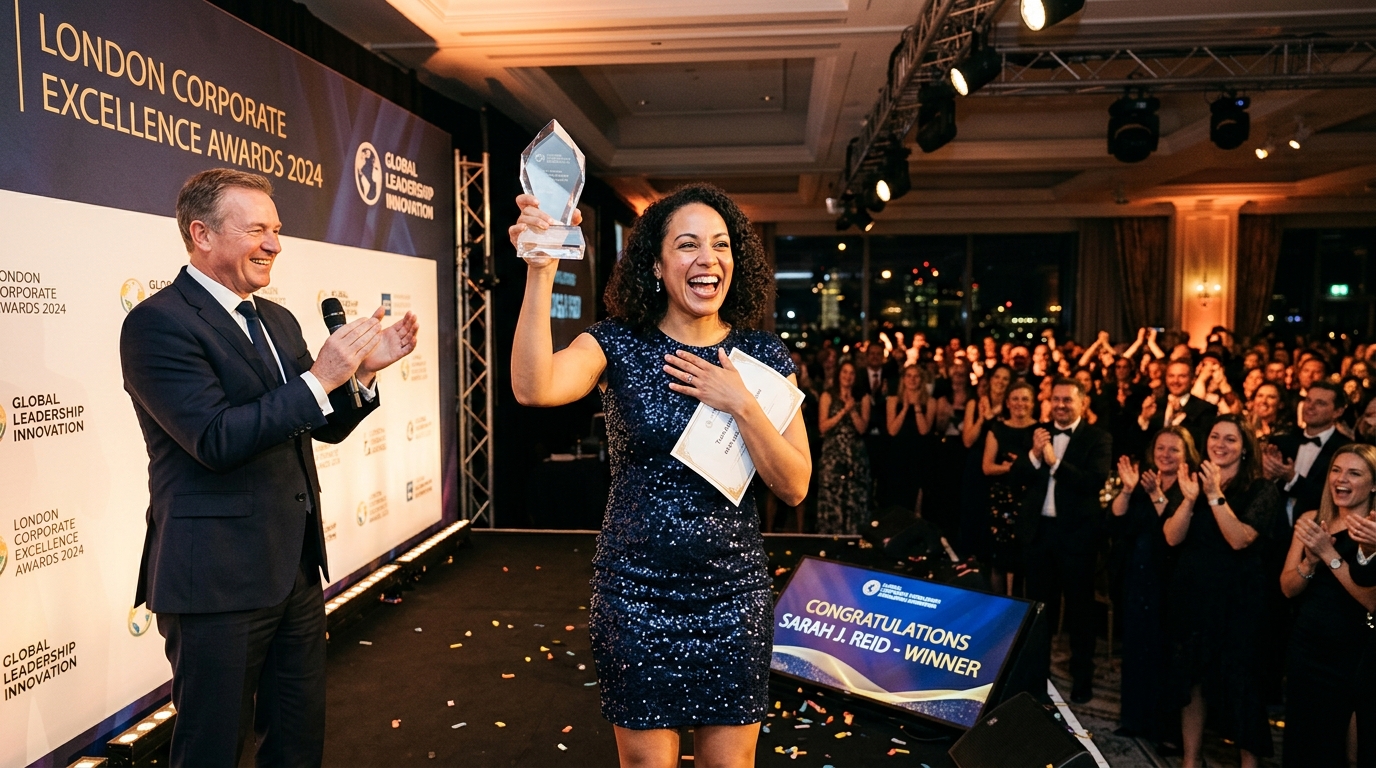
The ceremony itself is where the technical demands of awards photography are at their highest. The lighting on stage changes constantly as different presenters and winners step into different positions. The timing of the award handover, the moment when both presenter and recipient are holding the trophy and both faces are visible, lasts seconds. The room is dark enough that flash is not an option if you want the stage lighting to look the way it was designed to look.
As Social Tables’ guide to awards night photography coverage requirements3 identifies, the ceremony sequence at a corporate awards evening has a predictable structure that an experienced corporate awards photographer London plans their positioning around before the first category is announced. The complete ceremony coverage includes:
The announcement and reveal
The moment the winner’s name is announced and the reaction of the winner at their table. This is one of the most emotionally genuine moments of the entire evening and requires the photographer to be positioned in the room, not at the front, to capture it. The table reaction shot, where the winner’s colleagues around them respond to the announcement, is often more commercially powerful than the stage shot that follows it. I always try to position myself to capture both.
The walk to the stage
A transitional shot of the winner walking toward the stage. This image communicates movement and anticipation and provides a natural editorial bridge between the announcement reaction and the trophy handover. It requires the photographer to track the winner from the moment they leave their table and move smoothly to a position that allows a clean shot of the approach.
The trophy handover
The central image of the ceremony and the one every client has in mind when they commission an awards photographer. The handover itself lasts two to three seconds. A specialist photographer anticipates the moment rather than reacting to it, arriving at the right position before the category is called so that when the handover happens the frame is already composed. The image must show both faces clearly, the trophy fully visible, and the event branding in the background.
The winner’s moment at the podium
If the winner gives a speech or acknowledgement at the podium, a clean portrait of them with the trophy and the branded backdrop is one of the most useful individual images from the evening. This is the image that appears on their LinkedIn profile, in their company’s internal communications, and in any press coverage of the award. It should be captured at the moment they are most composed and most genuinely pleased rather than during the trophy handover itself, which is often hurried.
The audience response
Wide shots of the room during the applause for each winner communicate the scale and energy of the event in a way that stage-only coverage cannot. An image of four hundred people applauding a worthy winner communicates the weight of the recognition in a way that a trophy handover alone does not. These shots require a wide lens and a position that includes both the stage and a significant portion of the room.
The Dinner, Entertainment, and Evening Atmosphere
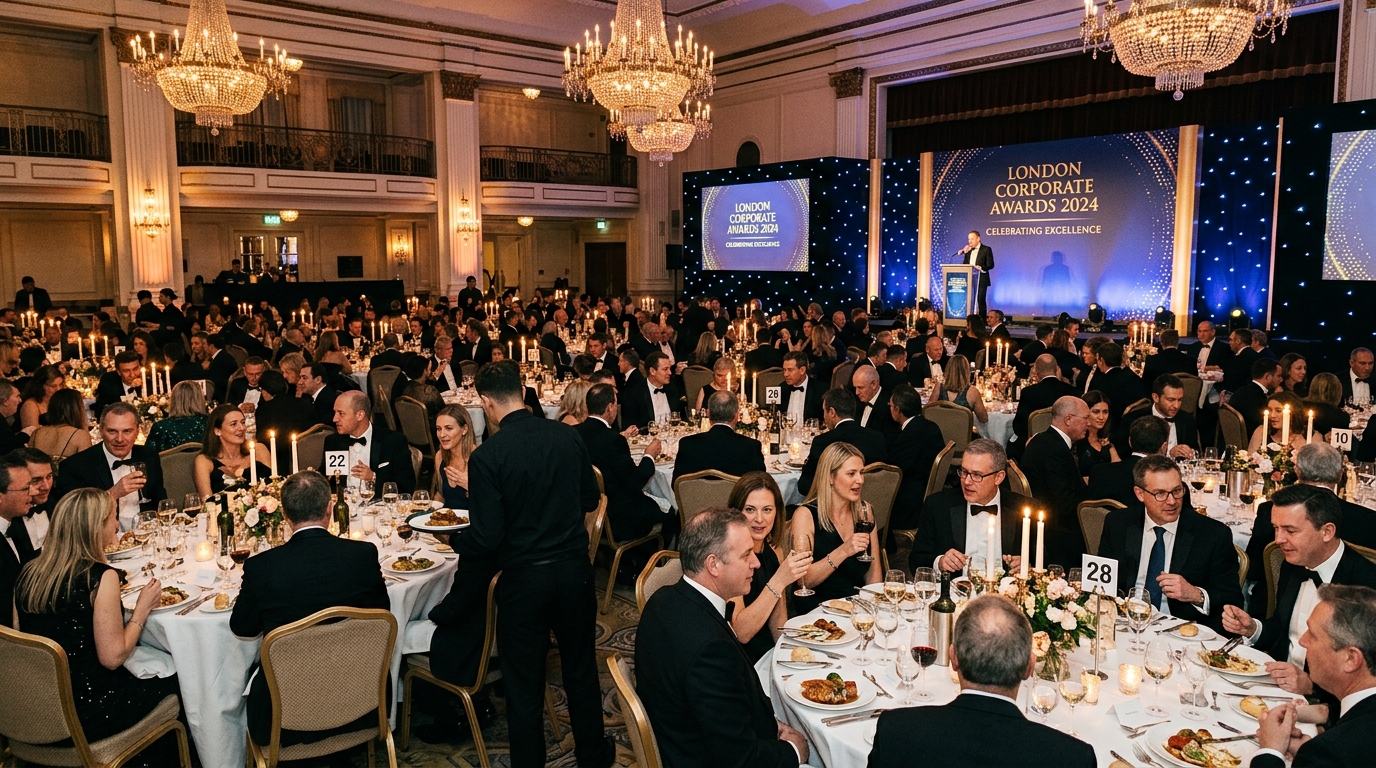
An awards evening is more than the ceremony itself. The dinner, the entertainment, and the informal moments between courses are all part of the event’s story, and they all contribute to an image library that communicates the full character of the evening rather than just the formal programme.
As Neurapix’s guide to low-light event photography technique and equipment4, the dinner and evening periods of a corporate awards night present the most technically demanding lighting conditions of the shoot. Candlelit tables, warm overhead ambience, and darker room lighting between courses all require a photographer with high-performance low-light camera equipment and the technical knowledge to produce clean, well-exposed images without flash. The specific coverage during the dinner and entertainment period includes:
- Table atmosphere shots. Wide images of tables in the context of the full room, showing the dinner in progress, the lighting design, and the general atmosphere. These images communicate the scale and quality of the event for post-event marketing and venue showcase use.
- Candid dining moments. Natural images of guests in conversation during the dinner, small groups of colleagues or industry peers caught in genuine interaction over the table. The best of these are indistinguishable from documentary photography and they perform strongly on social media because they feel real rather than staged.
- Entertainment coverage. If the evening includes a live band, comedian, host, or other entertainment, documentary coverage of the performance and the audience’s response to it forms part of the complete event story. These images are valued by both the entertainment provider and the event organiser.
- Speaker and host portraits. If the evening has a compere or headline speaker, clean editorial portraits during their performance are a deliverable for both the individual and the event organizer. A well-lit portrait of a well-known compere at an awards evening is a press asset that can be used across multiple contexts.
Frequently Asked Questions
How many images should I expect from an awards evening shoot?
A well-run London corporate awards evening typically produces a finished library of between one hundred and fifty and three hundred edited images, depending on the number of award categories, the size of the room, and the scope of the brief. Each award category typically produces five to ten images covering the announcement reaction, the walk to the stage, the handover, the podium moment, and the applause. The dinner, reception, setup, and group photography add further coverage beyond the ceremony itself. The specific volume should be discussed at briefing stage as it varies significantly with the scale and structure of the event.
Is flash photography used at awards ceremonies?
In most London corporate awards settings, flash is not used during the ceremony itself. Modern professional mirrorless camera systems with high-performance sensors are capable of producing clean, sharp images under stage lighting and candlelit dinner conditions without flash. As Photier’s 2025 guide to professional event photography technology5, the availability of high-quality available-light camera systems has effectively eliminated the need for flash in most awards ceremony contexts, producing images that feel more natural and more atmospheric than flash photography would. For pre-event room setup shots where additional light improves detail, a small off-camera flash may be used discreetly. During the ceremony and dinner, available light is standard.
How do I ensure the trophy handover is captured cleanly for every category?
The most reliable way to ensure every trophy handover is captured cleanly is to share the full ceremony running order with the photographer before the event, including the name and table position of each winner if they are known in advance. I always ask for this information where it is available. Knowing where a winner is sitting before their category is called allows the photographer to position themselves to capture both the table reaction and the stage moment rather than choosing between them. For events where winners are not known in advance, a clear sight line from a fixed position to the stage combined with a second angle from the room provides comprehensive coverage of every category.
Should group photographs be taken at the end of the evening or during the ceremony?
In my experience, the best group photographs at awards evenings are taken immediately after the final category, while the room is still assembled and before guests begin to leave. A group photograph of all winners together on stage, taken with the full branded backdrop visible and the room still full, communicates the scale and occasion of the evening more effectively than a photograph taken after half the room has left. If key individuals need to leave early, identify them before the event and arrange for their group photograph to be taken during one of the breaks rather than at the end. A good awards ceremony photography checklist always includes the group photograph timing as a specific item agreed upon in the brief.
What information does a corporate awards photographer need before the event?
Before an awards evening, a specialist corporate awards photographer London needs the full running order of the ceremony, including category names and the timing of each, the names and table positions of winners where known; the names and roles of any VIPs, sponsors, or key individuals who require specific portrait coverage; confirmation of any restrictions on photography during particular moments, the delivery format and timeline for the finished images, and the name and mobile number of the on-site contact for the evening. Browse the full corporate and awards photography portfolio at eventphotographer.photos and the conference photography portfolio to see examples of awards and corporate event coverage, then get in touch via the contact page to discuss your awards evening.
Commission Your Corporate Awards Night Photographer in London
A complete awards night photography library does far more than document who won what. It communicates the quality of the event, the scale of the recognition, and the culture of the organisation that chose to celebrate its people and partners in this way. Every image type described in this guide contributes to that story, and each one requires a photographer who has planned for it before the evening begins.
Joel Knight is a London-based corporate awards photographer London with extensive experience covering awards evenings, gala dinners, and recognition events for corporate clients, professional associations, and industry bodies across London and the UK. Browse the full corporate and awards photography portfolio, the conference photography portfolio, and the headshots and portraits portfolio at eventphotographer.photos, then get in touch via the contact page to discuss your event.
REFERENCES & CITATIONS
- Bernardson Photography (2025). Event Photography Narrative and Staging: Pre-Event Room Photography and Its Commercial Value. bernardson.com. Cited in H2 Section 1. [Pre-event room photography is one of the most undervalued elements of an awards evening shoot and one of the first things an experienced awards photographer plans time for before guests are admitted.]
- Retines Photography (2025). Event Photography Storytelling: The Commercial Value of Arrival and Reception Coverage. retines.fr. Cited in H2 Section 2. [The arrival and reception period of a corporate event produces some of the most commercially useful candid imagery of the evening, with subjects relaxed and unaware that the formal event has begun.]
- Social Tables (2025). Awards Night Photography Coverage Requirements: Ceremony Sequence and Positioning. socialtables.com. Cited in H2 Section 3. [The ceremony sequence at a corporate awards evening has a predictable structure that an experienced corporate awards photographer plans their positioning around before the first category is announced.]
- Neurapix (2025). Low-Light Event Photography: Technique and Equipment for Awards Dinners and Ballroom Events. neurapix.com. Cited in H2 Section 4. [Dinner and evening periods of a corporate awards night present the most technically demanding lighting conditions of the shoot, requiring high-performance low-light camera equipment.]
- Photier (2025). Professional Event Photography Technology: Available Light Camera Systems and Flash-Free Awards Coverage. photier.com. Cited in H2 Section 5 FAQs. [High-quality available-light camera systems have effectively eliminated the need for flash in most awards ceremony contexts, producing more natural and atmospheric imagery.]