
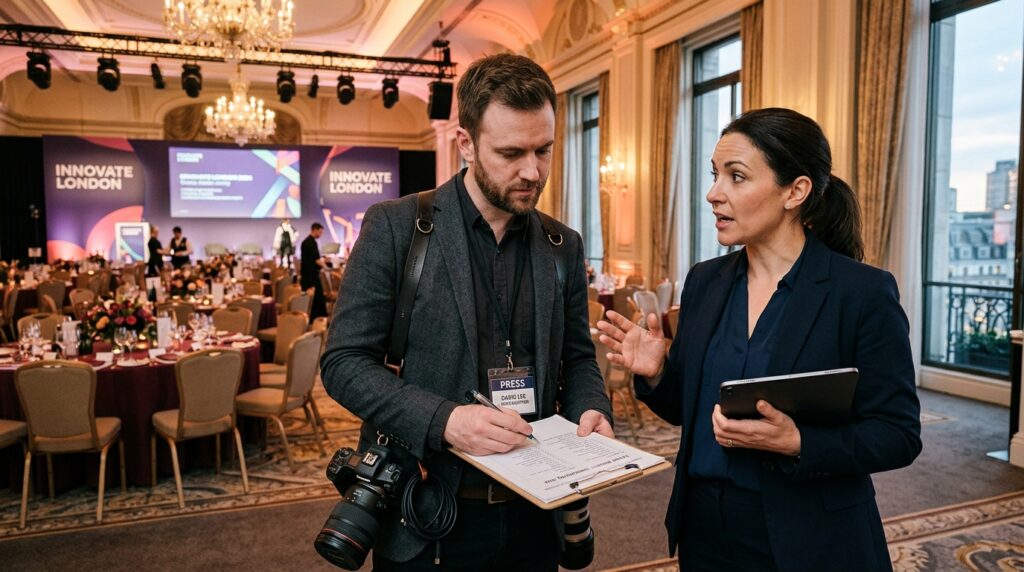
I can tell within the first five minutes of arriving at an event whether the client has thought carefully about what they need from the photography or whether they are hoping I will figure it out. Both approaches produce images. Only one produces the specific images the client had in mind. The briefing conversation before an event is not a formality. It is the creative and logistical foundation that determines what is possible in the finished library.
A good event photographer brief does not need to be long or technically sophisticated. It needs to answer a small set of specific questions that allow the photographer to make every creative decision of the day in service of what you actually need. This guide covers exactly what to include, how to communicate it, and what changes when the brief is done well versus when it is not.
Why the Brief Matters More Than Most Clients Expect
The most consistent source of disappointment in event photography is not technical quality. Most professional photographers working in London produce technically competent images. The disappointment comes from a mismatch between what the client expected and what the photographer understood they were there to capture. I have had conversations after events where a client showed me the image they had wanted, an image that was entirely possible to capture, but that I had no way of knowing existed in their mind because they had not mentioned it.
As Bernardson Photography’s guide to event photography brief quality and client outcomes1, the correlation between the thoroughness of the pre-shoot briefing and the client’s satisfaction with the finished photography is stronger than almost any other variable in event photography. A technically excellent photographer working from a weak brief will consistently underdeliver against a client’s expectations. A competent photographer working from an outstanding brief will consistently meet or exceed them. The brief is the single highest-leverage investment of time available to anyone commissioning event photography in London.
The practical reason is straightforward. An event unfolds in real time, at pace, with multiple things happening simultaneously. A photographer who knows exactly which moments are priorities, which people must be captured, and what the finished images need to do can make every positioning, timing, and compositional decision of the day in service of those requirements. A photographer who does not know any of these things makes every decision independently based on what they judge to be the most interesting shot available. Those two approaches produce very different libraries, even at the same event.
The Five Things Every Event Photographer Brief Must Include
In practice, every effective event photographer brief covers the same five areas, regardless of whether the event is a private celebration in a London townhouse or a two-day corporate conference at a City venue. The language and detail may differ but the structure is consistent.
As Retines Photography’s 2025 guide to event photography briefs and their commercial impact2, the most effective event photographer briefs are those that address the photographer’s five core needs in advance: what the event is and who it is for, what the must-have moments are, who the priority people are, where the images will be used, and what the delivery requirements are. Every other briefing detail is supplementary to these five. Get all five right and the photographer has everything they need to make good decisions throughout the day.
What the event is and what it is meant to achieve
The photographer needs to understand the event before they can serve it photographically. For a private celebration, this means knowing who the guest of honour is, what the occasion is, and what the emotional tone of the event should be. For a corporate event, it means knowing the organisation, the purpose of the event, the audience, and what the photography needs to communicate about both. A photographer briefing guide that skips this context produces a photographer who arrives knowing the logistics but not the meaning. Knowing the meaning changes every creative decision from the moment they walk in the door.
The must-have moments and images
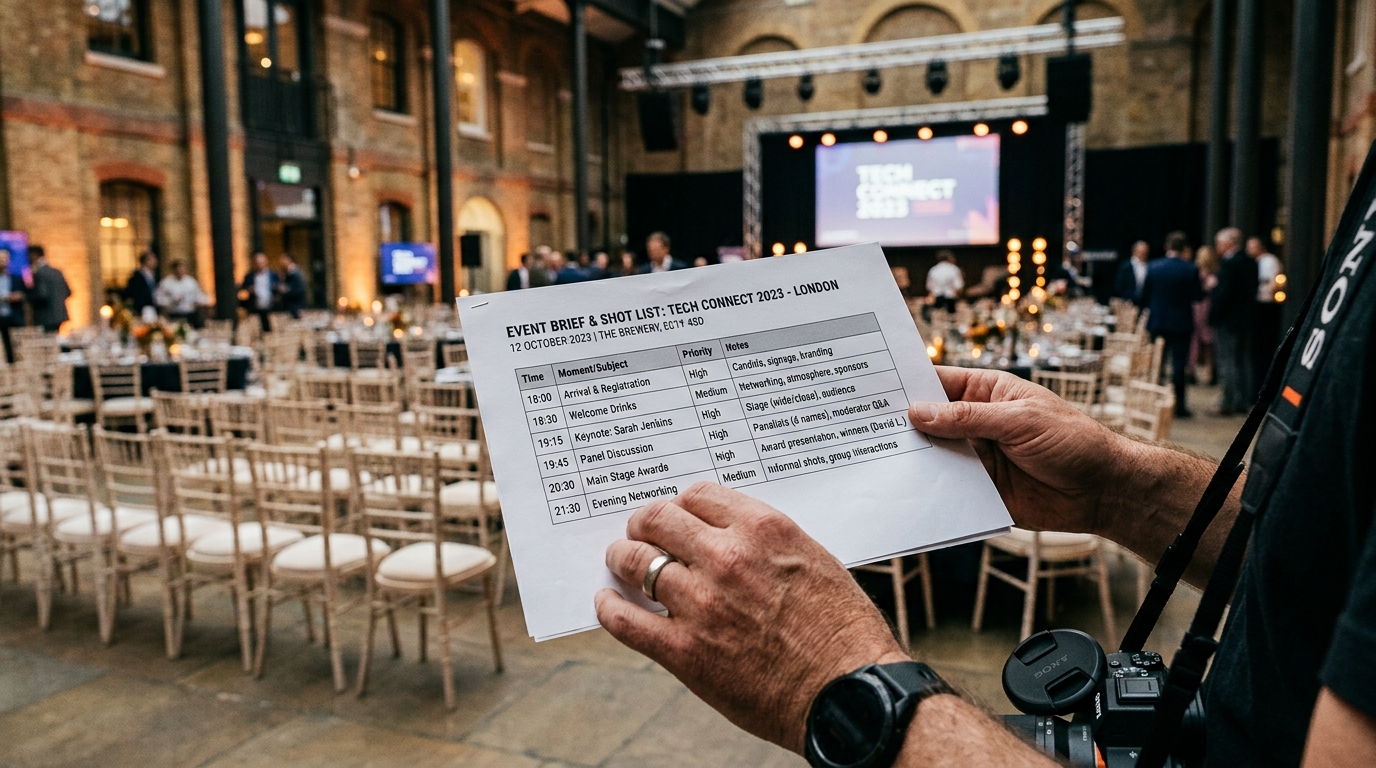
This is the shot list. It is a numbered list of every image that must exist in the finished library, regardless of how the rest of the event unfolds around it. It should be specific enough that the photographer can identify and anticipate each moment without ambiguity. Not just the speeches, but the speech by the managing director at approximately seven thirty, positioned at the lectern to the left of the stage. Not just the cake, but the birthday cake cutting at eight fifteen, with the family gathered around the table in the main dining room. Specificity is what allows the photographer to be in the right place rather than searching for the moment after it has already happened.
The priority people
Every event has specific individuals whose presence in the photographs is a requirement rather than a preference. Name them. For a birthday party, it is the guest of honour, close family, and any guests who have travelled a significant distance to be there. For a corporate event, it is the keynote speakers, the award winners, the senior leadership, and any sponsors or VIP guests whose specific coverage is a contractual or relationship obligation. Tell the photographer not just who these individuals are but also what they look like and where in the venue they are likely to be. A name without a description is considerably less useful than a name with a brief physical description and a likely location.
Where the images will be used
The intended use of the images determines how they should be composed, formatted, and delivered. Images for LinkedIn require a specific aspect ratio. Images for a press release need to work at thumbnail size as well as full size. Images for an internal newsletter have specific dimension requirements. Images for a printed programme or annual report need to be high resolution in specific file formats. Images for the guest of honour’s personal album have different requirements from all of the above. Sharing the complete list of intended uses at briefing stage allows the photographer to compose images that work for every required context rather than delivering a library that serves one channel and needs to be adapted for all the others.
The delivery requirements
When do you need the images? In what format and resolution? Is there a priority selection needed quickly for same-day social media or a next-day press release? Are there specific images that individual guests, speakers, or winners should receive directly? What is the total volume of edited images expected from the commission? These questions should be answered before the event rather than raised after delivery, because the answers shape the photographer’s post-shoot workflow significantly. A preparing for event photographer London process that leaves delivery expectations undefined is one of the most common causes of post-event friction between clients and photographers.
The Information That Separates a Good Brief from an Outstanding One
Beyond the five core elements, there is a second tier of briefing information that consistently makes the difference between a good event photography library and an outstanding one. These are the details that most clients do not think to include because they seem too specific, too personal, or too obvious to mention. They are almost never too obvious to mention.
As Social Tables’ guide to advanced event photography briefing for private and corporate clients3, the photographers who consistently receive the highest client satisfaction scores are those whose clients shared not just the logistics of the event but the emotional and relational context that made the event meaningful. That context is what allows a photographer to prioritise the moments that actually matter rather than the moments that merely look significant from the outside. The specific second-tier briefing information that makes the biggest difference includes:
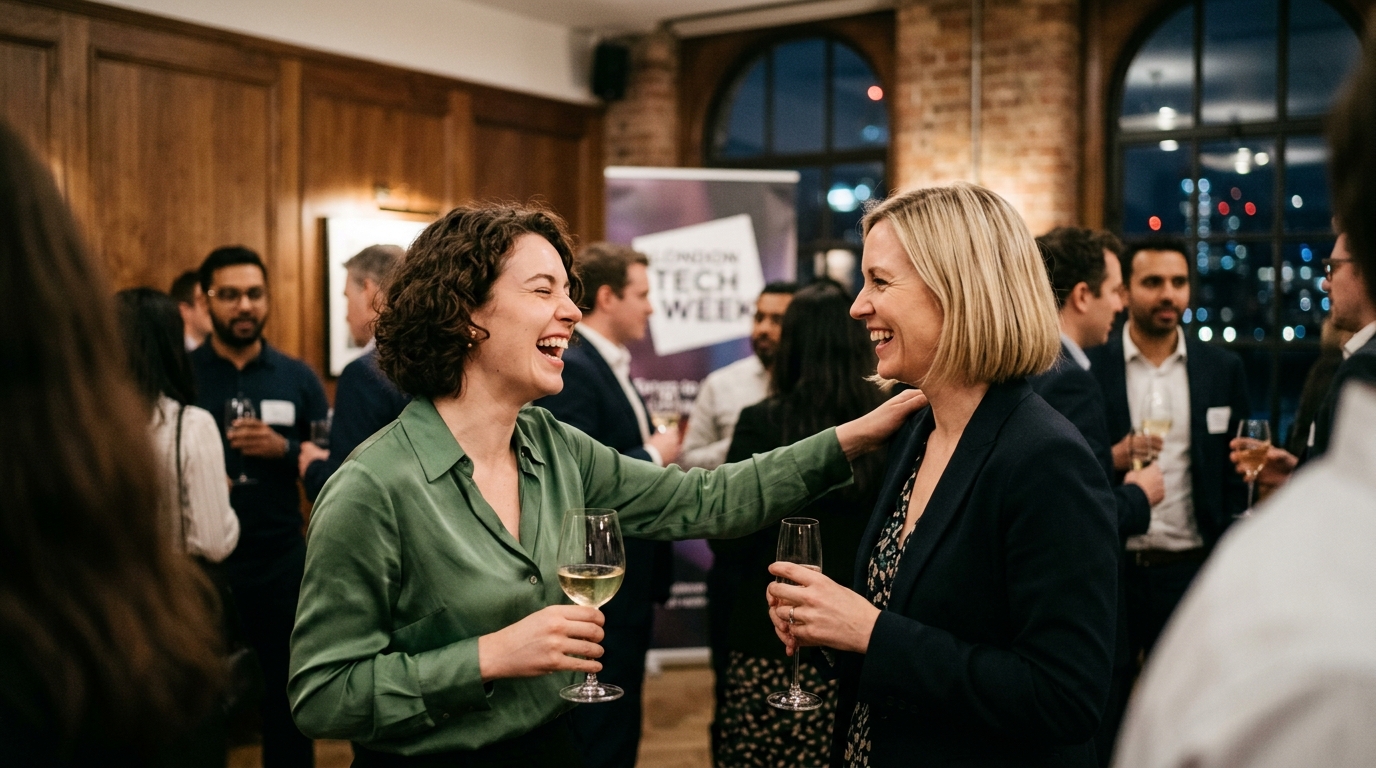
- The relationships between key people. If the guest of honour’s oldest friend is flying in from abroad and their reunion is likely to be one of the most emotionally significant moments of the event, mention it. If a team at a corporate event has just completed a significant project together and their group moment at the dinner is likely to be particularly charged, mention it. The photographer cannot read the emotional significance of relationships they do not know about.
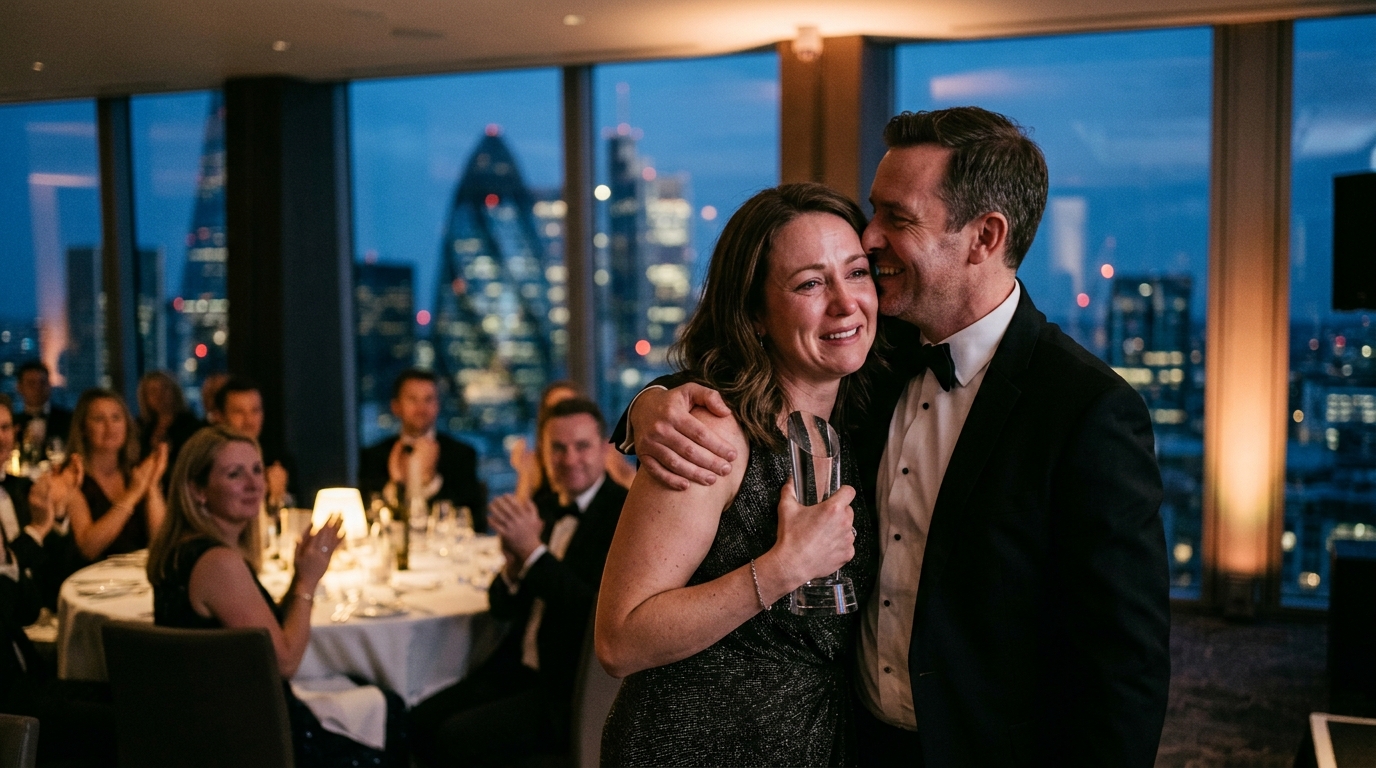
- Any surprises or planned emotional moments. A surprise element is the most photographically valuable moment of many events and the easiest to miss without advance notice. Whether it is a surprise arrival, a tribute video, an unannounced performer, or a gift reveal, tell the photographer it is happening, approximately when, and where in the venue. The three seconds when a surprise lands and the subject’s face registers genuine shock and joy is one of the most powerful images any event can produce. It is also impossible to capture if the photographer is in the wrong room.
- Anyone who is camera-shy or who has requested not to be photographed. Knowing this in advance allows the photographer to be respectful without creating an awkward interaction during the event. It also allows the photographer to focus their attention on the guests who are comfortable being photographed rather than repeatedly encountering reluctance that slows down their coverage.
- The venue’s specific quirks and restrictions. Every London venue has something: a room where photography is not permitted, a lighting condition that changes dramatically after the evening programme begins, a staircase that is the best natural light spot in the building, a ceiling height that makes wide shots difficult. If you know these things from a previous event at the same venue, share them. They are exactly the kind of context that saves the photographer significant time and produces better images.
• Your personal aesthetic preferences. Do you prefer images that feel warm and golden or clean and contemporary? Do you love close crops or wide environmental shots? Have you seen a specific photographer or style of event photography that particularly resonates with you? Share it. A photographer who understands your visual preferences produces a library that feels right to you rather than professionally competent but somehow not quite what you had in mind.
How to Deliver the Brief: Format, Timing, and the Pre-Shoot Conversation
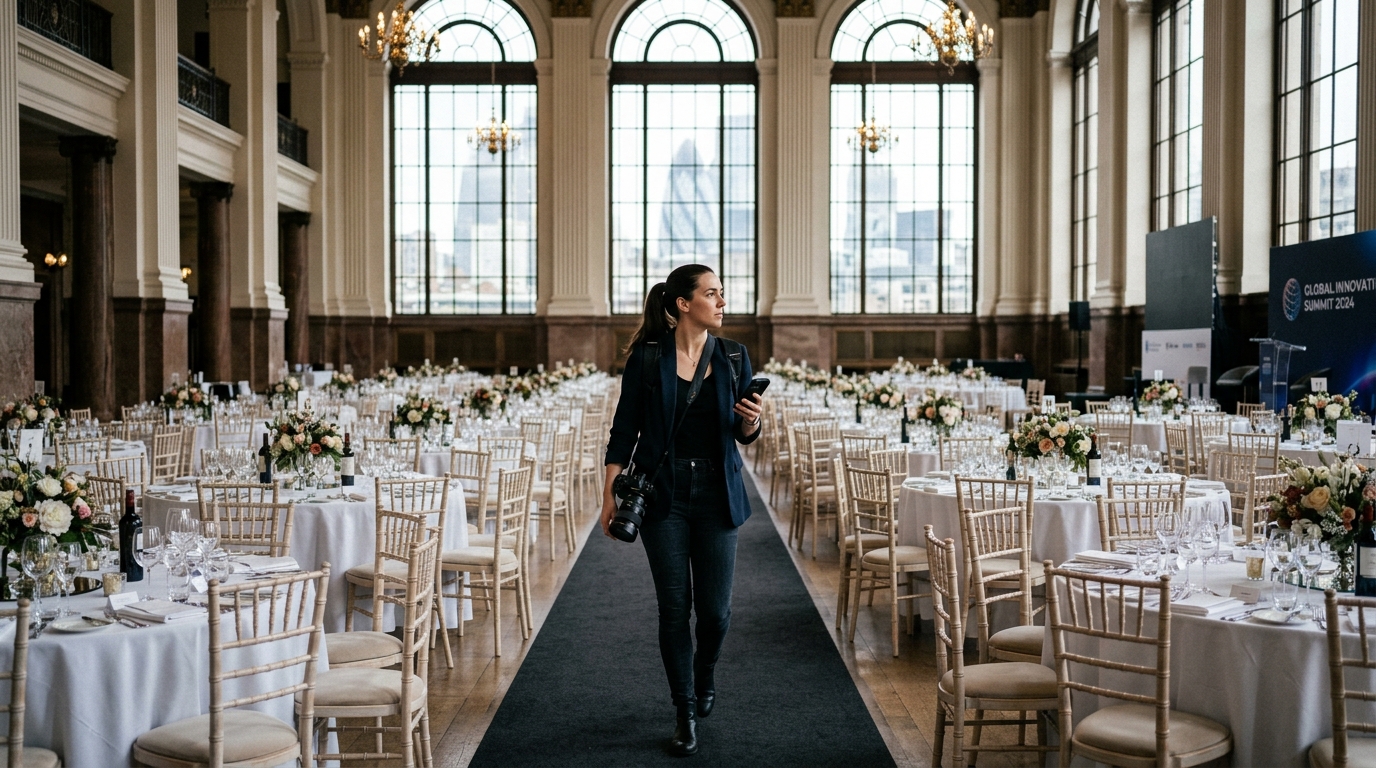
The brief should be written down and shared before the event. A verbal conversation on the morning of the day is better than nothing but significantly less effective than a written document shared at least a week in advance. The photographer who has had time to read the brief, identify questions, research the venue, and arrive with a coverage plan is in a fundamentally different position from the photographer who is processing the brief for the first time while simultaneously setting up their equipment.
As Neurapix’s guide to professional event photography preparation and client communication4, the format of the brief matters less than its content, but a structured document is significantly more useful than a series of text messages or email threads that the photographer has to piece together into a coherent picture. A simple Word document or a shared Google Doc covering the five core elements plus any second-tier context is sufficient for most events. For larger or more complex events, a call with the photographer to walk through the brief before the day is a worthwhile investment that surfaces questions on both sides before the event rather than during it.
The pre-event call or meeting
For events of significant scale or complexity, a brief pre-event call of twenty to thirty minutes produces a meaningfully better outcome than a brief alone. The call allows the photographer to ask the clarifying questions that reading a document always generates, to share any logistical considerations the client may not have anticipated, and to establish the personal rapport that makes the on-the-day working relationship more fluid. I try to have a pre-event call for every significant commission, not because the brief is insufficient but because the conversation surfaces things the brief does not.
The on-arrival check-in
Even with a thorough written brief and a pre-event call, the five minutes when the photographer arrives at the venue is a valuable final briefing moment. Use it to confirm any changes to the programme since the brief was written, to introduce the photographer to the designated on-site contact, to walk them briefly through the venue layout if they have not visited before, and to flag any last-minute priorities or concerns. The on-arrival check-in takes five minutes and eliminates the most common source of on-the-day confusion: changes that happened after the brief was written.
What to do if you do not have time to write a proper brief
If circumstances mean you cannot prepare a full brief in advance, prioritise the following three things above all else. Tell the photographer your three most important images, the specific shots that would make the event photography a success regardless of what else happens. Tell them the names and descriptions of your two or three most important people. And tell them the time and location of the one moment in the day that must be captured at any cost. These three pieces of information, even in a text message, produce a significantly better outcome than no brief at all.
Frequently Asked Questions
How long should an event photographer brief be?
For a private party or smaller event, one page covering the five core elements is sufficient. For a larger corporate event with multiple sessions, multiple priority individuals, and complex delivery requirements, two to three pages is appropriate. The brief should be as long as it needs to be to communicate everything the photographer needs to know, and no longer. A ten-page brief full of background information that does not affect any creative decision is less useful than a one-page brief that answers the five core questions precisely. Quality over volume, always.
Should I share a brief even if I have worked with the same photographer before?
Yes. Every event is different and every brief should be written fresh for each commission. A photographer who has worked with you before has valuable context about your preferences and your style, but they do not know the specific programme, the specific priority people, or the specific intended uses of the images for this particular event unless you tell them. The repeat brief is typically shorter and easier to write than the first one because the background context can be abbreviated, but the event-specific information should always be fresh. As Photier’s 2025 guide to long-term client and photographer relationships5, the photographers who deliver the most consistently outstanding results for repeat clients are those whose clients treat every commission as a fresh briefing opportunity rather than assuming prior knowledge covers current requirements.
What is the single most important thing to include in an event photographer brief?
The shot list. Specifically, the non-negotiable images: the moments that would make the photography a failure if they were not in the finished library. Everything else in the brief provides context that improves the quality of the surrounding coverage. The shot list protects the moments that cannot be missed. A photographer with a shot list and nothing else is better equipped than a photographer with three paragraphs of background context and no shot list. Start there and build everything else around it.
What if I do not know enough about photography to write a useful brief?
You do not need to know anything about photography to write a useful event photographer brief. You need to know about your event: who matters, what moments matter, and what you want to do with the images afterwards. The photographer brings the technical knowledge. You bring the event knowledge. A brief written in plain language that answers those questions specifically is far more useful than a brief written in photography terminology by someone who does not fully understand it. Write the brief in the language you would use to describe the event to a trusted friend who is helping you plan it, and the photographer will extract everything they need from it.
Is it too late to send a brief the day before the event?
It is not too late, and a brief sent the day before is always better than no brief at all. However, a brief sent the day before significantly limits what the photographer can do with it. They cannot arrange a site visit, cannot research the venue, cannot follow up on questions before the day itself, and cannot build a detailed coverage plan from a document they have read once the morning of the event. The ideal timing is one to two weeks before for a private event and two to four weeks before for a larger corporate commission. For events where briefing simply was not possible in advance, an on-arrival conversation covering the five core elements is the most effective alternative. Browse the full private event and party photography portfolio, the conference photography portfolio, and the corporate and awards photography portfolio at eventphotographer.photos, then get in touch via the contact page to discuss your event.
Book a London Event Photographer Who Makes the Briefing Process Easy
A strong event photographer brief is a twenty-minute investment that transforms the images you receive. It does not require technical knowledge. It does not require a complicated template. It requires knowing what your event means, which moments matter most, and what you want the images to do after the day is over. The photographer takes it from there.
Joel Knight is a London-based event photographer covering private celebrations, corporate events, conferences, and awards evenings across London and the UK. Every commission begins with a structured briefing process designed to ensure the finished library serves every requirement. Browse the full private event and party photography portfolio, the conference photography portfolio, and the corporate and awards photography portfolio at eventphotographer.photos, then get in touch via the contact page to discuss your event.
REFERENCES & CITATIONS
- Bernardson Photography (2025). Event Photography Brief Quality and Client Outcomes: The Correlation Between Preparation and Satisfaction. bernardson.com. Cited in H2 Section 1. [Correlation between thoroughness of the pre-shoot briefing and client satisfaction with the finished photography is stronger than almost any other variable in event photography.]
- Retines Photography (2025). Event Photography Briefs and Their Commercial Impact: Five Core Needs of Every Photographer. retines.fr. Cited in H2 Section 2. [Most effective event photographer briefs address the photographer’s five core needs: what the event is, what the must-have moments are, who the priority people are, where images will be used, and what the delivery requirements are.]
- Social Tables (2025). Advanced Event Photography Briefing: Emotional and Relational Context That Makes the Difference. socialtables.com. Cited in H2 Section 3. [Photographers who consistently receive the highest client satisfaction scores are those whose clients shared not just the logistics of the event but the emotional and relational context that made it meaningful.]
- Neurapix (2025). Professional Event Photography Preparation and Client Communication: Brief Format and Pre-Event Calls. neurapix.com. Cited in H2 Section 4. [A structured document is significantly more useful than a series of text messages or email threads that the photographer has to piece together into a coherent picture.]
- Photier (2025). Long-Term Client and Photographer Relationships: Fresh Briefing for Every Commission. photier.com. Cited in H2 Section 5 FAQs. [Photographers delivering the most consistently outstanding results for repeat clients are those whose clients treat every commission as a fresh briefing opportunity rather than assuming prior knowledge covers current requirements.]