
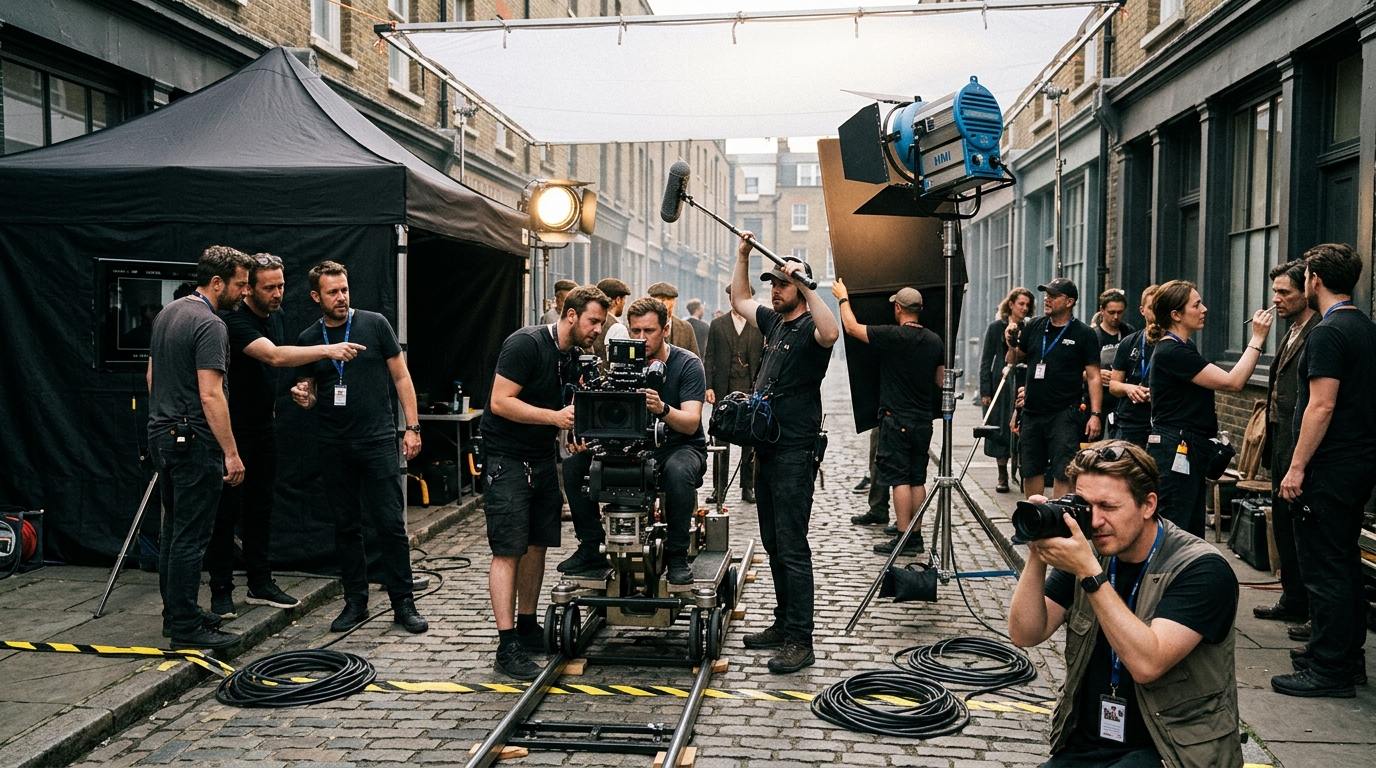
BTS photography is almost always the last thing added to a production budget and the first thing cut when costs tighten. I have seen this pattern consistently across film, television, and branded content productions in London. The unit stills photographer is booked. The video production is fully crewed. The talent is confirmed. And then someone asks whether they really need a separate person photographing the making of it, and the answer is usually not if we are over budget.
That is a commercially significant mistake. The behind the scenes photography from a production is not a nice-to-have documentation of how the project was made. It is a distinct content asset that serves marketing, PR, award submissions, social media, trade press, and internal communications across a timeline that extends well beyond the production’s release. It is also the content type that most consistently builds the audience connection and industry credibility that the finished production alone cannot generate. This guide covers why it matters, what it produces, and how to commission it correctly.
What BTS Photography Actually Produces and Why It Is Commercially Distinct
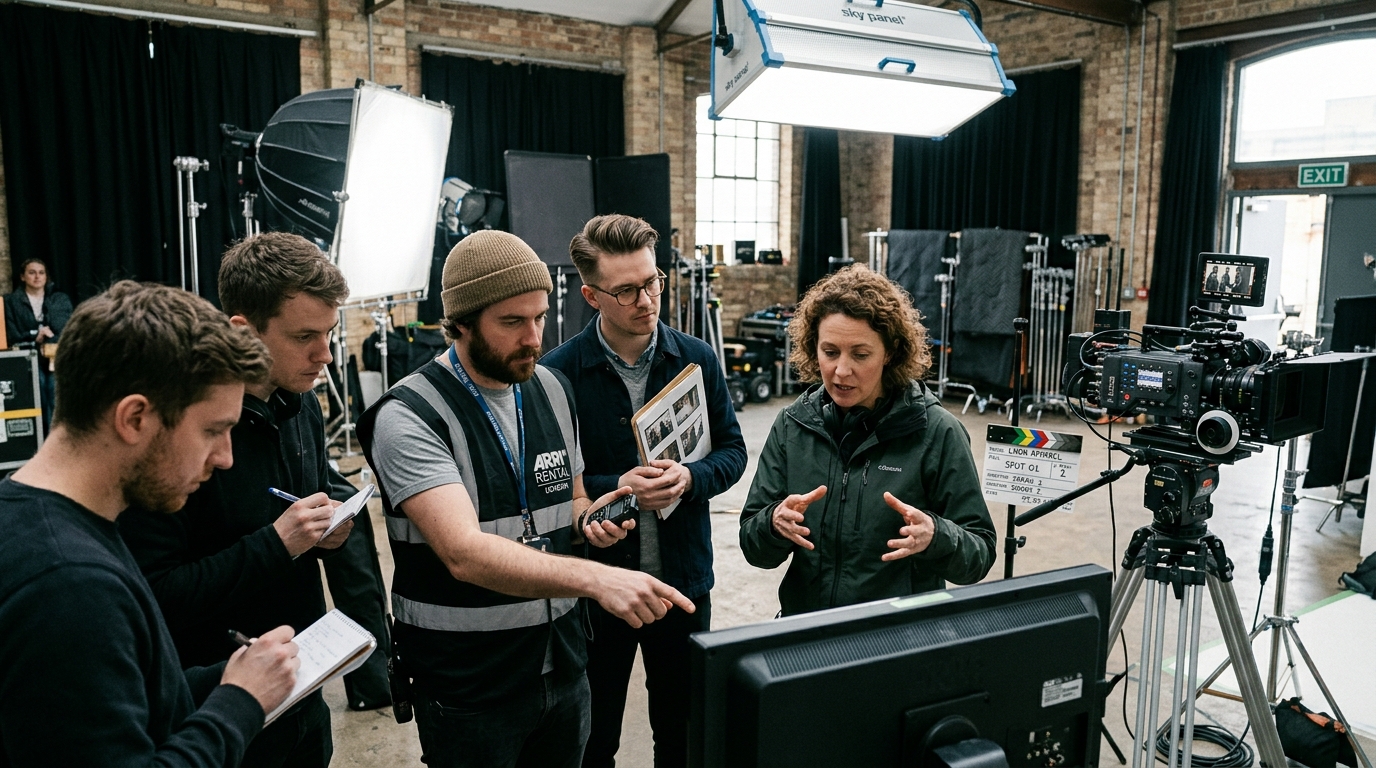
The fundamental commercial distinction between unit stills photography and BTS photography is the subject of the images. Unit stills photography documents the content of the production: the characters, scenes, and story. BTS photography documents the process of the production: the crew, the creative decisions, the environment, the human effort behind the finished work. Both are commercially valuable. They serve different audiences and different purposes, and neither replaces the other.
As Bernardson Photography’s guide to production photography and its multi-channel commercial value1, behind the scenes photography from a film or branded content production creates content assets that the finished production itself cannot generate. An audience watching the finished film sees the story. An audience engaging with BTS photography sees the people, the craft, and the creative decisions behind the story. That second layer of engagement builds a qualitatively different and commercially significant connection between the audience and the production that directly affects viewing numbers, sharing behaviour, and long-term brand affinity for the production company, the brand, or both.
The specific content assets that BTS photography production creates include:
- Social media content that performs during the production window. The weeks between a production announcement and a release are a critical audience engagement window. BTS photography is the primary content type that fills that window with material the audience wants to engage with. A teaser image of the director and principal talent on set generates engagement that no amount of copy or designed graphics can replicate, because it is real, it is exclusive, and it communicates genuine behind-the-scenes access.
- Trade press content that communicates industry credibility. Trade publications covering the film and television industry, branded content sector, and advertising industry all use BTS photography to illustrate their features. A production that can provide high-quality BTS images to trade press journalists and editors is a production that gets more coverage, more prominently, than one that can only provide finished content stills.
- Award entry materials. Major industry awards including the D&AD, the Cannes Lions, the Clios, and the BAFTA Craft Awards all accept or require supporting visual materials alongside award entries. BTS photography that documents the creative process, the technical complexity, and the collaborative environment of a production makes an award entry significantly stronger by demonstrating the craft behind the finished work.
- Making-of content for streaming extras and brand channels. Streaming platforms consistently find that audiences engage with making-of extras and behind-the-scenes content. BTS photography provides the visual foundation for this content whether it is published as a photographic essay, used to illustrate a long-read interview, or incorporated into a video making-of feature alongside footage.
The Specific Commercial Benefits of BTS Photography for Brand Productions
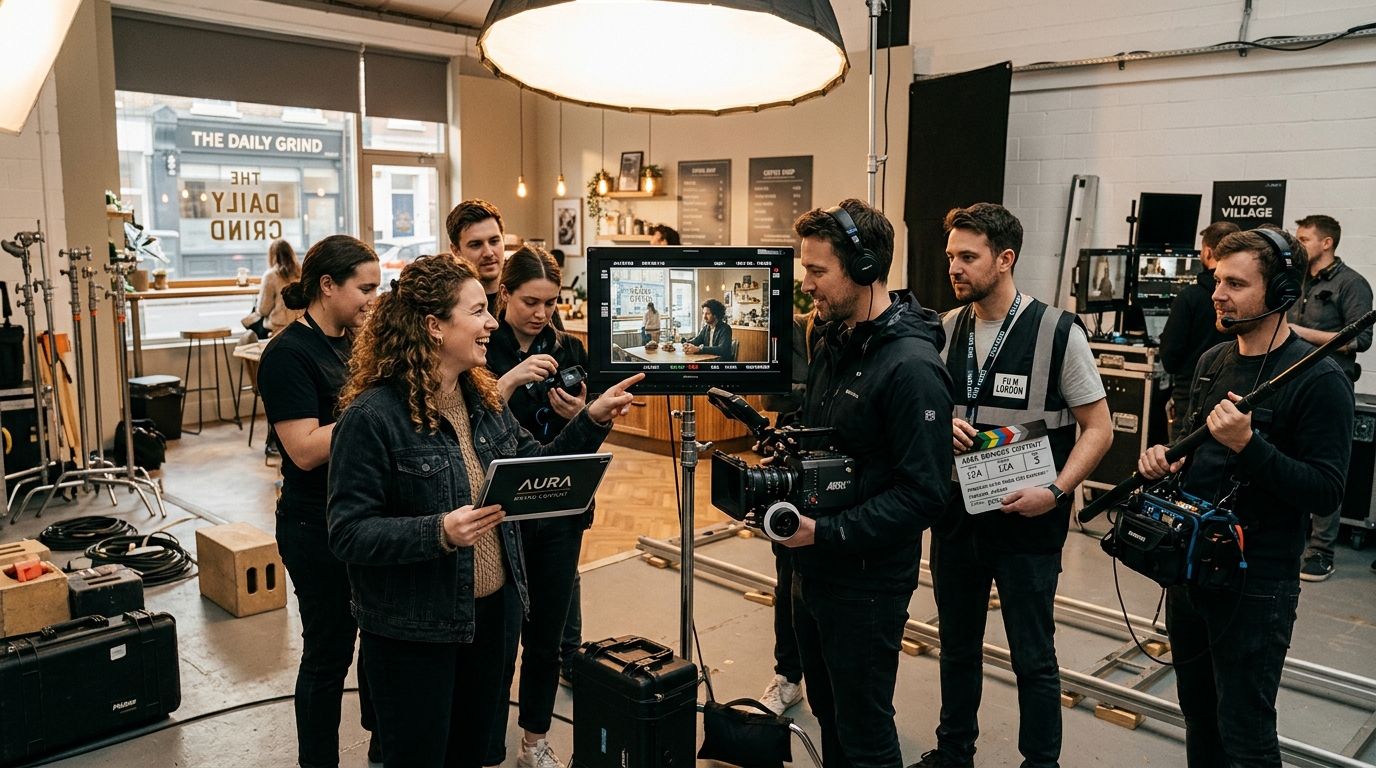
For brand productions specifically, the commercial case for investing in BTS photography is even stronger than for film and television, because a brand’s audience is invested not just in the content but in the brand itself. When a brand shows its audience how its content is made, it is not just building interest in a specific piece of work. It is building trust in the brand as a creative entity that invests seriously in the quality of its communications.
As Retines Photography’s 2025 guide to behind the scenes content and brand audience engagement2, behind the scenes content consistently outperforms finished content in terms of engagement rate on social media platforms, because it satisfies a specific audience curiosity that finished content cannot address: how was this made, and by whom? For London brands that invest in high-production-value content, BTS photography answers both of those questions in a way that reinforces rather than undermines the quality and authority of the finished work.
Building brand credibility through process transparency
A brand that shows its audience the creative process behind its content communications is making a specific and commercially significant statement: we invest in quality, we work with serious creative professionals, and we are confident enough in our craft to show you how it is done. This transparency builds a form of brand credibility that advertising content alone cannot generate, because it is not promotional. It is documentary. Audiences who understand and trust the process behind a brand’s content are more likely to engage with the finished content, share it, and feel a positive association with the brand that produced it.
Content for the team that made it
Every creative director, copywriter, account team member, and production crew person on a branded content shoot wants images from the making of it. These images serve professional portfolios, LinkedIn profiles, and personal records of career-defining work. A brand that provides high-quality BTS photography to the people who made its content builds goodwill within the creative community that produces ongoing commercial value. Creative professionals who have strong BTS images from a brand production share them to their own networks, generating organic reach that a paid media campaign cannot replicate. I have seen single BTS images from a well-run brand production reach tens of thousands of views organically through the networks of the crew alone.
Internal communications and stakeholder reporting
For brands with internal stakeholders who need to understand and appreciate the investment made in a production, BTS photography provides the visual evidence that makes a post-production report compelling rather than merely descriptive. A board presentation about a major brand campaign is more persuasive with BTS photography that communicates the scale, professionalism, and creative ambition of the production than it is with a written summary and the finished video alone. The BTS images are the evidence that the investment was made at the level the budget represented.
How BTS Photography Differs from Unit Stills Photography on a Production
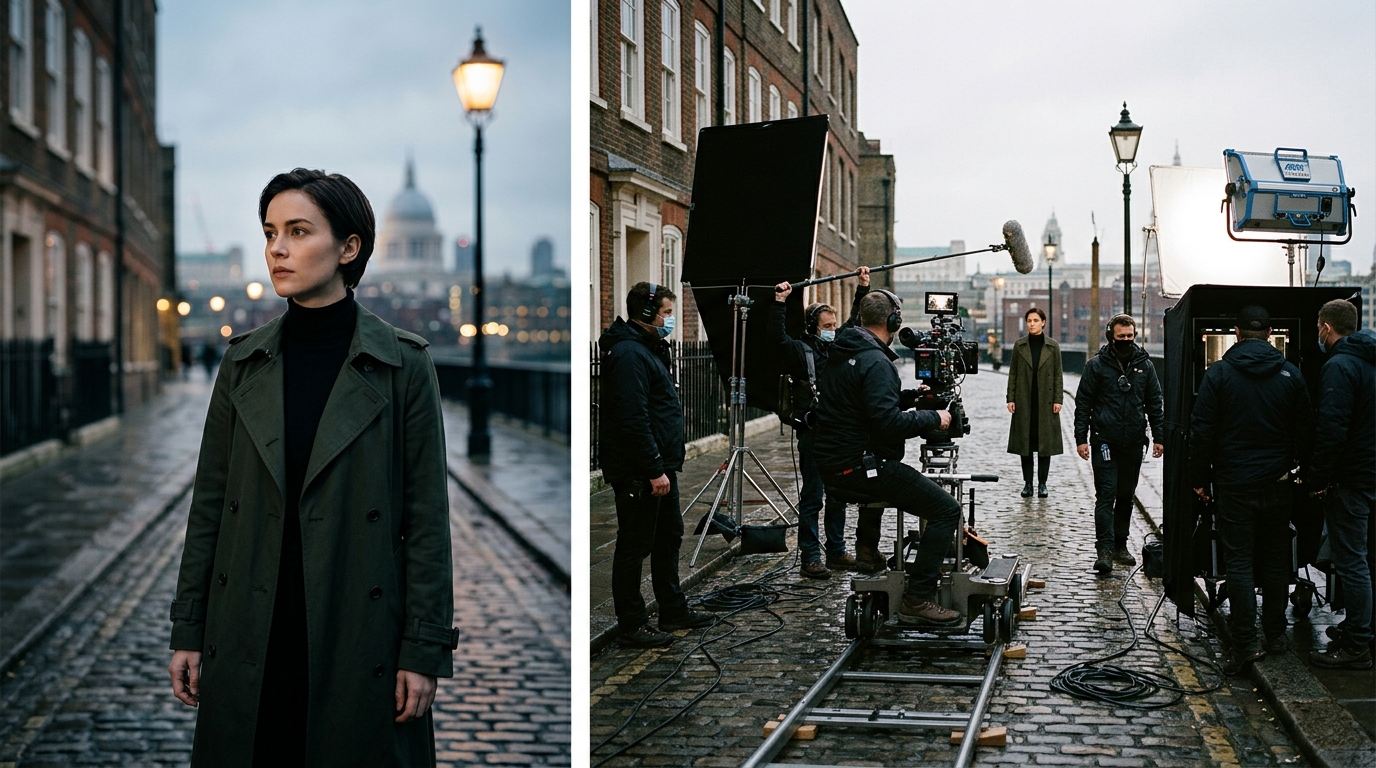
The distinction between unit stills photography and BTS photography is one that most productions either misunderstand or collapse entirely, typically by assigning both to the same person with a single brief that serves neither well. Understanding the distinction is the first step toward commissioning both correctly.
As Social Tables’ guide to production photography roles and their distinct outputs3, unit stills photography and BTS photography require different creative approaches, different working methods, and different equipment configurations, even when they are executed by the same photographer on the same production. Treating them as a single role with a single brief consistently produces a library that does neither job well.
The specific differences between the two disciplines in a production context:
- Subject matter. Unit stills photography documents what the production is: the characters, scenes, and story world. BTS photography documents how the production works: the crew, the equipment, the creative decisions, and the human process. Both are valuable but they serve different audiences and different commercial purposes.
- Working position. A unit stills photographer positions themselves to capture the action being filmed, typically at the edge of the filming frame using a long lens. A BTS photographer positions themselves to capture the production environment as a whole, typically at a wider angle that includes the crew, the equipment, and the full context of the set. The two positions are often incompatible from a single camera, which is why large productions use two separate photographers.
- The subject’s awareness of the camera. Unit stills photography works best when the talent is unaware of the stills camera, preserving the authenticity of the performance moment being documented. BTS photography often benefits from the crew being aware of and comfortable with the photographer’s presence, because BTS images of crew members caught in genuine moments of creative collaboration are among the most commercially valuable outputs of the discipline.
- Post-production and delivery. Unit stills images are selected for technical quality and promotional suitability, processed to a high standard, and delivered for press and platform use. BTS images are selected for storytelling quality and authentic feel, processed to preserve their documentary character, and delivered for social media, making-of content, and trade press use. The editing aesthetic for each discipline is different and applying the same post-production approach to both produces a library where neither looks as it should.
How to Commission BTS Photography Correctly on Your Next Production
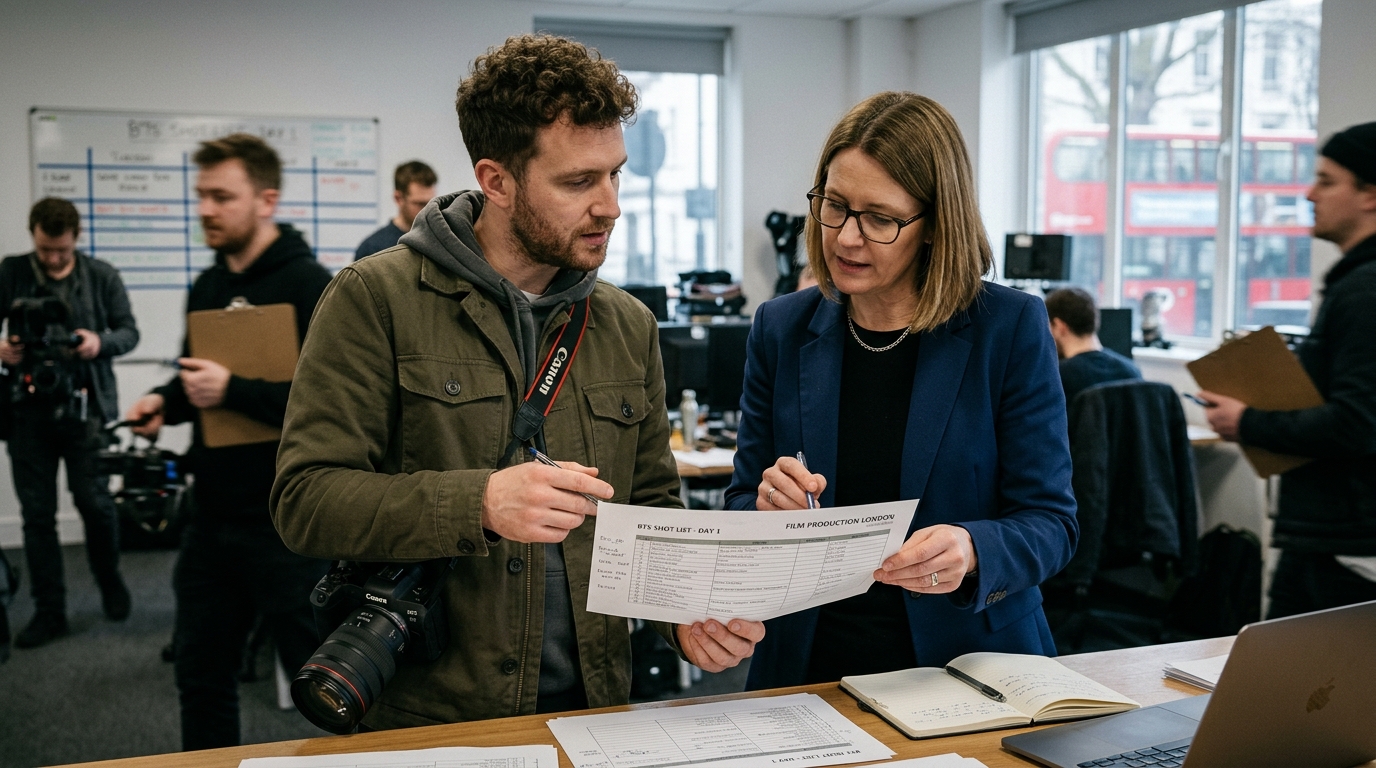
In practice, the productions that get the most from their BTS photography investment are those that treat the BTS photographer as a creative collaborator in the production rather than as a peripheral presence whose job is to stay out of the way. The brief for a BTS photographer is not simpler than the brief for a unit stills photographer. It is different. And getting it right requires thinking specifically about what the BTS content needs to achieve.
As Neurapix’s guide to commissioning BTS photography for film and branded content productions4, the most commercially valuable BTS libraries come from productions where the photographer has been briefed on the specific content the brand or production company needs for each intended output channel, rather than being given a general instruction to document the making of the production. The specific briefing elements that determine the quality of a BTS commission include:
- The social media content plan and format requirements. If the production’s social media team has a specific posting schedule during the production window, the BTS photographer should know which moments in the shoot will produce the most engaging content for each planned post. A production shooting a key scene on a specific day that the social team intends to tease should brief the BTS photographer to prioritise that scene.
- The trade press targets and their visual requirements. If the production intends to pitch a making-of feature to a specific trade publication, the BTS photographer should know which publication is being pitched and what its visual standards are. A Variety feature has different image requirements from a Campaign brief or a Shots feature. The photographer can compose images accordingly rather than delivering a library that does not meet the specific publication’s needs.
- Key creative personnel who should be prominently documented. The director, the director of photography, the production designer, the key talent, the agency creative director, and the brand client are all individuals whose presence in BTS photography serves specific commercial purposes. Naming them in the brief and indicating their role ensures the photographer treats them as priority subjects rather than background elements.
- The award entry plan. If the production intends to submit for industry awards, the BTS photographer should be aware of which awards programmes are being targeted and what visual materials those programmes typically accept alongside entries. A D&AD submission benefits from different BTS imagery than a Cannes Lions submission, and knowing the target allows the photographer to produce the most relevant documentary material during the production.
Frequently Asked Questions
Does every production need a dedicated BTS photographer or can the unit stills photographer cover both?
On larger productions, separating the roles consistently produces better output in both categories. A unit stills photographer who is also trying to document the production environment is a photographer who is frequently in the wrong position for both disciplines simultaneously. On smaller productions and shorter brand shoots, a single experienced photographer who understands both disciplines and is briefed clearly on the priority outputs for each can cover both effectively. The key is the brief. A photographer given a combined brief that distinguishes clearly between unit stills priorities and BTS priorities can make intelligent creative decisions about which role to inhabit at each moment in the shoot day. A photographer given a generic instruction to cover everything typically produces a library that satisfies neither requirement.
How much BTS content does a typical production generate?
A full-day production shoot with a dedicated BTS photographer typically generates a library of between eighty and one hundred and fifty edited images, depending on the scale of the production and the number of distinct creative moments and environments documented. For a multi-day production, each shoot day produces its own selects, with a final comprehensive library delivered at the end of principal photography. For branded content shoots of half a day to one day, a selects library of thirty to sixty images is typically sufficient to support the social media, trade press, and internal communications requirements of most brand content productions.
Is BTS photography only relevant for film and television or does it work for events too?
BTS photography is equally relevant and commercially valuable for large events as it is for film and television productions. A major corporate conference, an awards ceremony, or a brand activation all have a production process: the setup, the technical infrastructure, the preparation of the speakers and presenters, the crew working to make the event happen. Photography of this production process serves the same commercial purposes as BTS photography on a film set: it communicates the scale and quality of the investment, builds audience connection, and provides content that the event itself cannot generate. As Photier’s 2025 guide to BTS photography across production and event contexts5, the commercial logic of BTS photography applies to any context where a professional production process is taking place and where the audience has genuine curiosity about how the finished work or event was created.
What is the best approach to BTS photography for a one-day brand shoot?
For a one-day brand shoot, the most effective approach is to brief the BTS photographer with a specific list of social media posts that the brand intends to publish during or immediately after the shoot, and to ask the photographer to produce images that serve each planned post rather than a general documentary library. This reverses the typical workflow, starting from the content output rather than the production input, and produces a BTS library that is immediately deployable rather than requiring editorial selection and adaptation before it can be used. It also ensures the photographer prioritises the moments most likely to produce commercially useful content rather than distributing their attention equally across the full shoot day.
How should BTS photography be credited when used in press and social media?
Credit requirements for BTS photography vary by context and should be agreed in the commission contract before the shoot. For press and editorial use, a photographer credit is standard practice and typically required. For social media use by the production company or brand, credit conventions vary by platform and by the terms of the commission. For internal communications use, credits are typically not required. The most common approach is to agree a standard credit line with the photographer before the commission begins, include it in the image metadata delivered with the library, and apply it consistently across editorial uses. Browse the full unit stills and BTS photography portfolio at eventphotographer.photos, then get in touch via the contact page to discuss your production’s BTS photography requirements.
Commission BTS Photography for Your London Production
The productions that build the strongest audiences and the most durable industry credibility are those that understand the distinction between the work they are making and the story of how they are making it. Behind the scenes photography is how that second story is told. It is the content that turns a production into a creative event rather than a finished deliverable, and it is the content that keeps working for months after the production itself has been released.
Joel Knight is a London-based photographer covering unit stills, BTS, and film production photography for film, television, and branded content productions across London and the UK. Browse the full unit stills and BTS photography portfolio, the editorial and PR photography portfolio, and the conference photography portfolio at eventphotographer.photos, then get in touch via the contact page to discuss your production.
REFERENCES & CITATIONS
One citation per H2 section. Inline anchor text is a live hyperlink. Superscript number is plain text beside it. All links open in a new tab in WordPress.
- Bernardson Photography (2025). Production Photography and Its Multi-Channel Commercial Value: BTS as a Distinct Content Asset. bernardson.com. Cited in H2 Section 1. [Behind the scenes photography from a film or branded content production creates content assets that the finished production itself cannot generate, building a qualitatively different and commercially significant connection between the audience and the production.]
- Retines Photography (2025). Behind the Scenes Content and Brand Audience Engagement: BTS Photography Outperforming Finished Content. retines.fr. Cited in H2 Section 2. [Behind the scenes content consistently outperforms finished content in terms of engagement rate on social media platforms because it satisfies a specific audience curiosity that finished content cannot address.]
- Social Tables (2025). Production Photography Roles and Their Distinct Outputs: Unit Stills vs BTS Photography. socialtables.com. Cited in H2 Section 3. [Unit stills photography and BTS photography require different creative approaches, different working methods, and different equipment configurations even when executed by the same photographer on the same production.]
- Neurapix (2025). Commissioning BTS Photography for Film and Branded Content Productions: Channel-Led Briefing. neurapix.com. Cited in H2 Section 4. [The most commercially valuable BTS libraries come from productions where the photographer has been briefed on the specific content needed for each intended output channel rather than given a general instruction to document the making of the production.]
- Photier (2025). BTS Photography Across Production and Event Contexts: The Commercial Logic Applied Beyond Film. photier.com. Cited in H2 Section 5 FAQs. [The commercial logic of BTS photography applies to any context where a professional production process is taking place and where the audience has genuine curiosity about how the finished work or event was created.]