
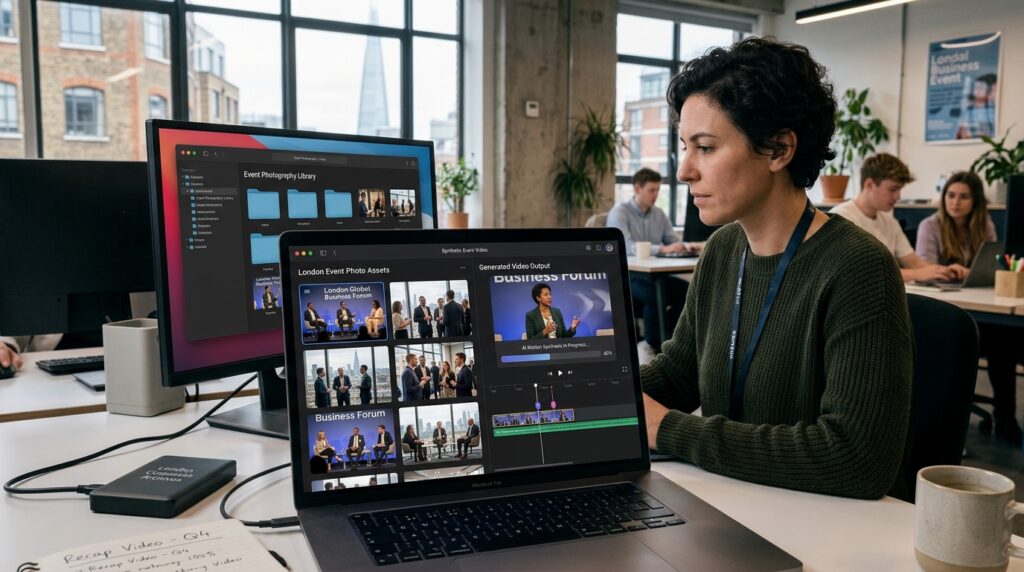
The short answer is yes. The longer answer, which is the one that actually helps you decide whether to do it, involves understanding what the output looks like, what quality of photography it requires to work well, what the AI tools are actually doing to produce the motion effect, and where the result performs and where it does not. I have produced AI video from event photography libraries for London clients across conferences, awards evenings, and brand productions, and the difference between a commission that produces genuinely useful social content and one that produces something the client was embarrassed to publish almost always comes down to the quality of the source photography and the creative intelligence applied to the selection and sequencing process.
This guide covers everything a London event organiser, marketing manager, or communications lead needs to know before commissioning AI video from event photos, including how the technology works, what the output actually looks like in practice, what the photography requirements are, and which distribution channels it serves most effectively.
How AI Turns Event Photography Into Video Content
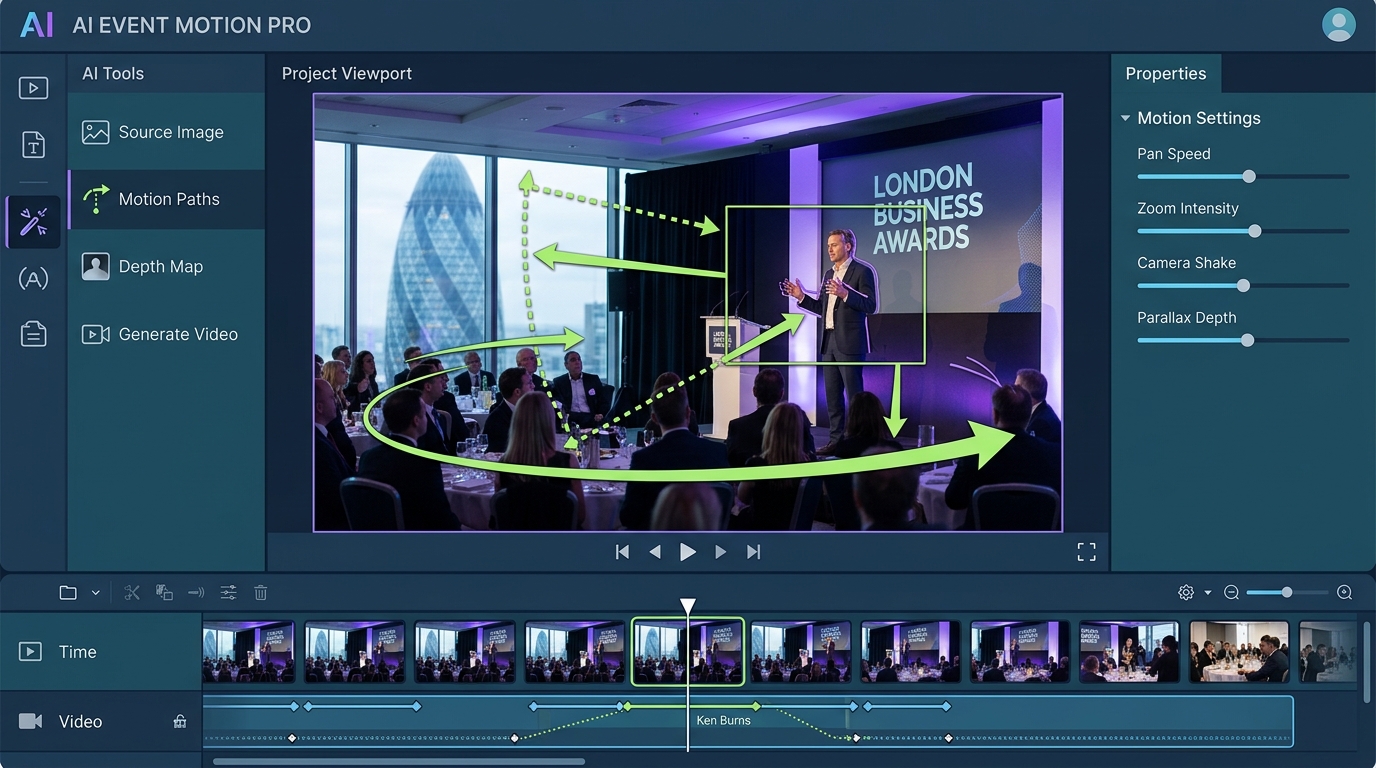
The process by which AI converts still photographs into video content involves several distinct technical operations happening in sequence. Understanding what each step does makes it much easier to brief the process correctly and to understand why the quality of the source photography is so consequential to the quality of the output.
Photier’s 2025 guide to AI photo-to-video technology and its event content applications1, the AI tools that produce video from still photographs use a combination of computer vision analysis, generative motion synthesis, and audio synchronisation to create the impression of a professionally edited video from a set of static images. The specific technical steps involved are:
Image analysis and content recognition
The AI first analyses each photograph in the library to understand its content: identifying faces, determining the compositional structure of the image, assessing the visual complexity, and mapping the areas of the frame that contain the most visually significant information. This analysis informs the motion effect that will be applied to each image, because the AI generates movement that draws the viewer’s eye toward the most significant content in the frame rather than moving randomly across the image surface.
Motion synthesis and camera simulation
Once the AI has analysed the image content, it generates a simulated camera movement across each still image. This is commonly called the Ken Burns effect after the documentary filmmaker who popularised the technique, though modern AI tools apply it with significantly more sophistication than simple pan and zoom. The AI can generate smooth parallax effects that simulate depth in a flat image, subtle zoom movements that create a sense of anticipation or arrival, and lateral pans that reveal the width of a scene gradually rather than presenting it all at once. The result, when the source photography is strong enough, is a motion sequence that feels like it was captured with a moving camera rather than assembled from static frames.
Sequencing and narrative structure
The AI then sequences the individual motion clips into a coherent narrative structure, applying transitions between images that reflect the visual relationship between adjacent frames. A transition from a wide room shot to a close portrait might use a gradual zoom-in that preserves visual continuity. A transition between two unrelated moments might use a cut that the AI times to a beat in the accompanying music. The sequencing logic used by AI tools varies significantly between providers, and this is one of the areas where human creative involvement in the process makes the most difference to the quality of the finished output.
Audio synchronisation and music integration
The final step is synchronising the visual sequence to an audio track. AI tools can analyse music for its rhythmic structure, identifying beat points and building the visual sequence so that transitions and motion effects align with the music’s energy and tempo. For event highlight content, this synchronisation is what gives the finished video its emotional impact: the combination of strong event photography, smooth AI motion effects, and music timed precisely to the visual rhythm produces content that feels professionally produced rather than automatically assembled.
What Makes a Photography Library Suitable for AI Video Conversion
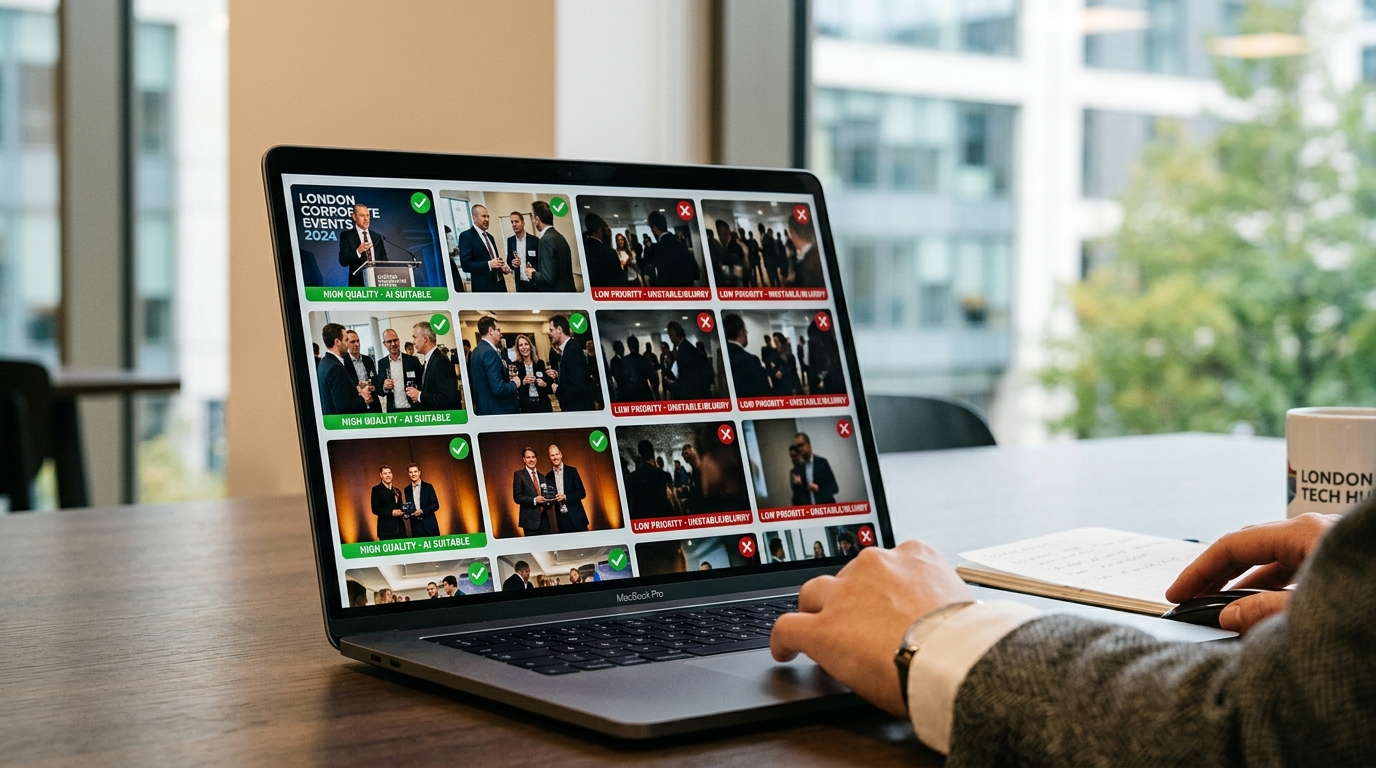
The quality of the finished AI video is determined more by the quality of the source photography than by any other single factor. This is the most important thing to understand before commissioning AI video from an event photography library, and it is the consideration that most directly affects whether to invest in the process or to commission professional event photography and video simultaneously from the start.
Bernardson Photography’s guide to source material quality and its effect on AI video output2, the minimum photography quality requirements for AI video conversion that produces genuinely commercial output are significantly higher than those for standard event photography use. Images that look acceptable in a static gallery or on a website may not contain the visual resolution, compositional depth, or dynamic range that AI motion synthesis requires to produce smooth and professional-looking video. The specific photography characteristics that determine AI video suitability include:
Image resolution and technical quality
AI motion synthesis requires images with sufficient resolution to support the zoom and crop operations that simulate camera movement without the image becoming visibly pixelated during the motion. A professional event photography library produced at full resolution on a modern mirrorless camera system provides more than enough resolution for AI video production at social media output dimensions. A library of compressed, downsized, or low-resolution images will show visible quality degradation during motion effects, particularly during zoom operations, and will not produce output that looks professionally produced. This is a specific reason why the photography brief for an event where AI video is planned should specify maximum resolution delivery rather than web-optimised files.
Compositional variety and visual range
A strong AI video from photos requires a photography library that contains significant compositional variety: wide room shots that establish context, mid-range images that capture groups and interaction, close portrait crops that create emotional intimacy, and detail shots that add visual texture. A library of images that are all composed at the same framing and distance produces an AI video that feels repetitive and monotonous regardless of the motion effects applied. The event photographer should be briefed to prioritise compositional variety if AI video production from the library is planned, because the same images that serve a static gallery or press pack well may not contain the range of visual information that an AI video narrative requires.
Lighting quality and dynamic range
The motion effects applied by AI tools create dynamic changes in the apparent lighting of an image as the virtual camera moves across it. Images lit with flat, even lighting that contains no shadow or highlight variation look static and uninspiring when AI motion is applied because the motion reveals no new visual information. Images with strong directional lighting, visible depth, and a range of tones from shadow to highlight create dynamic and visually engaging motion sequences because the virtual camera movement reveals different aspects of the lighting as it travels across the frame. Professional event photography lit with strong directional light consistently produces better AI photo to video output than photography produced under flat overhead event lighting, which is one of the reasons why investing in a photographer who understands light produces a more versatile asset library than one who simply documents what is in front of them.
The Channels Where AI Event Video Performs Most Effectively
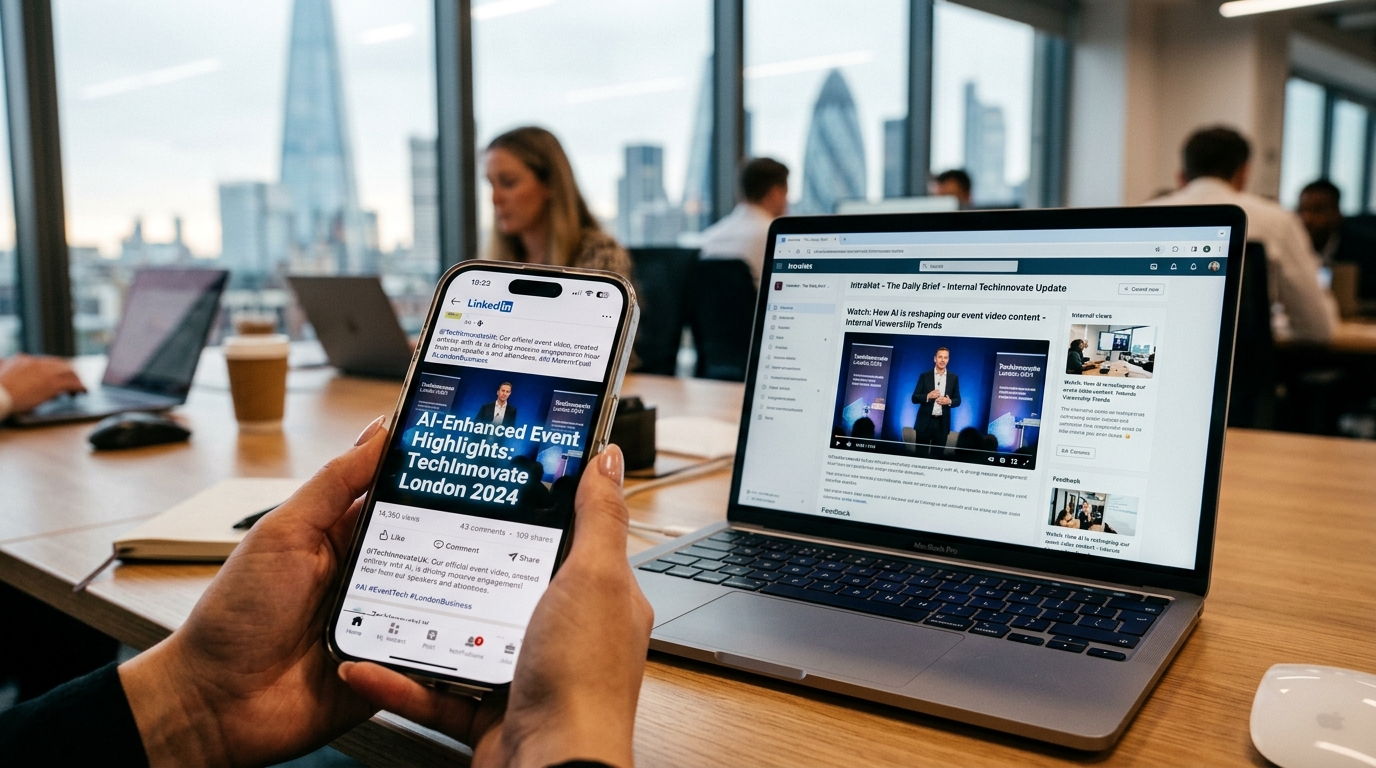
Not every distribution channel is equally well-suited to AI video from event photography. Understanding which channels it serves most effectively is what allows a marketing or communications team to plan the AI video commission around genuine content needs rather than producing content that does not perform in the contexts it ends up in.
Retines Photography’s 2025 guide to AI event video content and its social media performance3, AI video produced from event photography consistently outperforms static photography galleries in engagement rate on social media platforms, and performs comparably to traditionally produced event video in most social media contexts where the primary distribution format is a sixty to ninety second clip. The specific channels and contexts where AI event content creation from photography delivers the strongest commercial return include:
- LinkedIn event recap posts. A sixty to ninety second highlight video posted to LinkedIn in the day or two following a corporate event reaches the event audience while they are still engaged with the experience, and reaches a wider professional audience that was not present but is interested in the content. LinkedIn’s algorithm consistently favours video content over static images, and AI-produced event highlight video performs equivalently to traditionally produced highlight reels in terms of the platform engagement metrics that determine organic reach.
- Instagram Reels and Stories. The short-form vertical video format of Instagram Reels is well-suited to AI video from event photography because the motion effects and music synchronisation that AI tools apply are optimised for the fast-paced, visually dynamic character of short-form social video. A thirty to sixty second Instagram Reel produced from a set of strong event photographs with AI motion effects and synchronised music is indistinguishable from a traditionally produced short-form event video in the typical Instagram viewing context.
- Internal communications and intranet. An AI-produced highlight video from a company all-staff conference or awards evening posted to the corporate intranet on the day of the event engages the internal audience while the event energy is fresh. Internal audiences are less critically evaluative of production standards than external audiences, which means AI video from photography performs very well in internal communications contexts even when the source photography is not at the highest end of the quality range.
- Event recap email newsletters. A short AI video embedded in or linked from a post-event recap email consistently generates higher click-through rates than a static image or a text-only recap. For organisations with email audiences of existing clients, partners, or community members, AI event video provides a compelling reason to open and engage with post-event communications rather than archive or delete them.
• Channels where AI video is less effective. AI video from photography is not the right choice for formal presentations, broadcast or television contexts, award submissions requiring full-resolution original footage, streaming platform content, or any context where the audience is specifically expecting live-capture video with audio. In these contexts, the absence of authentic movement and sound within the footage is immediately apparent and the AI motion effects communicate a production shortcut rather than a deliberate creative choice.
How to Commission AI Video From Your Event Photography Library
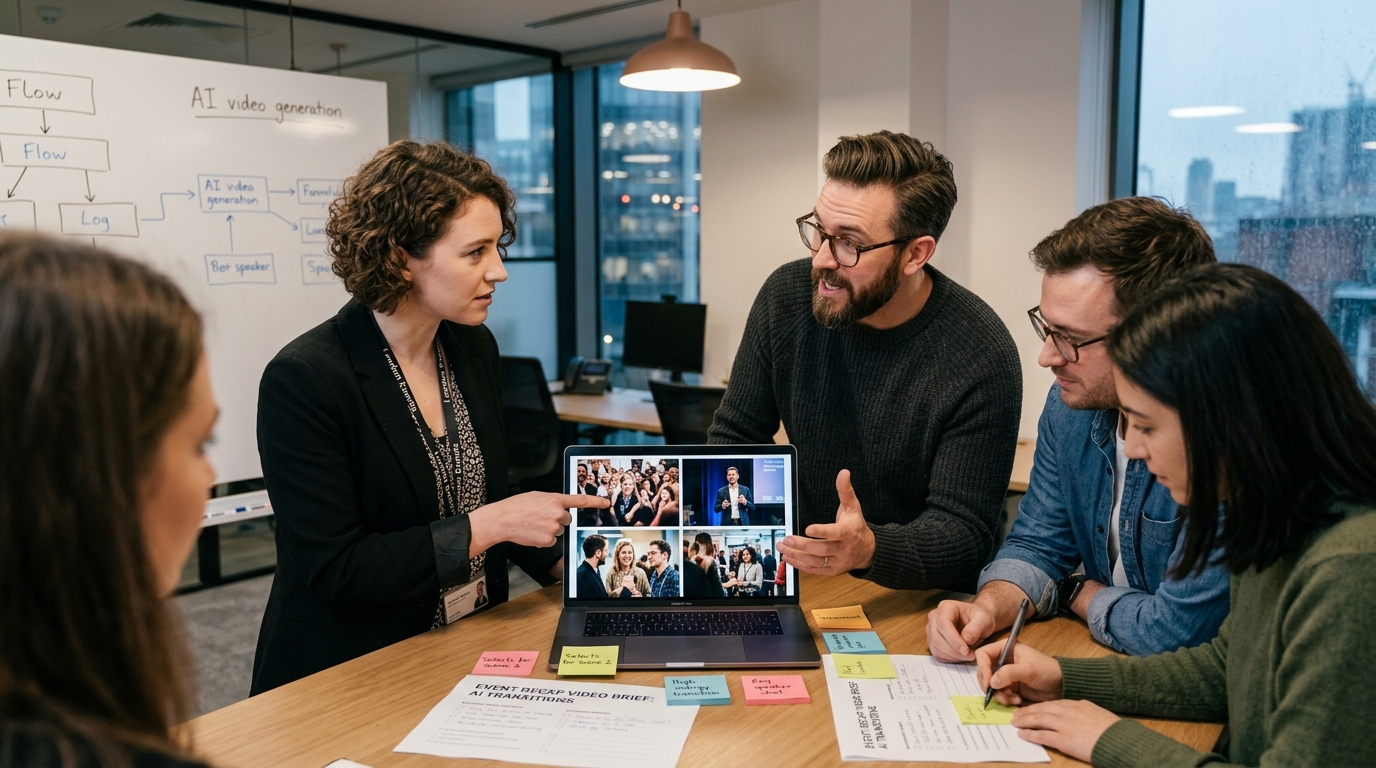
Commissioning AI video from an event photography library is a significantly more straightforward process than commissioning traditional video production, but it is not without creative decisions that meaningfully affect the quality of the output. The most consistent mistake in AI video commissions from photography is treating it as a purely automated process and providing the full unedited photography library without any creative direction about which images to use, in what order, and for what narrative purpose.
Neurapix’s guide to commissioning AI video from event photography: brief and selection requirements4, the quality of an AI video commission from event photography is directly proportional to the quality of the image selection that feeds the process. An AI tool fed a curated selection of the twenty to thirty strongest images from an event, chosen for compositional variety, lighting quality, and narrative coherence, produces output that is commercially strong. The same AI tool fed the complete unedited library of two hundred images produces output that is mechanically assembled and lacks the editorial intelligence that makes the difference between content that performs and content that is posted once and forgotten. The specific elements of an effective AI video brief from a photography library include:
- A curated image selection rather than the full library. Before handing the photography library to an AI video producer, select the twenty to forty images that represent the event most compellingly. The selection should include a range of wide establishing shots, mid-range group and interaction images, and close portrait crops. It should tell the story of the event with visual variety and emotional range. The AI tool sequences these images into a video. The human creative decision about which images to include is what determines the quality of the narrative.
- A clear brief on the intended platform and video format. The AI production workflow is adapted based on the distribution platform the video will primarily appear on. LinkedIn video performs best at a sixteen by nine landscape aspect ratio with a duration of sixty to ninety seconds. Instagram Reels require a nine by sixteen vertical format at thirty to sixty seconds. Internal communications may use a wider range of formats. Specifying the primary platform before production begins ensures the output is correctly formatted for its intended context rather than requiring reformatting after delivery.
- A narrative structure or emotional arc for the edit. The most effective AI videos from event photography have a deliberate emotional structure: an opening that establishes the scale and context of the event, a middle section that captures the key moments and the energy of the occasion, and a close that communicates the positive outcome or the sense of achievement the event produced. Communicating this structure to the AI video producer before production begins produces a video with genuine narrative momentum rather than a mechanical slide show with motion effects applied.
• Music selection or direction. The music track applied to an AI event video has a more significant effect on the emotional impact of the finished content than almost any other single creative decision. The tempo, energy, and emotional register of the music shapes how the viewer experiences the imagery. Providing specific music direction, whether by naming a track, describing the desired energy level, or identifying comparable examples of event video content with music that works well, produces significantly better results than leaving the music choice entirely to the AI tool or the production provider.
Frequently Asked Questions
How long does it take to produce AI video from event photography?
For a curated selection of twenty to thirty event photographs, AI video production typically takes between two and four hours from image submission to finished content, depending on the complexity of the edit, the number of platform formats required, and the level of human creative review applied to the AI output. For events where same-day social content is a priority, a pre-selected image set submitted to the AI video producer during the event itself, while photography is still being shot, can produce finished content within a few hours of the event ending. The critical path item is almost always the image selection, not the AI production itself.
Is AI video from photos obviously different from real video footage?
In social media contexts, where the majority of viewers are watching on phone screens at a relatively small display size, AI video from high-quality event photography is typically not distinguishable from traditionally shot event video by the average viewer. The motion effects, when applied to strong photography with genuine visual depth and professional lighting, simulate real camera movement convincingly enough that the distinction is not apparent in the typical social media viewing experience. In larger screen contexts, on a television, a presentation display, or a cinema screen, the absence of authentic motion within the frame becomes more apparent and the AI-produced quality is distinguishable from live-captured video by a perceptive viewer. The practical implication is to use AI video from photography for social and digital channels and to invest in live video capture for any context where it will be displayed at large scale or in formal broadcast settings.
Can AI video be produced on the day of the event from photographs taken that day?
Yes, and same-day AI video production from event photography is one of the most commercially compelling applications of the technology. The workflow requires the event photographer to transfer a priority image selection to the AI video producer before the event has finished, the producer to complete the AI production workflow during the final hour of the event or immediately after it ends, and the client’s social media team to review and approve the finished content for same-day publication. This workflow requires pre-event planning and clear communication about the image transfer process, but it is entirely achievable for corporate events in London and produces a social content window that traditional production cannot serve. As Social Tables’ guide to same-day event content workflows including AI video production5, same-day AI video from event photography is most reliably achieved when the image selection brief is agreed before the event rather than decided on the day, and when the delivery workflow, approval process, and platform posting access are all confirmed in advance.
What if my event photography library is not strong enough for AI video?
If the photography library from a past event does not meet the quality requirements for effective AI video conversion, there are two practical options. The first is to commission a new photography session that specifically produces a library suitable for AI video, either by scheduling a brand shoot that recreates key aspects of the event in a controlled environment, or by waiting for the next comparable event and briefing the photographer for AI video suitability from the start. The second is to work with what the library contains, accepting that the AI video output will reflect the quality of the source material and may be suitable for internal communications use even if it does not meet the standard required for external publication. A professional AI video producer can review your existing photography library and advise honestly on what the output will look like before any production work is commissioned.
How much does AI video from event photography cost?
AI video production from an existing event photography library is significantly less expensive than commissioning traditional event video production, because it does not require a camera crew on site, eliminates the cost of multi-day video footage editing, and produces a finished deliverable in hours rather than days. The cost of an AI video production from a photography library for a typical London corporate event is a fraction of a traditional event video production. It is more useful to think of it as a post-event content creation service than as a video production in the traditional sense. Specific pricing depends on the number of platform formats required, the length and complexity of the finished video, and the level of creative input involved in the image selection and sequencing. Browse the full AI video production portfolio at eventphotographer.photos to see examples of AI video produced from event photography, then get in touch via the contact page to discuss your photography library and your content requirements.
Commission AI Video From Your Event Photography in London
AI can turn event photos into videos, and when the source photography is strong and the production process involves genuine creative intelligence in the selection and sequencing, the result is social content that performs as well as traditionally produced event video in the channels that matter most for corporate event marketing. The technology is not a substitute for professional event coverage. It is a tool that extends the commercial value of strong event photography into a content format that a significant and growing proportion of social media audiences prefers over static imagery.
Joel Knight offers AI video production from event photography as a standalone post-event content service and as an integrated component of event photography commissions for corporate clients across London. Browse the full AI video production portfolio, the conference photography portfolio, and the corporate and awards photography portfolio at eventphotographer.photos, then get in touch via the contact page to discuss your event.
REFERENCES & CITATIONS
- Photier (2025). AI Photo-to-Video Technology and Its Event Content Applications: Technical Mechanisms of Motion Synthesis. photier.com. Cited in H2 Section 1. [AI tools producing video from still photographs use a combination of computer vision analysis, generative motion synthesis, and audio synchronisation to create the impression of a professionally edited video from a set of static images.]
- Bernardson Photography (2025). Source Material Quality and Its Effect on AI Video Output: Photography Requirements for Commercial Results. bernardson.com. Cited in H2 Section 2. [Minimum photography quality requirements for AI video conversion that produces genuinely commercial output are significantly higher than those for standard event photography use.]
- Retines Photography (2025). AI Event Video Content and Its Social Media Performance: Channel-by-Channel Analysis. retines.fr. Cited in H2 Section 3. [AI video produced from event photography consistently outperforms static photography galleries in engagement rate on social media platforms, and performs comparably to traditionally produced event video in most social media contexts.]
- Neurapix (2025). Commissioning AI Video From Event Photography: Brief and Selection Requirements for Quality Output. neurapix.com. Cited in H2 Section 4. [The quality of an AI video commission from event photography is directly proportional to the quality of the image selection that feeds the process — a curated selection produces commercially strong output; the full unedited library produces mechanically assembled content.]
- Social Tables (2025). Same-Day Event Content Workflows Including AI Video Production: Pre-Event Planning Requirements. socialtables.com. Cited in H2 Section 5 FAQs. [Same-day AI video from event photography is most reliably achieved when the image selection brief is agreed before the event rather than decided on the day, and when the delivery workflow, approval process, and platform posting access are all confirmed in advance.]