
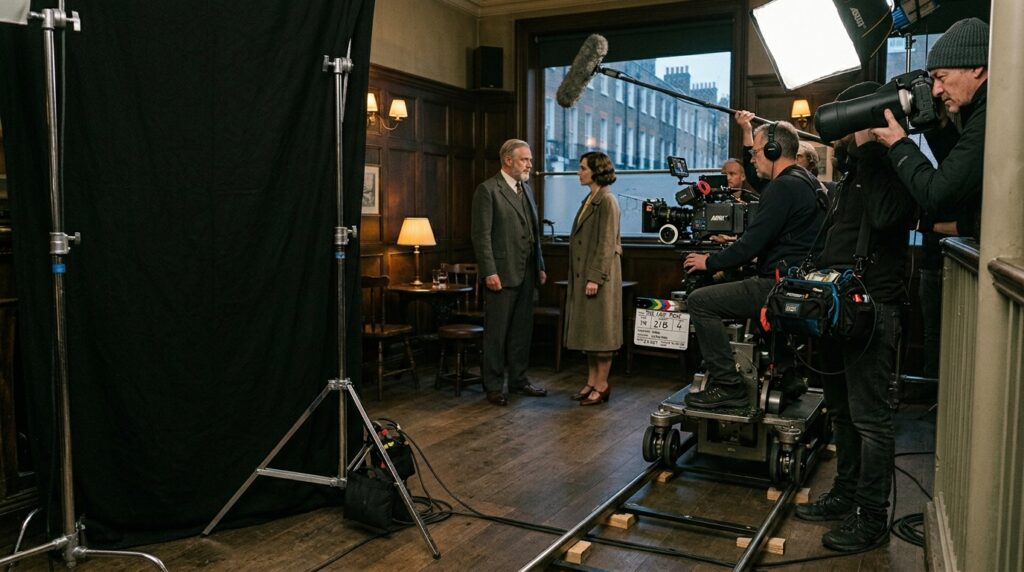
The unit stills photographer is one of the most misunderstood roles on a film or television production. I have been on sets where the director assumed I was there to take promotional photographs of the crew, where the first assistant director expected me to photograph every setup regardless of its promotional value, and where the production manager had booked me without telling anyone else I was coming. The role is specific, the working method is particular, and the output serves purposes that most productions do not fully understand until they need the images and discover they do not have them.
This guide covers exactly what a unit stills photographer does on a film, television, or branded content production, how the role operates within the production environment, what output it produces and who uses it, and what producers and production managers in London need to know before they book one.
The Core Function of a Unit Stills Photographer
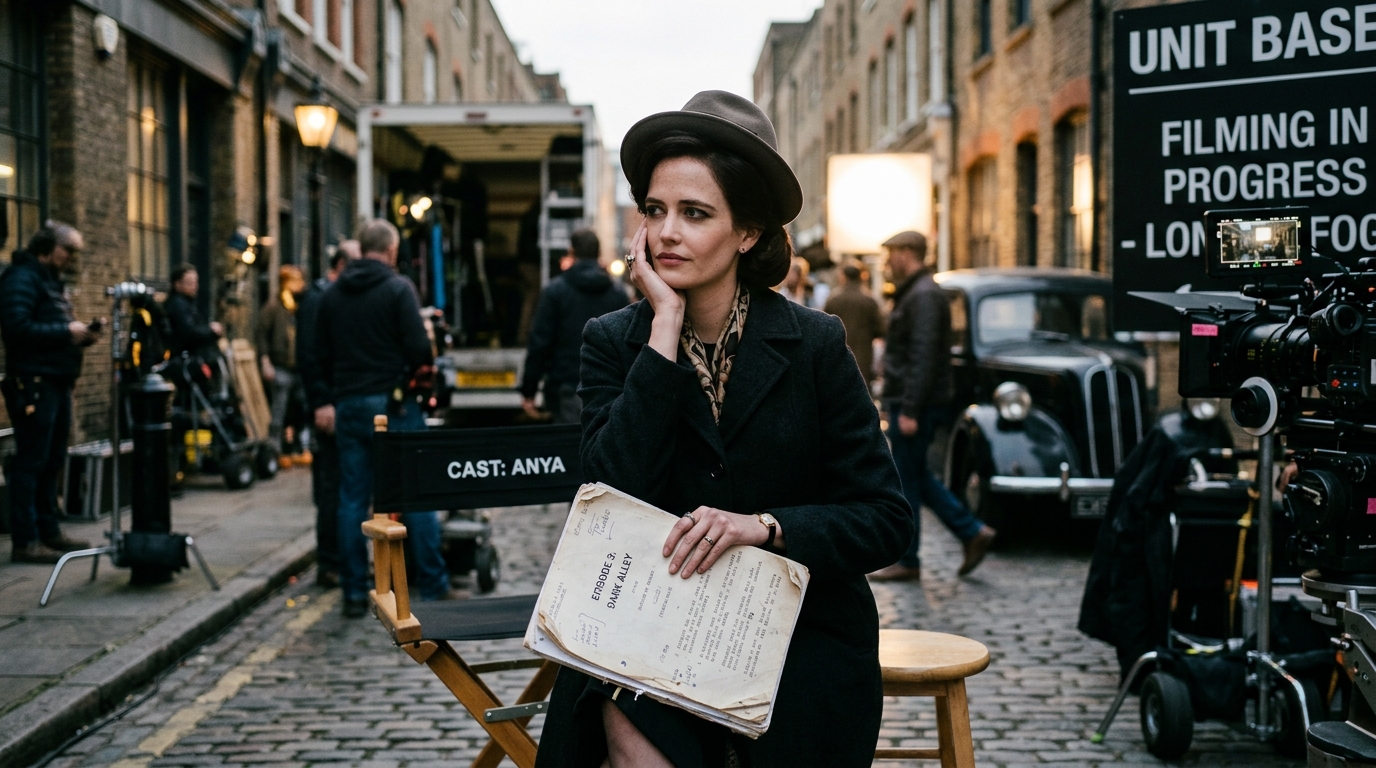
The primary function of a unit stills photographer is to produce images that serve the marketing, publicity, and promotional needs of a film, television, or branded content production. These are not photographs of the production process for its own sake. They are specific, purposefully composed images of characters, scenes, and key moments that will be used in press packs, on streaming platform artwork, in trade publications, on posters, and in the social media campaigns that build an audience before and after a production’s release.
As Bernardson Photography’s guide to production photography and its commercial applications1, the unit stills photographer operates at the intersection of documentary photography, commercial photography, and editorial journalism, producing images that meet the specific visual standards of multiple simultaneous output contexts: a streaming platform’s thumbnail requirements, a trade publication’s editorial standards, a film festival’s press pack specifications, and a social media campaign’s format requirements, all from a single production shoot.
The specific outputs that a unit stills photographer is responsible for producing across a production include:
- Character portraits. Clean, well-lit portrait images of each principal actor or presenter in their character’s costume and makeup. These images are among the most commercially valuable produced on any set because they serve artwork, press packs, publicity materials, casting announcements, and streaming platform profiles simultaneously. They must be composed and lit to meet technical publication standards and to communicate the character’s identity clearly to an audience who has not yet seen the production.
- Scene coverage images. Images that capture specific scenes from the production in a way that communicates the narrative and visual world of the project to an audience that has not seen the finished film or episode. These are not screenshots from the camera feed. They are purposefully composed still images that illustrate the story, the relationships between characters, and the visual aesthetic of the production in a format suitable for press and promotional use.
- On-set atmosphere and production images. Images of the production environment itself: the crew at work, the technical infrastructure of a major production, the scale and complexity of the set design. These serve trade press, industry publications, and behind-the-scenes content for social media and streaming platform extras.
• Promotional and hero shots. Staged promotional images, typically produced during breaks between takes or in dedicated photography sessions, where the principal talent are directed specifically for marketing use. These are the images that become the key art for a production: the poster image, the streaming thumbnail, the press kit cover shot.
How a Unit Stills Photographer Works on Set
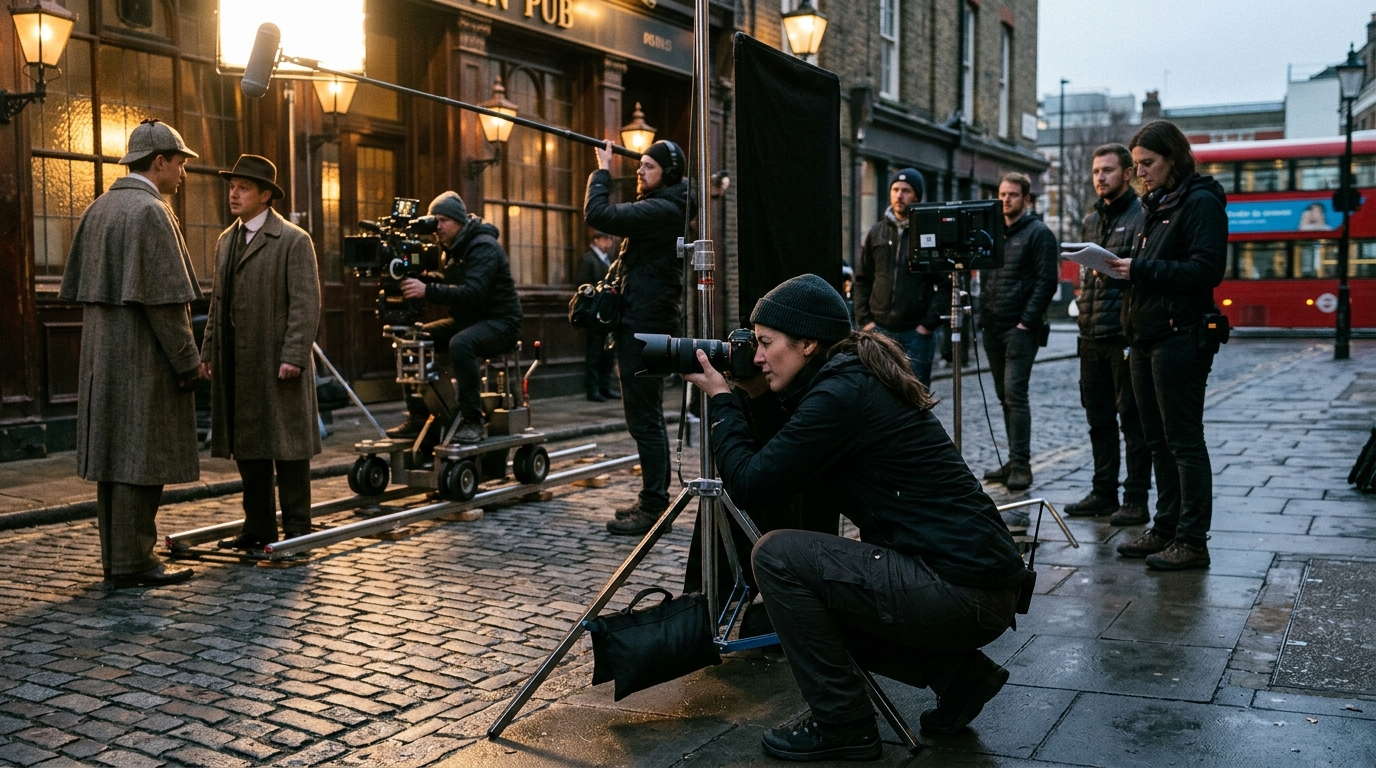
The working method of a unit stills photographer is one of the most distinctive aspects of the role and the one that most distinguishes it from other forms of commercial photography. The fundamental requirement is that the photographer must never disrupt the production. Every creative and logistical decision they make on set is governed by this constraint.
As Retines Photography’s 2025 guide to on-set photography protocol and production integration2, a unit stills photographer who disrupts filming, attracts the attention of talent during takes, or requires the first assistant director to manage their movements is a photographer whose presence on set creates more cost than value. The working method that avoids this requires specific equipment, specific skills, and a specific understanding of production hierarchy and on-set protocol that is not common to all commercial photographers.
Silent shooting during takes
The most fundamental technical requirement of unit stills photography is the ability to shoot during live takes without creating any audible sound that could be picked up by the production’s sound recording equipment. Modern professional mirrorless cameras with fully electronic shutters operate in complete silence, which makes this possible. Earlier generations of DSLR cameras required blimp housings, bulky sound-dampening enclosures that significantly limited the photographer’s mobility. A unit stills photographer working on a contemporary production without a camera capable of completely silent operation is working with equipment that is not fit for purpose in a sound-sensitive environment.
Working within the eyeline rule
One of the most important protocols on any film or television set is the eyeline rule: no one other than the director of photography, the director, and specifically designated crew should be in a position where their presence could attract the attention of a performer during a take. A unit stills photographer must understand and observe this rule consistently. This means working from positions that are outside the talent’s natural field of vision during a take, using long lenses to maintain working distance, and being aware of where the talent’s eyeline is for each setup before positioning themselves to shoot. A photographer who does not understand the eyeline rule will eventually attract the attention of a principal actor mid-take, which stops the production and damages their relationship with the first assistant director and director.
Taking direction from the first assistant director
On a professional film or television production, the first assistant director is the person responsible for managing the set and maintaining the shooting schedule. The unit stills photographer works within the first AD’s authority, which means asking permission before entering areas of the set, checking in during the first AD’s radio communication windows rather than interrupting them, and accepting decisions about when photography is and is not permitted without creating friction. A unit stills photographer who has a good working relationship with the first AD consistently gets better access and better coverage than one who creates management overhead for the AD by behaving as though their needs supersede the production’s.
Identifying and pursuing the promotional priority shots
Not every shot in a production schedule is of equal promotional value. A unit stills photography guide for any production should identify, in advance of the shoot schedule, which scenes contain the most commercially significant promotional moments: the scene that will produce the key art, the moment that defines the character relationship, the visual that will appear on the streaming platform thumbnail. A unit stills photographer who has reviewed the script, discussed priorities with the producer and director, and identified these moments in the schedule can ensure they are in the right position with the right lens at the right time for the most important images of the entire commission.
The Outputs of Unit Stills Photography and Who Uses Them
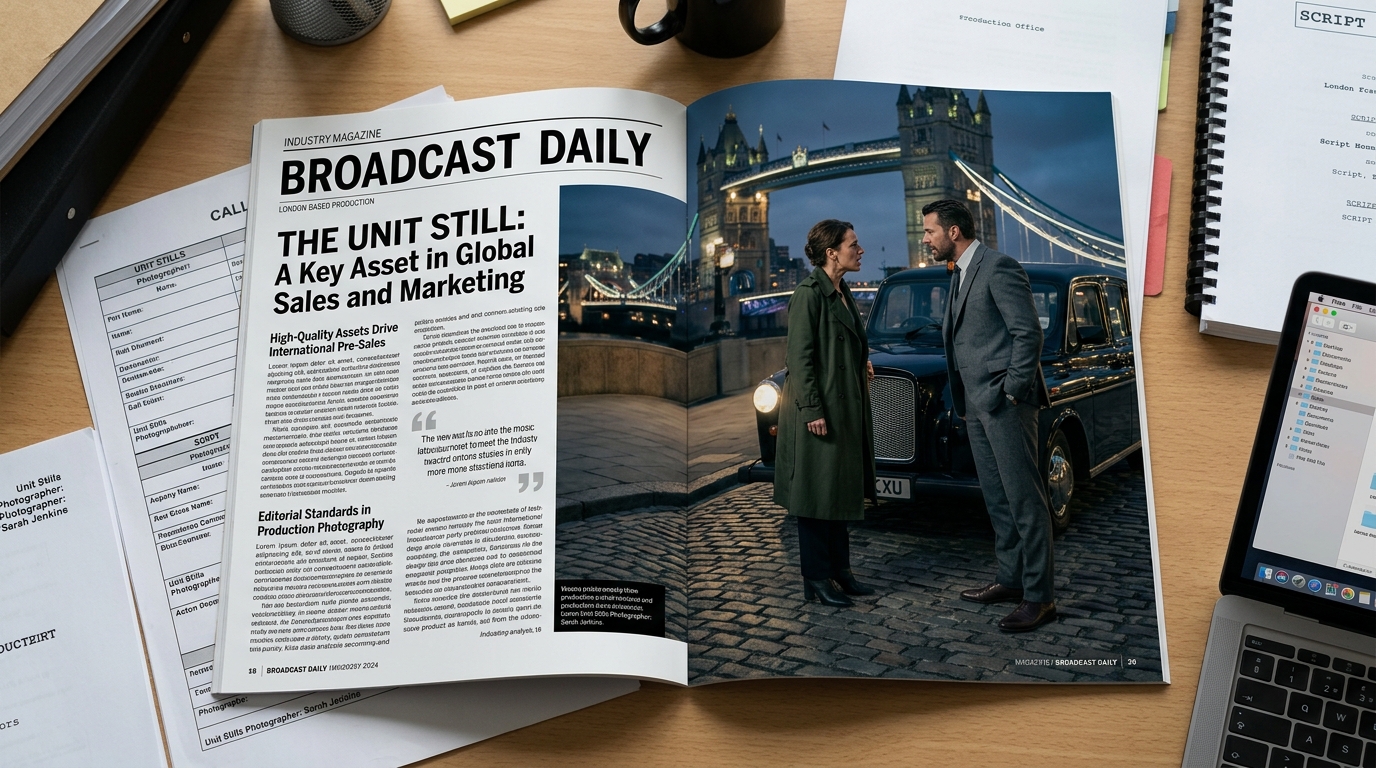
In practice, the images produced by a unit stills photographer serve a wider range of commercial purposes than most producers anticipate when they book the role. Understanding all of the output contexts is what allows a producer to brief the photographer correctly and ensure that every required format is captured during the production rather than discovered as a gap after the shoot.
As Social Tables’ guide to production photography output and its commercial lifecycle3, the commercial lifecycle of unit stills photography output extends significantly beyond the immediate press and marketing launch period. Images from a production continue to be used in anniversary coverage, retrospective features, archive licensing, and streaming platform metadata refreshes for years after the original release. This long commercial lifecycle makes the quality and comprehensiveness of the unit stills library a production asset with a value that compounds over time rather than expiring at release.
Press and publicity materials
The most immediate use of unit stills photography output is the production press pack: the collection of images, character portraits, scene stills, and on-set photographs distributed to journalists, publications, and broadcast media to support the launch of a film, television series, or branded content production. The images in this pack are selected from the unit stills library by the production’s publicist or marketing team. A comprehensive and high-quality unit stills library gives the publicist maximum flexibility in selecting images that serve specific media outlets and publication contexts. A thin or low-quality library forces the publicist to make the best of inadequate material.
Streaming platform artwork and metadata
Streaming platforms including Netflix, Disney Plus, Apple TV Plus, and Amazon Prime Video all require specific image formats for their platform artwork: thumbnail images, hero banners, and character profile images at specific dimensions and resolution. These requirements are published in the technical specifications for each platform and must be met for a production to appear correctly in the platform’s interface. A unit stills photographer who is aware of these specifications can compose images that work at thumbnail scale as well as at full screen, which significantly increases the production’s flexibility when preparing platform assets.
Social media and digital marketing
The social media campaign that accompanies a film or television launch relies heavily on unit stills photography for its image content. Character introduction posts, scene teaser images, behind-the-scenes social content, and the ongoing image feed that maintains audience engagement between a production announcement and its release all draw from the unit stills library. Social media formats require images that work at multiple aspect ratios and at small display sizes, which is a compositional requirement that a unit stills photographer should be aware of when composing images on set.
Trade press and industry communications
The film and television industry has its own press ecosystem of trade publications, industry newsletters, and professional platforms that cover productions from a business and craft perspective rather than a consumer entertainment perspective. Publications including Screen International, Variety, The Hollywood Reporter, and Broadcast magazine all use unit stills photography to illustrate their coverage. These publications have specific visual standards and typically prefer images that communicate the professional quality and scale of a production rather than simply documenting the narrative content.
What Producers Need to Know Before Booking a Unit Stills Photographer
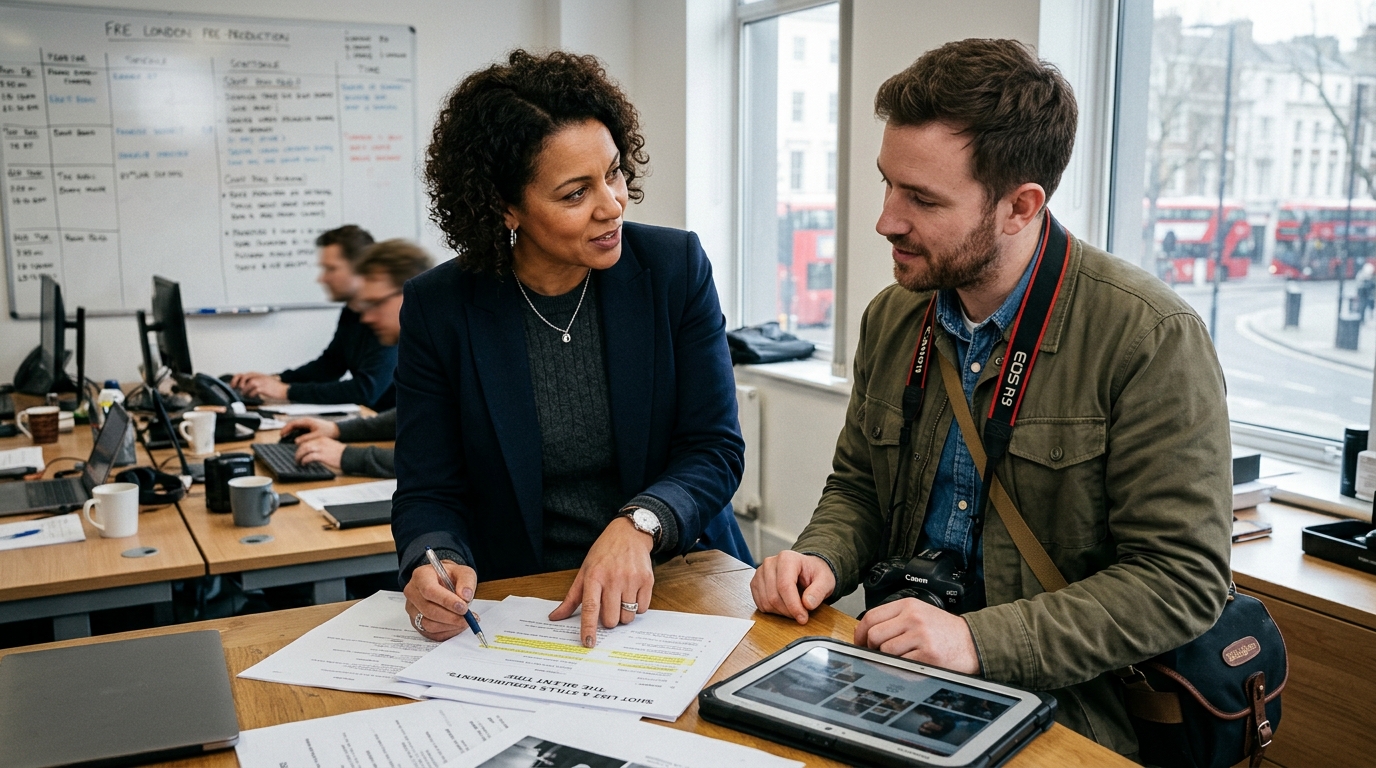
Booking a unit stills photographer without briefing them correctly produces a library that covers the production and serves no specific promotional purpose. The briefing conversation for a unit stills commission is different from the briefing conversation for any other photography discipline, and it requires specific information that is not always intuitive for producers who have not worked closely with the role before.
As Neurapix’s guide to unit stills photography commissioning for film and branded content productions4, the most common reason unit stills libraries fail to serve their intended promotional purposes is not technical quality but the absence of a pre-production conversation that establishes which scenes are most promotionally significant, which character relationships need to be documented for press use, and which specific image formats are required for the production’s platform and media distribution plan. The information a unit stills photographer needs before they arrive on set includes:
- The production’s distribution and platform plan. A film releasing theatrically has different image format requirements from a television series releasing on a streaming platform, which has different requirements from a branded content production distributing through social media. The distribution plan determines which image formats, aspect ratios, and technical specifications the unit stills photographer should be composing for throughout the production.
- The key scenes and promotional priorities. Before production begins, the producer, director, and marketing team should identify which scenes in the schedule are most promotionally significant and communicate these priorities to the unit stills photographer. These scenes receive dedicated priority coverage. Everything else receives standard coverage.
- The character hierarchy and principal talent. A clear hierarchy of which characters and performers should receive the most comprehensive portrait coverage, in what costume and makeup combinations, and at what point in the production schedule their dedicated portrait session should be scheduled.
- Access to the script and scene breakdown. A unit stills photographer who has read the script before arriving on set understands the narrative, the character relationships, the tone of the production, and the specific moments in each scene that are most likely to produce strong promotional images. Access to the script before the first day of photography is not a privilege. It is a briefing requirement.
• The delivery schedule and image format requirements. When images are needed, in what format, at what resolution, and for which specific purposes. The delivery schedule for unit stills is often tiered: a selection of key images needed immediately for a casting announcement or production announcement, followed by a comprehensive library delivered at the end of each shoot week, followed by a final selects delivery for the press pack at the end of principal photography.
Frequently Asked Questions
Is a unit stills photographer the same as a BTS photographer?
No, though the two roles are frequently confused and sometimes performed by the same individual on smaller productions. A unit stills photographer produces images of the production’s content: the characters, the scenes, and the story being told, for use in press, marketing, and platform materials. A behind-the-scenes photographer documents the production process itself: the crew at work, the technical apparatus of filmmaking, the environment of the set. Both roles produce valuable content, but they serve different audiences and different purposes. Unit stills images appear in press packs and on streaming platforms. BTS images appear in making-of content, social media, and documentary extras. On larger productions, these are two distinct roles. On smaller productions and branded content shoots, a single photographer often covers both simultaneously.
How long should a unit stills photographer be booked on a production?
The standard approach is to book a unit stills photographer for the specific shoot days that contain the most promotionally significant content rather than for the entire production. On a feature film, this typically means the key scenes involving principal cast in the most promotionally important settings. On a television series, it typically means the first episode’s principal photography and any subsequent days that feature significant narrative moments or new character introductions. On a branded content production, it typically means the full shoot schedule because the entire production is usually promotional content. The producer and director should agree the unit stills schedule with the photographer before principal photography begins rather than making day-by-day decisions.
What equipment does a professional unit stills photographer use?
A professional unit stills photographer working on a film or television production in London uses a full-frame or medium format mirrorless camera system with a fully electronic silent shutter as their primary camera. A selection of lenses covering wide to telephoto focal lengths allows them to work at the appropriate distance for each production environment without entering the filming frame. As Photier’s 2025 guide to professional unit stills photography equipment standards5, the fully electronic silent shutter is a non-negotiable requirement for any production with live sound recording. DSLR cameras with mechanical shutters are not appropriate for unit stills work on productions where sound is being recorded, regardless of their image quality. Additional equipment typically includes multiple memory cards with a robust backup workflow and a mobile editing setup that allows priority images to be processed and delivered rapidly at the end of a shoot day.
Can a unit stills photographer work on branded content and commercial productions?
Yes, and the branded content and commercial production sector in London is one of the strongest markets for unit stills photography. The working method is identical to film and television production, with the specific output requirements adjusted for the branded content context. A commercial production for a London brand may require images for the brand’s social media channels, for trade press coverage of the campaign, for award entries such as the D&AD or Cannes Lions, and for internal communications celebrating the production. All of these outputs benefit from the same standard of unit stills photography that a film or television production would require.
How is unit stills photography licensed?
The images produced by a unit stills photographer are typically licensed to the production company rather than sold outright. The production company then licenses specific images to press, to the distribution platform, and to marketing agencies as needed. The terms of the unit stills photographer’s licence agreement should specify what uses are included in the production licence, what uses require additional licensing, and what the photographer’s credit requirements are for each use context. Credit requirements vary by context: editorial and press use typically requires a photographer credit, while streaming platform artwork and marketing materials may not. These terms should be agreed in the commission contract before principal photography begins. Browse the full unit stills and BTS photography portfolio and the editorial and PR photography portfolio at eventphotographer.photos, then get in touch via the contact page to discuss your production.
Book a Unit Stills Photographer for Your London Production
A unit stills photographer is not a luxury on a production that intends to reach an audience. They are the professional responsible for producing the images that reach the audience before the production itself does: the images that generate press coverage, populate the streaming platform, and build anticipation before a single frame of the finished work has been seen. Every production that does not have a unit stills photographer is releasing without its primary marketing asset.
Joel Knight is a London-based photographer covering unit stills, BTS, and film production photography for film, television, and branded content productions across London and the UK. Browse the full unit stills and BTS photography portfolio and the editorial and PR photography portfolio at eventphotographer.photos, then get in touch via the contact page to discuss your production.
REFERENCES & CITATIONS
- Bernardson Photography (2025). Production Photography and Its Commercial Applications: Unit Stills as a Multi-Context Asset. bernardson.com. Cited in H2 Section 1. [The unit stills photographer operates at the intersection of documentary photography, commercial photography, and editorial journalism, producing images that meet the visual standards of multiple simultaneous output contexts.]
- Retines Photography (2025). On-Set Photography Protocol and Production Integration: Working Method for Unit Stills. retines.fr. Cited in H2 Section 2. [A unit stills photographer who disrupts filming, attracts the attention of talent during takes, or requires the first assistant director to manage their movements creates more cost than value on a production.]
- Social Tables (2025). Production Photography Output and Its Commercial Lifecycle: Long-Term Value of Unit Stills Libraries. socialtables.com. Cited in H2 Section 3. [The commercial lifecycle of unit stills photography output extends significantly beyond the immediate press and marketing launch period, with images used in anniversary coverage, retrospective features, and streaming platform metadata refreshes for years after release.]
- Neurapix (2025). Unit Stills Photography Commissioning for Film and Branded Content: What Producers Need Before Booking. neurapix.com. Cited in H2 Section 4. [Most common reason unit stills libraries fail to serve their intended promotional purposes is the absence of a pre-production conversation that establishes which scenes are most promotionally significant and which image formats are required.]
- Photier (2025). Professional Unit Stills Photography Equipment Standards: Silent Shutter as a Non-Negotiable Requirement. photier.com. Cited in H2 Section 5 FAQs. [The fully electronic silent shutter is a non-negotiable requirement for any production with live sound recording; DSLR cameras with mechanical shutters are not appropriate for unit stills work regardless of their image quality.]