

The weakest PR photography briefs I receive are the ones that describe the event rather than the story. They tell me there is a product launch on Tuesday at a venue in Shoreditch, starting at six, with around fifty guests. That tells me the logistics. It tells me nothing about what the images need to communicate, which publications are being pitched, what the hero shot should look like, or when the images need to be in a journalist’s inbox. And those are the things that determine whether the photography earns press coverage or disappears into a shared folder.
A good PR photography brief is not long. It is specific. It answers the questions a photographer needs to make every creative decision of the day in service of the media outcome you are trying to achieve. This guide covers exactly what to include, how to structure it, when to send it, and what changes when the brief is done well.
Why PR Photography Briefs Fail and What That Costs
I have been sent PR photography briefs that arrived the morning of the shoot as a two-line text message. I have been sent briefs that were forty pages of corporate brand guidelines with no mention of what the news story was. Both produced the same outcome: images that covered the event adequately and served no press purpose whatsoever. The brief is not a formality. It is the creative and strategic foundation of the entire commission.
As Bernardson Photography’s guide to PR photography and its media requirements1, the most consistent cause of PR photography failure is not technical quality or photographer experience. It is the absence of a brief that communicates the news story, the target publications, and the delivery deadline clearly enough for the photographer to make every creative decision in service of the media outcome. A technically excellent photographer working from a vague brief produces images that look professional and serve no specific purpose. A photographer working from a specific brief produces images that get used.
The commercial cost of a weak PR photography brief is concrete. A product launch at a London venue attended by fifty journalists is a significant media opportunity. The photography from that launch is the asset that converts that opportunity into coverage. If the images arrive twenty-four hours after the event without a clear hero shot, if they are formatted for website use rather than for publication dimensions, if the delivery email requires a journalist to make decisions rather than simply download and use, the coverage rate drops sharply. The photography investment is the same. The media return is a fraction of what a well-briefed shoot would have produced.
The Seven Elements Every PR Photography Brief Must Include
In practice, every effective PR photography brief covers seven specific elements. Missing any one of them creates a gap that the photographer has to fill with their own assumptions on the day, and assumptions made under time pressure in a live environment are the most expensive kind.
As Retines Photography’s 2025 guide to PR photography briefing standards and media requirements2, the photographers who consistently produce images that generate press coverage are those whose clients share all seven briefing elements in advance. The photographers who consistently produce images that are technically strong but commercially inert are those whose clients share two or three and assume the rest is self-evident. Nothing in a PR photography brief is self-evident. Specificity is what makes the difference.
The news story in one sentence
Not the event description. The news story. If a journalist were writing a headline based on what happened, what would it say? That headline is the brief for the hero shot. Everything else the photographer captures supports or contextualises that central image. A PR photographer who knows the headline can compose, position, and time their shots to produce an image that illustrates it. A photographer who only knows the event cannot do this because they do not know which moment matters most.
The hero shot description
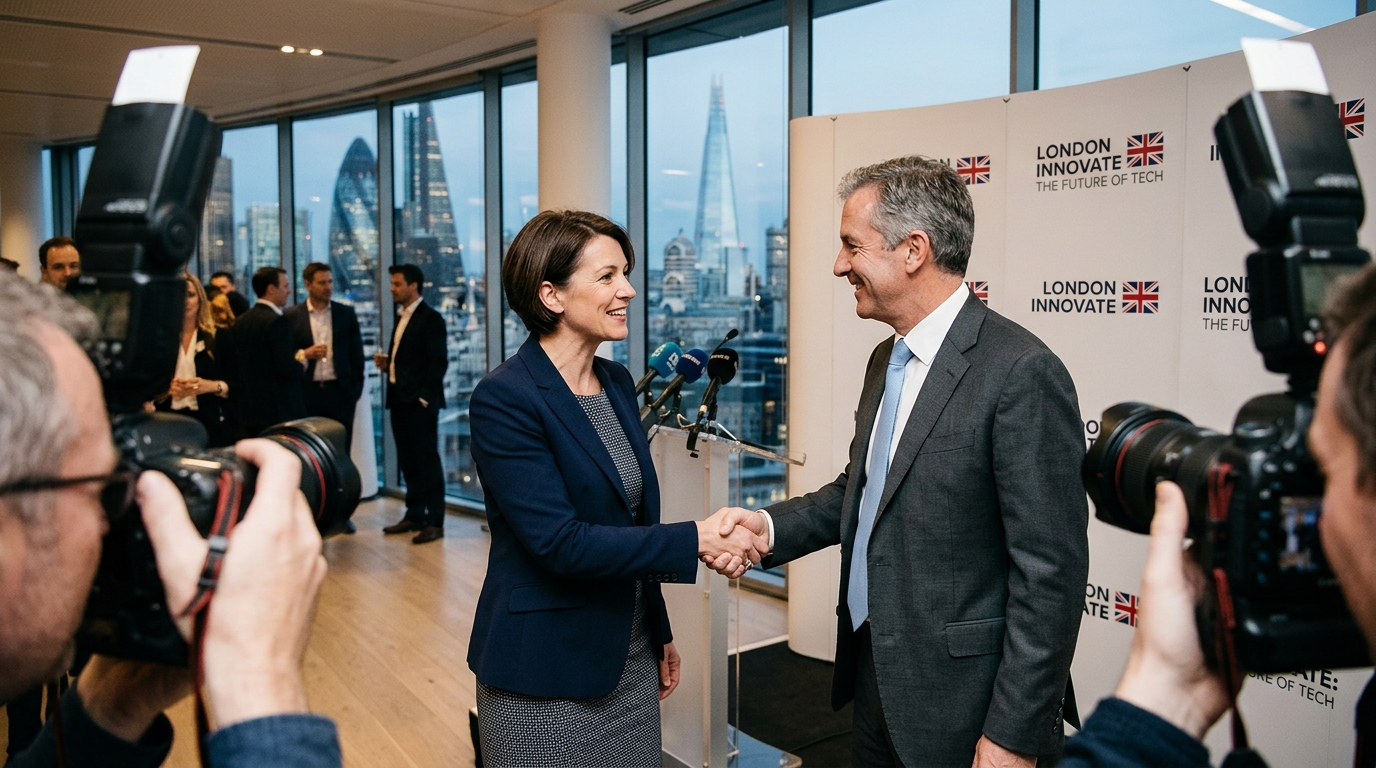
Based on the news story, describe the single image that would most effectively illustrate it for press use. Be specific. Not a photo of the launch, but the CEO and the partner organisation’s founder together at the moment of the announcement, shaking hands in front of the branded backdrop with both faces clearly visible. A PR photographer who knows exactly what the hero shot needs to look like can plan their position, their lens choice, and their timing to produce it with consistency rather than hoping it emerges from general coverage.
The target publications and their visual standards
Different publications have fundamentally different visual requirements. A trade publication covering a technology partnership typically uses clean, corporate-register photography with clear subjects and minimal visual complexity. A national newspaper covering a consumer brand launch may prefer more dynamic, lifestyle-register imagery with energy and visual interest. A luxury publication has different colour palette and tonal preferences from a business news outlet. Knowing which publications are being pitched allows the photographer to produce images in the visual register those publications favour rather than a generic standard that serves none of them optimally.
The key individuals and their roles
Name every individual who must appear in the photography with sufficient clarity to be identified from the image. Include their full name, their title, and their role in the news story. If two CEOs are announcing a partnership, both names, titles, and organisations should be in the brief. If a minister is attending a product launch, their name and the significance of their attendance should be stated. A photographer who knows who the principals are can identify them on arrival, track their movements throughout the event, and ensure clean coverage of every interaction involving them.
The delivery deadline and format
This is the element most consistently missing from PR photography briefs. The delivery deadline for a PR image pack is driven by the press cycle, not by production convenience. If images need to be in a journalist’s inbox by eight the following morning to make the day’s news cycle, the photographer needs to know this before the shoot so they can plan their post-production workflow accordingly. The format should specify file type, resolution, and any specific dimension requirements from the target publications. A press image pack delivered in the wrong format requires reformatting before use, which is a friction that reduces the chance of a busy journalist or editor actually using it.
The image licensing terms
PR images distributed to press are typically licensed under a press licence that allows editorial use without payment. The licensing terms should be stated in the brief and included in the delivery email alongside the images. Ambiguous licensing is one of the most common reasons press desks do not use images they would otherwise select. A clear statement that images are cleared for editorial use by named publications removes that friction entirely.
The on-site contact and access arrangements
The name and mobile number of the person the photographer should contact on site, confirmation of what time access to the venue is available before the event begins, any security or accreditation requirements to be resolved in advance, and any areas of the venue where photography is restricted. For London venues in the City, Canary Wharf, or security-conscious locations, access arrangements for cameras and equipment sometimes require advance notice to the venue operations team. Discovering this on the morning of a PR shoot is among the most avoidable and most costly problems in PR shoot preparation London practitioners regularly encounter.
The Visual References That Transform a PR Photography Brief

There is one element of a PR photography brief that consistently produces a more significant improvement in the quality of the finished images than any other single addition: visual references. Not mood boards in the abstract design sense, but specific examples of PR images from comparable brands, events, or publications that communicate the visual register, the compositional style, and the editorial tone the brief requires.
As Social Tables’ guide to advanced photography brief preparation for PR and media contexts3, visual references reduce the gap between what a client imagines and what a photographer produces more effectively than any amount of descriptive language. A client who says they want natural, dynamic, editorial-quality images is using three adjectives that mean different things to different photographers. A client who shares three examples of images from comparable PR campaigns that they consider to match that description is communicating the same information with zero ambiguity.
The most effective way to use visual references in a PR photography brief:
- Choose references from the same type of occasion as your commission. A product launch reference from a luxury brand has different visual conventions from a product launch reference from a technology company. The reference should be from a context close enough to your own that the photographer can translate the visual approach directly rather than adapting it significantly.
- Include three to five images, not fifty. A large reference pack requires the photographer to synthesise a visual direction from many competing examples, which often produces a compromise rather than a clear creative approach. Three to five strong references that all share the same visual character are more useful than a comprehensive mood board of everything that has ever appealed to the person writing the brief.
- Annotate what specifically you like about each reference. Is it the lighting? The composition? The natural expression of the subject? The relationship between the foreground and background? Annotating what specifically appeals about each reference allows the photographer to understand which elements of the reference to replicate and which are incidental to the images you have chosen.
- Include at least one example of what you do not want. A negative reference, an example of the style of PR photography the brief explicitly rejects, is often as useful as a positive one. A client who shows the photographer an image and says this is what we want to avoid, particularly if they can articulate why, gives the photographer a clear boundary that shapes every creative decision.
How to Structure the Brief Document and When to Send It

A PR photography brief should be a structured written document, not a series of emails or a verbal conversation. The document does not need to be long. A one to two page brief that covers all seven elements clearly is superior to a ten-page document that buries the essential information in background context. Structure matters because a photographer reviewing a brief under time pressure needs to find specific information immediately, not search through paragraphs of brand background to locate the delivery deadline.
As Neurapix’s guide to professional photography brief structure and delivery timing4, the most effective PR photography briefs use a consistent section structure that places the most time-sensitive information first. The photographer’s first question is always about the news story and the hero shot. Their second is about the delivery deadline. Their third is about access and logistics. Structuring the brief in this order of priority rather than in the order that feels natural from the client’s perspective significantly improves how quickly a photographer can absorb and act on the brief.
Recommended brief structure
Section one: The news story and hero shot. One paragraph maximum. What happened, why it matters, and what the key image needs to show. Section two: Target publications and delivery deadline. The specific publications being pitched and the time by which images must be delivered. Section three: Key individuals. Named list with titles and their role in the story. Section four: Event logistics. Date, time, venue, access arrangements, on-site contact. Section five: Visual references. Three to five annotated image references with notes on what specifically they communicate about the desired style. Section six: Licensing and distribution. A clear statement of the press licence terms under which the images will be distributed.
When to send the brief
For a London product launch, brand activation, or press event, the brief should be sent at least five working days before the shoot. This gives the photographer time to research the venue, identify any access issues, prepare questions, review the visual references, and plan their approach before arriving on site. Briefs sent the day before the event are better than briefs sent the morning of the shoot, but they significantly limit what the photographer can do with the information. The brief is an investment in preparation. Preparation that happens the night before is materially weaker than preparation that has had five days to develop.
The pre-shoot call
For significant PR commissions, a fifteen to twenty minute pre-shoot call with the photographer is a worthwhile investment regardless of how thorough the written brief is. The call allows the photographer to ask clarifying questions that reading a document always generates, to surface any logistical considerations the client may not have anticipated, and to confirm that both parties have the same understanding of the hero shot, the delivery timeline, and the licensing terms. I ask for a pre-shoot call on every significant PR commission. Not because I need to, but because the call consistently produces a better outcome than the brief alone.
Frequently Asked Questions
How is a PR photography brief different from an event photography brief?
An event photography brief is primarily logistical: what happens, when, where, and who needs to be in which images. A PR photography brief is primarily editorial: what is the news story, what publications are being pitched, what does the hero shot need to show, and what is the press deadline. The logistical information overlaps but the editorial layer is entirely distinct. A photographer who receives an event brief for a PR shoot will cover the event comprehensively. A photographer who receives a PR brief will produce images specifically optimised for media pickup. If both are needed, both briefs should be written and both should be explicit about which deliverables they are governing.
Should the PR brief be shared directly with the photographer or filtered through an agency?
The photographer should always receive the full brief directly. When a brief passes through multiple intermediaries before reaching the photographer, it is almost always reduced in specificity at each stage. Details that seem obvious to the account manager are omitted. Nuances about the news story or the visual references are simplified. The delivery deadline loses its precision. The photographer who receives the full brief is the photographer who makes the best creative decisions. If an agency is managing the commission, the most effective approach is for the agency to write the brief collaboratively with the client and then share the complete document directly with the photographer rather than paraphrasing it.
What if the news story changes after the brief has been sent?
This is more common than most PR professionals acknowledge. A partnership changes in scope, a product feature is altered before launch, a spokesperson pulls out. The photographer should be updated immediately with whatever the new story is. A photographer who arrives with an outdated brief and no update is in a worse position than one who arrives with no brief at all, because they will be actively looking for moments that no longer represent the story. As Photier’s 2025 guide to managing PR photography commissions through late changes5, the most effective approach to late brief changes in PR photography is to treat the update as a new document, replacing the original rather than supplementing it, so the photographer is working from a single clear source of truth rather than trying to reconcile conflicting instructions.
How many hero shots should a PR photography brief identify?
One primary hero shot and two to three supporting images is the optimal structure for most PR photography briefs. The primary hero shot is the single image that illustrates the news story most directly and that the photographer treats as the non-negotiable priority of the shoot. The supporting images provide context, atmosphere, and alternative framings that give press editors and social media teams options beyond the single hero. A brief that identifies ten or fifteen hero shots of equal priority produces a photographer who cannot prioritise because everything is equally important, which is the same as nothing being a priority.
Can I use the same photographer for PR photography and general event coverage at the same occasion?
Yes, and there are strong reasons to do so. A single photographer who is briefed for both PR hero shots and general event coverage structures their day to produce both without compromising either. The PR hero shots are identified and secured early in the event when the photographer can give them full attention. The general event coverage fills the rest of the shoot day. The key is briefing for both explicitly rather than assuming that a single brief covering the event will produce both. Browse the full editorial and PR photography portfolio at eventphotographer.photos to see examples of PR and editorial photography in practice, then get in touch via the contact page to discuss your commission.
Commission Your PR Photography in London
A well-briefed PR photographer is one of the highest-return investments available to a London brand or agency at any press moment. The brief costs twenty minutes to write. The difference it makes to the media outcome is measurable and consistent. The photography investment is the same whether the brief is strong or weak. The coverage is not.
Joel Knight is a London-based PR and editorial photographer with extensive experience working alongside in-house communications teams and agencies on product launches, brand activations, partnership announcements, and press events across London and the UK, with clients including Google, Facebook, and Manchester United. Browse the full editorial and PR photography portfolio, the conference photography portfolio, and the corporate and awards photography portfolio at eventphotographer.photos, then get in touch via the contact page to discuss your PR photography brief.
REFERENCES & CITATIONS
One citation per H2 section. Inline anchor text is a live hyperlink. Superscript number is plain text beside it. All links open in a new tab in WordPress.
- Bernardson Photography (2025). PR Photography and Its Media Requirements: Why Briefs Fail and What That Costs. bernardson.com. Cited in H2 Section 1. [Most consistent cause of PR photography failure is not technical quality but the absence of a brief that communicates the news story, target publications, and delivery deadline clearly enough for the photographer to make decisions in service of the media outcome.]
- Retines Photography (2025). PR Photography Briefing Standards and Media Requirements: The Seven Essential Elements. retines.fr. Cited in H2 Section 2. [Photographers who consistently produce images that generate press coverage are those whose clients share all seven briefing elements in advance; those who share two or three produce technically strong but commercially inert images.]
- Social Tables (2025). Advanced Photography Brief Preparation for PR and Media Contexts: Visual References and Their Impact. socialtables.com. Cited in H2 Section 3. [Visual references reduce the gap between what a client imagines and what a photographer produces more effectively than any amount of descriptive language.]
- Neurapix (2025). Professional Photography Brief Structure and Delivery Timing: Priority-Led Document Organisation. neurapix.com. Cited in H2 Section 4. [Most effective PR photography briefs use a consistent section structure that places the most time-sensitive information first, in order of the photographer’s priorities rather than the client’s natural narrative order.]
- Photier (2025). Managing PR Photography Commissions Through Late Changes: Update as Replacement Rather Than Supplement. photier.com. Cited in H2 Section 5 FAQs. [Most effective approach to late brief changes in PR photography is to treat the update as a new document replacing the original so the photographer works from a single clear source of truth rather than reconciling conflicting instructions.]