
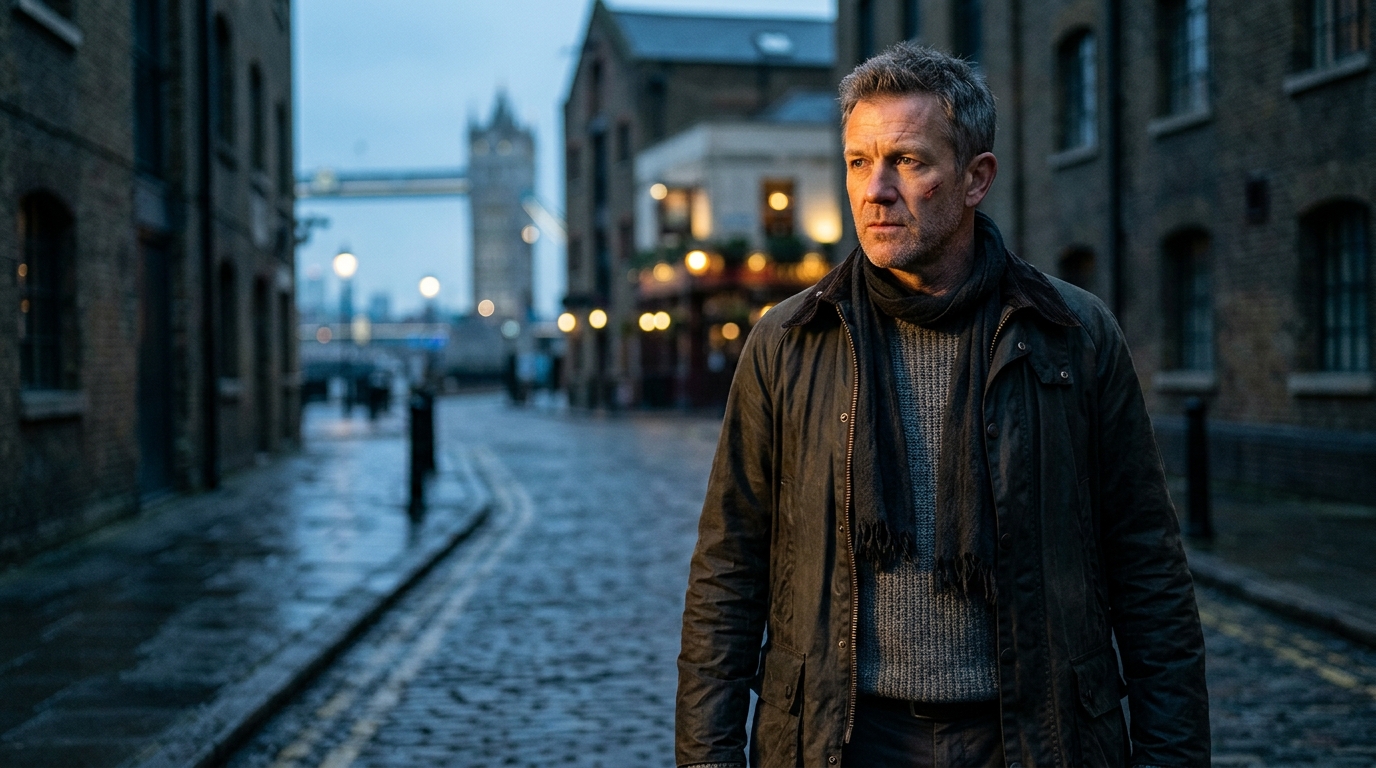
Most productions commission unit stills photography because they know they need it, not because they have thought carefully about what it needs to do. The brief is often vague, the image formats are often undefined, and the connection between the photography brief and the marketing strategy is often absent entirely. I have delivered unit stills libraries to productions that had no press plan for how to use them, no streaming platform specifications to compose for, and no marketing team involved in the brief. The images were technically strong. They were commercially inert.
Understanding how unit stills photography supports film marketing is what separates a photography brief that produces a marketing asset from one that produces a library of well-lit images that nobody quite knows what to do with. This guide covers every marketing channel that unit stills photography serves, what each channel requires technically and creatively, and what producers and marketing teams in London need to build into their briefs before principal photography begins.
The Marketing Channels That Depend on Unit Stills Photography
The first thing I establish at the briefing stage for any unit stills commission is which marketing channels the images will serve and in which priority order. The answer to that question determines every creative decision of the shoot, from lens choice and composition to the specific moments and character combinations that receive priority coverage. A unit stills photographer who does not know the marketing plan for the production they are working on is making creative decisions without the information they need to make them correctly.
As Bernardson Photography’s guide to production photography and its marketing applications1, the marketing channels that depend on unit stills photography as their primary visual input span a wider range than most productions anticipate when they budget for the role. Each channel has distinct technical requirements, distinct timing constraints, and distinct creative standards that the unit stills photographer must understand and compose for simultaneously during principal photography. The primary channels include:
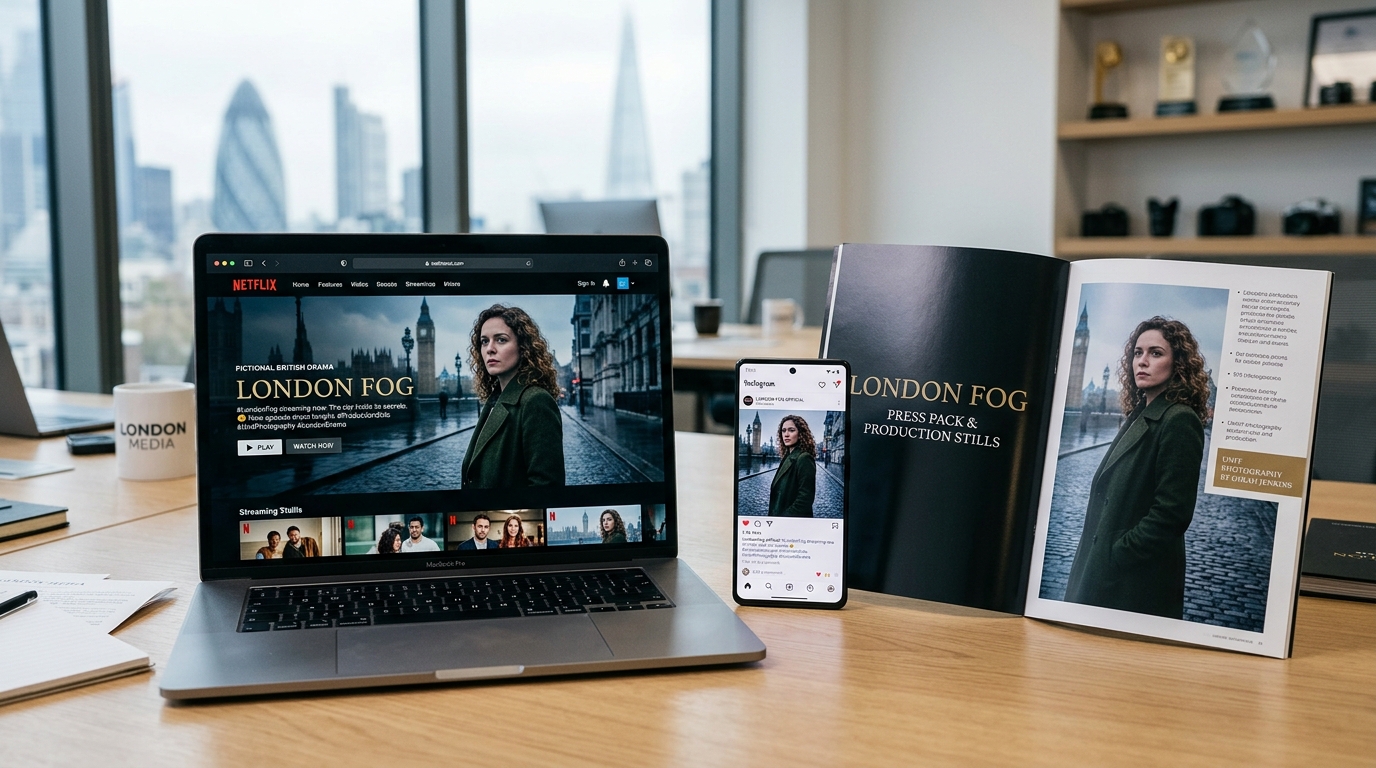
- Streaming platform artwork and metadata. The thumbnail images, hero banners, and character profile images that appear in streaming platform interfaces are drawn exclusively from the unit stills library. Netflix, Disney Plus, Apple TV Plus, and Amazon Prime Video all publish technical specifications for platform artwork that require images at specific dimensions, aspect ratios, and resolution standards. A unit stills photographer who composes images to meet these specifications during the shoot produces platform-ready assets. One who does not produces images that require significant cropping and adaptation that often compromises the composition.
- Press packs and editorial photography. The unit stills library is the primary source for the production’s press pack: the collection of images distributed to journalists, publications, and media outlets to support the launch. Press images must meet the technical standards of editorial publishing across print, digital, and broadcast media simultaneously. This means full-resolution files at specific minimum dimensions, clean backgrounds behind key subjects, and compositions that communicate a story clearly at thumbnail scale and at full-page resolution.
- Film festival and awards submissions. Film festivals including the BFI London Film Festival, Cannes, BAFTA, and TIFF all require photography as part of the submission process. The images used in festival press materials and award ceremonies are drawn from the unit stills library. Festivals have their own specific image format requirements that differ from streaming platform specifications and from standard press image formats, and these should be included in the unit stills brief if the production intends to submit.
- Social media campaigns. The social media campaign that builds audience awareness before a production’s release relies on unit stills photography for its key visual content: character reveal posts, relationship teaser images, and the specific hero moments that stop the scroll and generate sharing behaviour. Social media image formats require compositions that work at square, landscape, and portrait aspect ratios simultaneously, which is a compositional constraint that should inform the unit stills brief from the start of the commission.
What Streaming Platforms Require from Unit Stills Photography
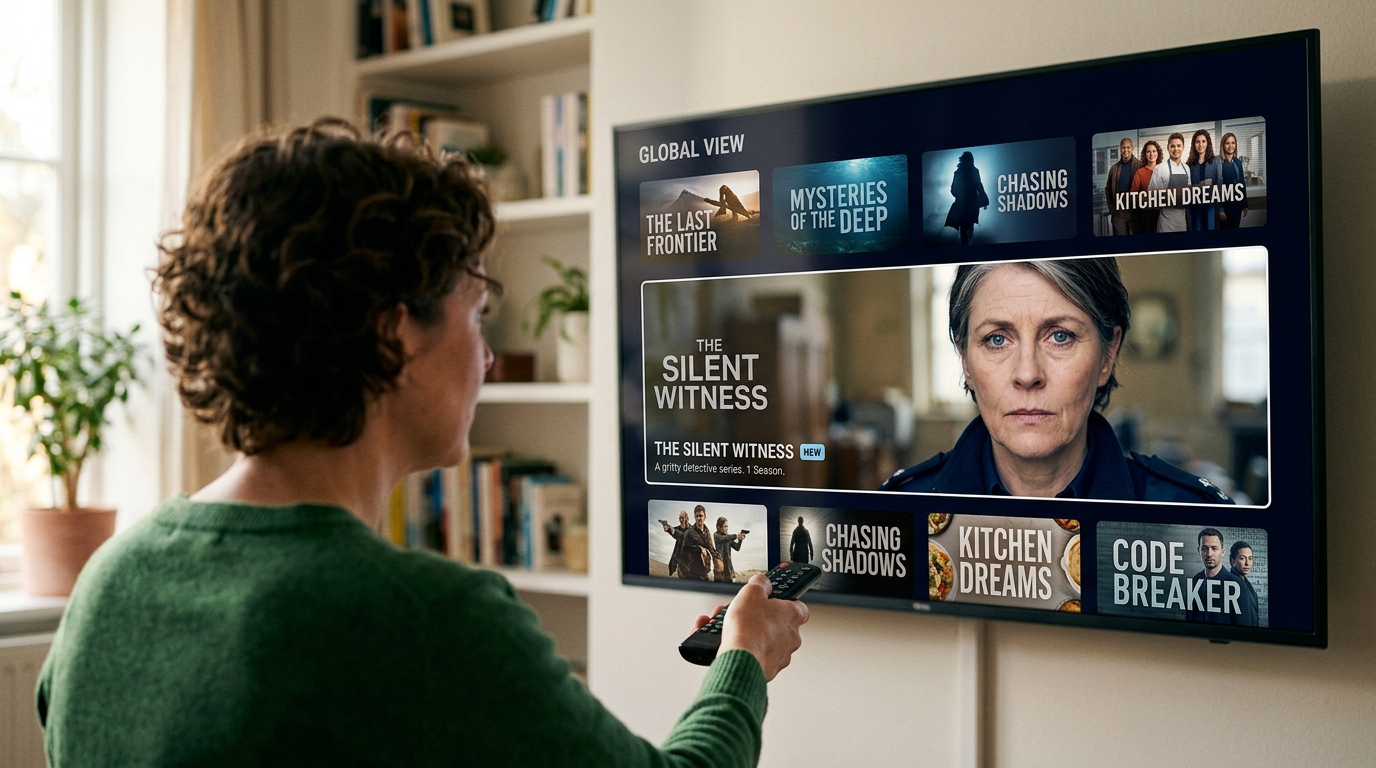
In practice, the most commercially consequential use of unit stills photography in the current market is streaming platform artwork. The thumbnail image that a streaming platform displays for a production is the single most viewed image that production will ever have. Millions of subscribers scroll past it every day. The decision to click, to add to a watchlist, or to keep scrolling is made in a fraction of a second and is driven almost entirely by that image. Getting it right starts during principal photography, not after.
As Retines Photography’s 2025 guide to unit stills photography for streaming and digital distribution2, the specific technical and creative requirements of streaming platform artwork have changed how unit stills photography is planned and executed on productions that are commissioning for digital-first distribution. The requirements that unit stills photographers working on streaming productions in London must understand and compose for include:
Thumbnail-optimised compositions
A streaming platform thumbnail is typically displayed at a very small size on a browse screen: often no larger than a postage stamp in terms of the physical space it occupies in a viewer’s field of vision. A unit stills image that is beautifully composed at full size but relies on environmental detail or group dynamics to communicate its appeal at a small size loses most of its impact as a thumbnail. The compositions that perform best as streaming thumbnails are those with a single dominant subject, a strong expression or moment of tension, and minimal visual complexity in the background. These compositional requirements should be explicitly communicated to the unit stills photographer before the shoot.
Horizontal and vertical format crops
Streaming platforms use both horizontal and vertical image formats depending on the device and the interface context. A production that delivers only horizontally composed unit stills images will find that its vertical format artwork, for mobile interfaces and portrait displays, requires significant cropping that often compromises the composition. A unit stills photographer briefed to produce both horizontal and vertical format options for priority character portraits and key scenes provides the production’s marketing team with maximum flexibility when preparing platform assets.
Character focus and face visibility
Research by streaming platforms consistently shows that thumbnails featuring clearly visible human faces outperform those without them in click-through rate. A unit stills for streaming platforms brief should explicitly prioritise character portraits where the principal talent’s face is clearly visible, well-lit, and expressive. This is not a creative preference. It is a data-driven requirement that the streaming platform’s marketing team will apply when selecting images from the unit stills library for platform artwork. A library that provides multiple options for each principal character, shot at different emotional registers and in different costume and lighting conditions, gives the marketing team the material it needs to test and optimise platform artwork performance.
How Unit Stills Photography Serves Press and Publicity Campaigns
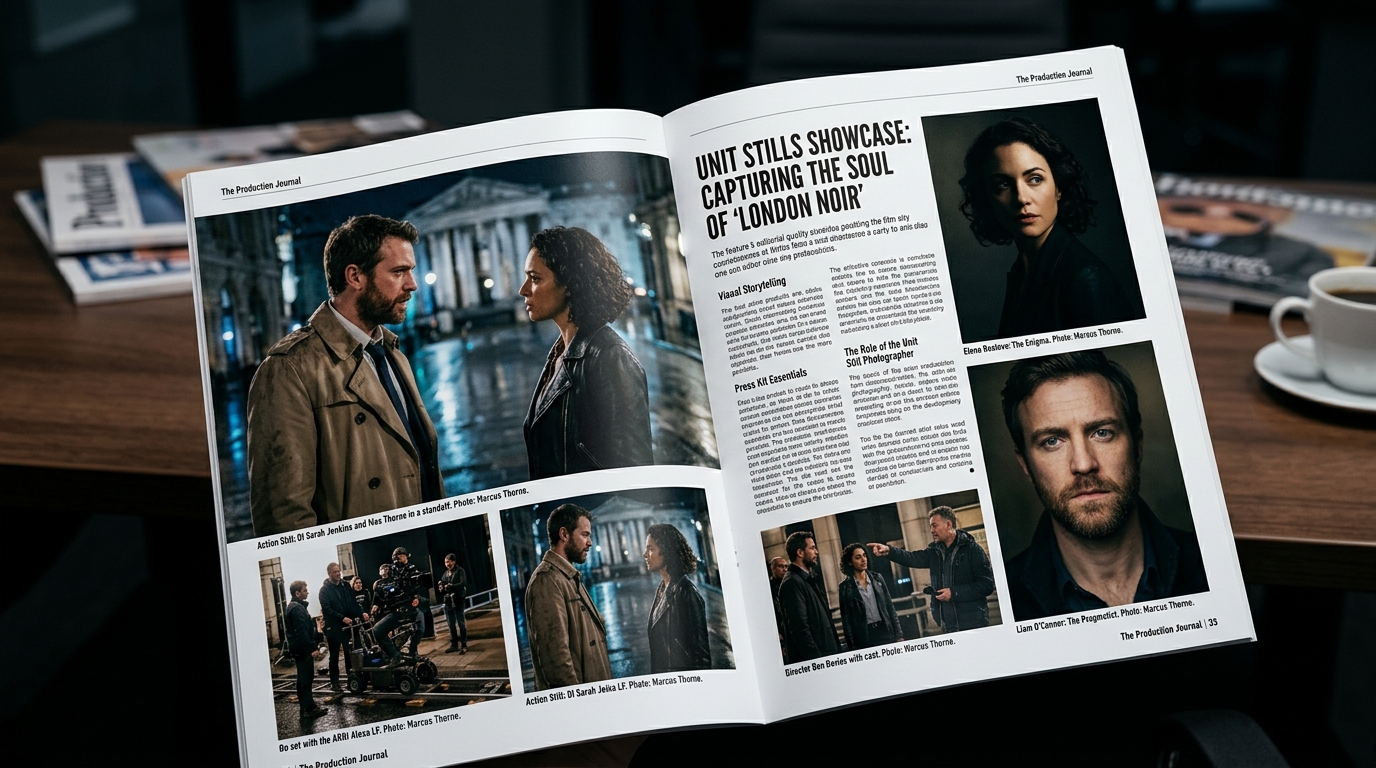
Press and publicity work for a film or television production begins long before the release date, often at the point of production announcement, and the unit stills library is the primary source of imagery throughout the entire press campaign. Understanding how the press cycle works and what types of images it requires at each stage is essential for building a unit stills brief that serves the publicity campaign effectively.
As Social Tables’ guide to production photography and its press lifecycle3, the press lifecycle for a film or television production creates distinct demand for different types of unit stills imagery at different stages. A production announcement requires a single strong image that communicates the tone and visual world of the project. A casting announcement requires clean character portraits of each principal talent. A festival submission requires images that meet the specific format and quality standards of the festival’s press materials. A release press pack requires a comprehensive selection covering all principal characters, key relationships, and significant scenes. Each of these stages should be identified in the unit stills brief so the photographer can plan coverage for each deliberately rather than discovering requirements retrospectively.
The production announcement image
The single image that announces a production to the trade and consumer press is often the first unit stills image the world sees, and it typically needs to be available before principal photography is complete. In practice, this means identifying the production announcement image as a specific priority during the earliest days of the shoot and ensuring it is captured, processed, and cleared for release before the announcement date. A production team that does not identify the announcement image as a priority during the shoot brief regularly finds themselves making do with development materials or pre-production photography that does not meet the quality standards of the press pack.
Casting announcement portraits
When a production announces its principal cast, clean character portraits are required for every individual being announced. These portraits are the images that appear in the trade press, on social media, and in the streaming platform’s announcement materials. They must meet the technical standards of editorial photography: sharp, well-lit, correctly exposed, and composed to work at both full-size editorial use and at social media thumbnail scale. A dedicated portrait session for each principal talent, planned into the production schedule before the casting announcement date, is the most reliable way to ensure these images are available when they are needed.
Scene and relationship images for feature coverage
When a production is covered in long-form features, profiles, or preview pieces in consumer and trade publications, the images used are typically scene coverage photographs that communicate the relationships between characters and the visual world of the production. These images require different compositional approaches from character portraits: they typically include two or more characters in a setting that communicates the narrative context of the scene. The film stills for marketing that serve feature coverage best are those that tell a story clearly without requiring the viewer to have seen the production, which is a compositional challenge that should be explicitly discussed between the producer and unit stills photographer before these scenes are shot.
Planning the Unit Stills Brief Around the Marketing Calendar

The most consistent gap I encounter between what a unit stills library could deliver and what it actually delivers is the gap between the photography brief and the marketing calendar. The photography is planned around the production schedule. The marketing is planned around the release strategy. The two plans rarely intersect explicitly, which means the unit stills photographer is frequently shooting without knowing which images are most urgently needed and by when.
As Neurapix’s guide to integrating unit stills photography with production marketing strategy4, the productions that build the strongest marketing asset libraries from their unit stills photography are those that involve the marketing team in the photography brief before principal photography begins rather than presenting the finished library to the marketing team after principal photography is complete. The integration points between the photography brief and the marketing calendar that make the biggest difference include:
- The production announcement date and its image requirements. The announcement date creates a hard deadline for the first unit stills delivery. Every production should establish this date before the first day of photography and ensure the unit stills photographer knows it and plans their coverage to produce announcement-ready images in the first days of the shoot.
- The casting announcement schedule for each principal. If cast are being announced in sequence rather than all at once, each announcement creates a separate deadline for that individual’s portrait images. The unit stills photographer should have the full announcement schedule before the shoot begins and should flag any conflicts between the announcement schedule and the scenes in which each principal appears.
- The festival submission deadlines. If the production is targeting specific festivals, each festival’s submission deadline creates a requirement for a specific image selection from the unit stills library. Festival submission packages typically require images to be delivered weeks before the submission deadline to allow the publicist to prepare the submission materials. Working backward from festival submission deadlines to unit stills delivery dates to unit stills priority coverage within the shoot schedule is the planning logic that ensures festival materials are available when they are needed.
- The streaming platform delivery requirements. Streaming platform agreements typically specify when artwork assets must be delivered to the platform. These delivery dates create a requirement for the final approved unit stills selections to be processed and formatted to platform specifications by a specific date, which creates a requirement for the raw unit stills library to be delivered and reviewed significantly earlier than that. The platform delivery date should be a fixed point in the unit stills planning calendar from the start of principal photography.
Frequently Asked Questions
Can unit stills photography replace a dedicated marketing photography shoot?
In most cases, yes, and for productions with constrained marketing budgets this is one of the strongest arguments for investing in a high-quality unit stills photographer rather than assuming that a dedicated marketing shoot can be arranged post-production. The talent, the costumes, the sets, the lighting environment, and the creative atmosphere of the production are only available during principal photography. A marketing shoot arranged after principal photography is complete is typically more expensive, logistically more complex, and produces images that have a different visual character from the unit stills library because the production environment that gives unit stills their authenticity and visual authority no longer exists. The unit stills photographer present during principal photography is working in conditions that a post-production marketing shoot cannot replicate.
How do unit stills images differ from film frame grabs for marketing use?
Film frame grabs and unit stills are fundamentally different in their technical quality and their suitability for marketing use. A frame grab is a still image extracted from the film’s footage, typically at the resolution of the video format being shot. Unit stills are captured on dedicated high-resolution still cameras at significantly higher pixel resolution than any video format currently in production use. For applications that require image files at the resolution needed for full-page print publications, large-format outdoor advertising, or high-resolution streaming platform artwork, frame grabs do not meet the technical specifications that unit stills photography produces as standard. As Photier’s 2025 guide to unit stills photography versus frame grabs for marketing applications5, the technical quality difference between unit stills and frame grabs is significant enough that major streaming platforms and press publications actively require unit stills photography rather than frame grabs for their image submissions.
How many unit stills images does a typical film or TV marketing campaign require?
A feature film marketing campaign typically requires a minimum of fifty to one hundred approved images across all principal characters, key scenes, and relationship dynamics. A television series marketing campaign requires a similar base library for each episode or series, with additional images produced for any major character introductions or narrative developments across the series. Streaming platform artwork alone typically requires multiple approved options for each character and each key relationship, allowing the platform’s marketing team to test different artwork options and optimise click-through performance. These volume requirements should be reflected in the length of the unit stills engagement and in the priority coverage plan for each shoot day.
What happens when the unit stills library does not meet streaming platform specifications?
This is a problem that arises more frequently than most producers anticipate and that is almost entirely preventable by including the streaming platform’s technical specifications in the unit stills brief before principal photography begins. When the unit stills library does not meet platform specifications, the production’s marketing team has three options: commission a post-production marketing shoot at significant additional cost, use frame grabs that do not meet the platform’s preferred resolution standards, or negotiate with the platform on the artwork requirements. None of these options is as commercially effective as having a unit stills library that meets the specifications from the outset. Browse the full unit stills and BTS photography portfolio at eventphotographer.photos to see examples of production photography that meets marketing campaign standards, then get in touch via the contact page to discuss your production.
Should the marketing team or the production team manage the unit stills brief?
Both should be involved and the brief should reflect both sets of requirements. The production team understands the shoot schedule, the scene priorities, the costume and makeup plan, and the logistical constraints of the production environment. The marketing team understands the marketing calendar, the platform specifications, the press pack requirements, and the specific image types that each marketing channel needs. A unit stills brief that is written by the production team without input from the marketing team will typically prioritise scenes over marketing moments. A brief written by the marketing team without input from the production team will typically be logistically impractical. The most effective briefs are written collaboratively and reviewed by both teams before principal photography begins.
Commission Your Unit Stills Photography in London
The connection between unit stills photography and a film or television production’s marketing outcomes is direct and measurable. Every streaming thumbnail, every press image, every festival submission, and every social media campaign that the production launches is built from the unit stills library. A library that was produced without knowing the marketing plan produces marketing materials that do not perform as well as they should. A library built around a brief that integrates the marketing calendar from the start of principal photography produces marketing assets that do the production’s commercial work with every image in the set.
Joel Knight is a London-based photographer covering unit stills, BTS, and film production photography for film, television, and branded content productions across London and the UK. Browse the full unit stills and BTS photography portfolio, the editorial and PR photography portfolio, and the conference photography portfolio at eventphotographer.photos, then get in touch via the contact page to discuss your production.
REFERENCES & CITATIONS
- Bernardson Photography (2025). Production Photography and Its Marketing Applications: Multi-Channel Unit Stills Planning. bernardson.com. Cited in H2 Section 1. [The marketing channels that depend on unit stills photography as their primary visual input span a wider range than most productions anticipate, each with distinct technical requirements, timing constraints, and creative standards.]
- Retines Photography (2025). Unit Stills Photography for Streaming and Digital Distribution: Platform Artwork Requirements. retines.fr. Cited in H2 Section 2. [The specific technical and creative requirements of streaming platform artwork have changed how unit stills photography is planned and executed on productions commissioning for digital-first distribution.]
- Social Tables (2025). Production Photography and Its Press Lifecycle: Stage-by-Stage Image Requirements. socialtables.com. Cited in H2 Section 3. [The press lifecycle for a film or television production creates distinct demand for different types of unit stills imagery at different stages, from announcement through casting reveals to festival and release press packs.]
- Neurapix (2025). Integrating Unit Stills Photography with Production Marketing Strategy: Calendar-Led Brief Planning. neurapix.com. Cited in H2 Section 4. [Productions that build the strongest marketing asset libraries from their unit stills photography involve the marketing team in the photography brief before principal photography begins rather than presenting the finished library after completion.]
- Photier (2025). Unit Stills Photography vs Frame Grabs for Marketing Applications: Technical Quality Comparison. photier.com. Cited in H2 Section 5 FAQs. [The technical quality difference between unit stills and frame grabs is significant enough that major streaming platforms and press publications actively require unit stills photography rather than frame grabs for image submissions.]