
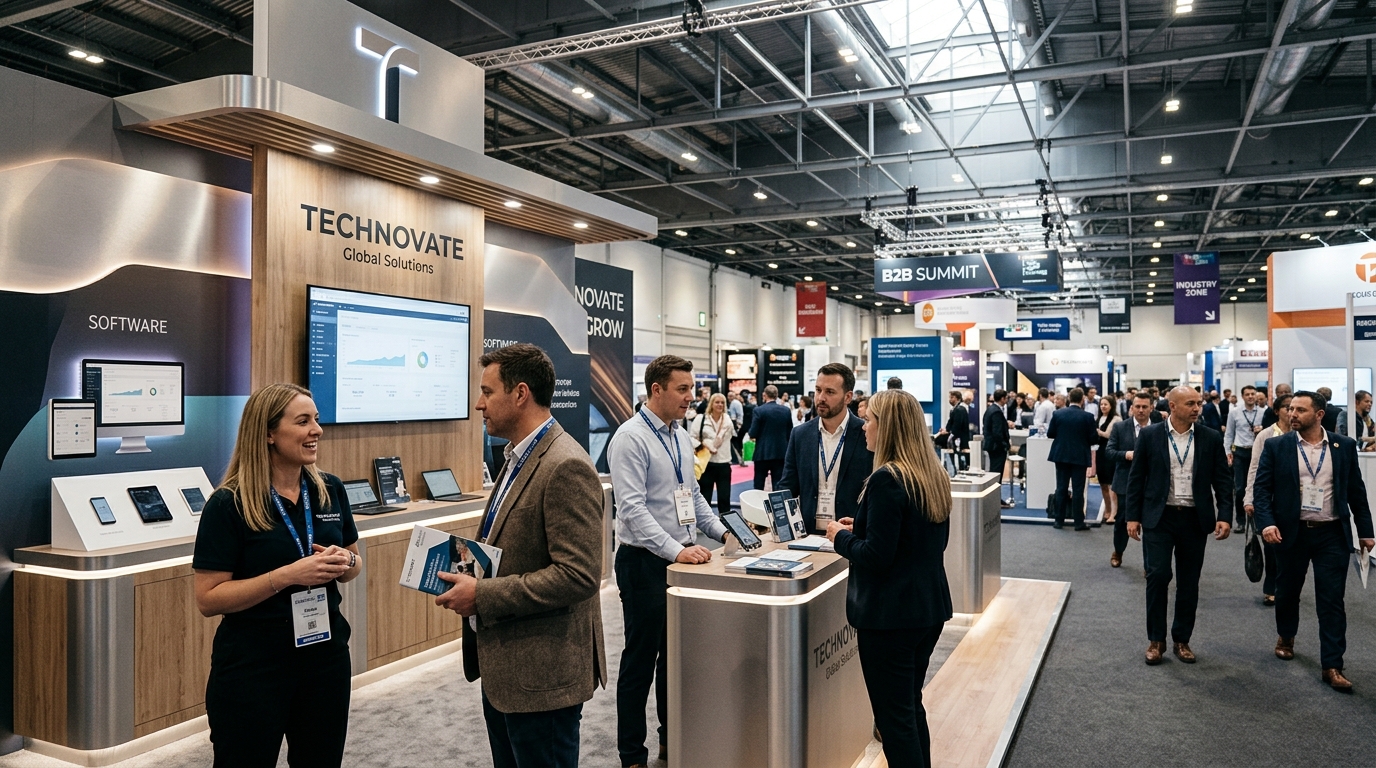
An exhibition stand can take weeks or months to design, build and prepare, yet the opportunity to photograph it may last only a few hours. Once the show closes, the stand is dismantled, the graphics come down and the interactions that made the investment worthwhile are gone. Professional exhibition stand photography in London turns that temporary presence into a permanent marketing asset.
The mistake is to treat trade show photography as a single clean photograph of an empty booth. That image is useful, but it tells only part of the story. A commercially useful gallery should show the stand design, the brand in context, staff speaking with visitors, product demonstrations, speaker or activation moments, busy periods, close details and the human interactions that prove the space was doing its job.
If you are exhibiting at Excel London, Olympia, a hotel exhibition floor or another London trade-show venue, the photography brief should be built around
what you want the images to achieve after the event. This guide explains what to capture, when to capture it and how to build an image library that serves marketing, sales, PR, internal reporting and future exhibitions.
Why Exhibition Stand Photography Should Be Planned Around Business Objectives
According to CEIR research on how exhibitors evaluate outcomes1, lead generation, branding and relationship management are among the primary objectives exhibitors evaluate after a show. That is why exhibition photography should document evidence of those objectives rather than focusing only on stand architecture.
The latest IAEE and CEIR exhibitor marketing discussion2 likewise centres on how exhibitors allocate budget, evaluate performance and connect exhibition spend to lead generation, brand building and face-to-face engagement.
A useful photography brief starts by asking a simple question: what does success at this exhibition look like for the business? If the primary objective is brand awareness, the gallery needs clean visual evidence of the stand, signage, design and scale. If the objective is sales conversations, it needs people interacting with staff, products and demonstrations. If the stand is supporting partner relationships, those people and branded touchpoints need to be photographed deliberately.
This changes the shot list. Instead of requesting generic “stand photos”, ask for a balanced set that can serve several commercial purposes:
- Clean stand photographs before the floor becomes busy, including wide views and important design details.
- Branding in context, showing logos, screens, graphics and products as part of the overall visitor experience.
- Real conversations between stand staff and attendees, captured naturally rather than staged.
- Demonstrations, presentations or hands-on product interaction that show what visitors could actually do at the stand.
- Busy-period photographs that communicate footfall, energy and participation without making the space look chaotic.
- Team photographs and selected portraits that give sales and marketing teams reusable people-focused content.
The aim is not to create hundreds of near-identical frames. It is to create a small, varied library in which every image has a plausible use after the event.
For exhibitors whose stand design and setup are a major part of the story, the Event Production Design & Details portfolio shows how venue setups, branding and fine design elements can be documented before doors open.
Photograph the Exhibition Stand Before Doors Open
Olympia London’s exhibitor guidance3 emphasises advance planning across logistics and brand-visibility services. Photography belongs in that same pre-show planning window because the cleanest opportunity to document the stand is usually before attendees arrive.
Excel London’s exhibitor information4 specifically points exhibitors toward venue guidance for filming and photography permits, so exhibitors should confirm venue and organiser requirements before assuming access or shooting arrangements.
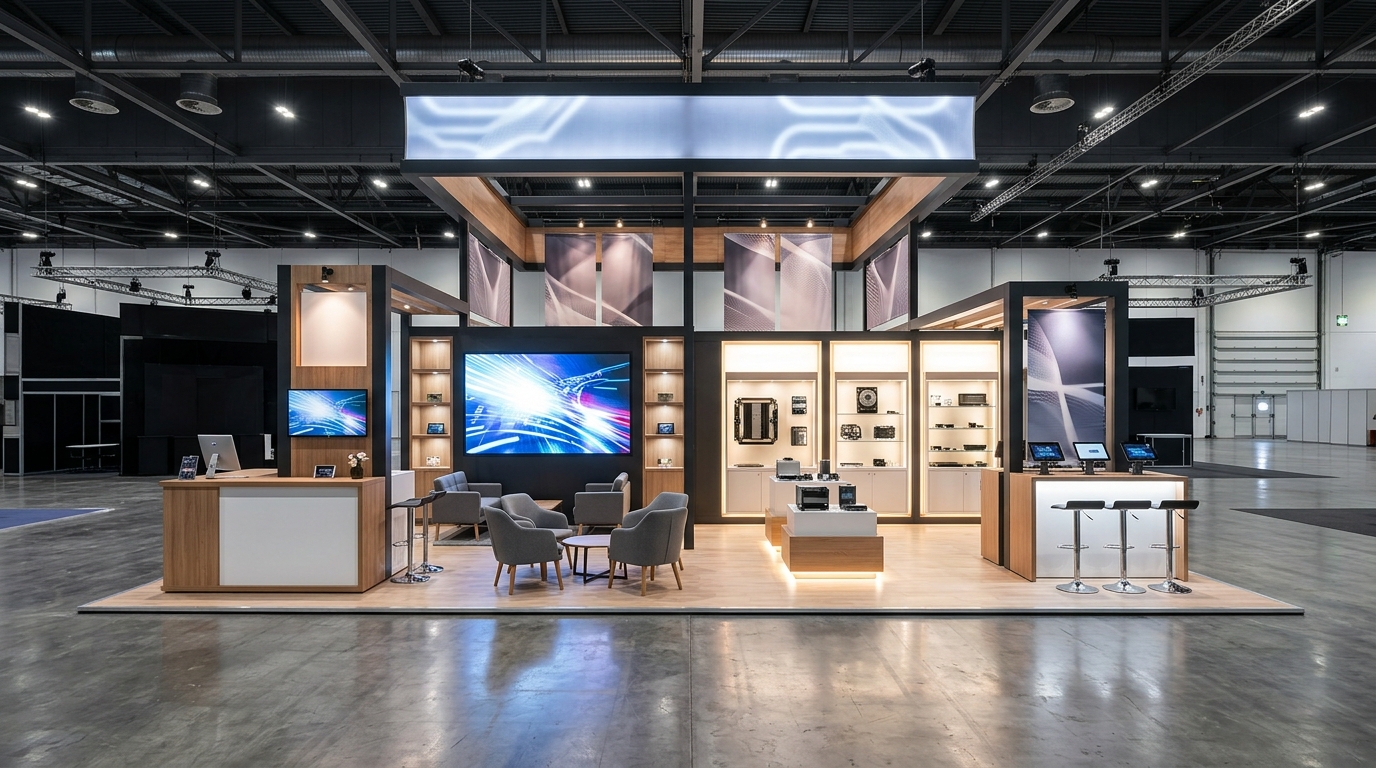
The pre-opening window is when the stand looks closest to the design presentation: counters are clear, displays are aligned, staff have not filled every surface with bags and coffee cups, and the photographer can choose angles without people blocking key visual elements.
For a strong set of exhibition stand photos, capture the physical environment in layers:
1. The hero wide shot
This is the image that shows the whole stand and its relationship to the exhibition floor. It should make the brand, stand shape, lighting and principal feature immediately understandable. If the stand has an open corner, overhead signage or a distinctive entrance, the photographer should test more than one position before the floor becomes busy.
2. Secondary angles
One front-on photograph rarely explains a complex stand. Side views, corner views and slightly elevated angles can reveal meeting zones, displays, screens, demonstration counters and branded structures that disappear in the hero shot.
3. Design and production details
Close photographs of materials, printed graphics, lighting, digital screens, furniture, product displays and hospitality details are especially valuable when agencies, stand builders, venues or production suppliers also need images for their portfolios.
4. Staff before the crowd arrives
A quick team photograph at the start of the day gives the business a clean record of the people representing the brand. It is much easier to organise before everyone becomes occupied with visitors and meetings.
Ask the photographer to allow enough time before public opening. Arriving at the same time as the first delegates removes the only guaranteed opportunity to photograph the stand in a controlled state.
Capture Visitor Engagement, Demonstrations and Real Conversations
Cvent’s 2026 guidance on trade-show lead capture5 stresses that exhibitors need to define the people they want to reach and connect booth experiences and conversations to lead quality. Photography can support that story by showing the right type of interaction, not just anonymous footfall.
CEIR’s exhibition-floor engagement research6 identifies tactics such as lead retrieval, onsite brand exposure, video recording and QR-enabled interaction as useful tools for exhibitor objectives, reinforcing the value of documenting engagement as it actually happens.
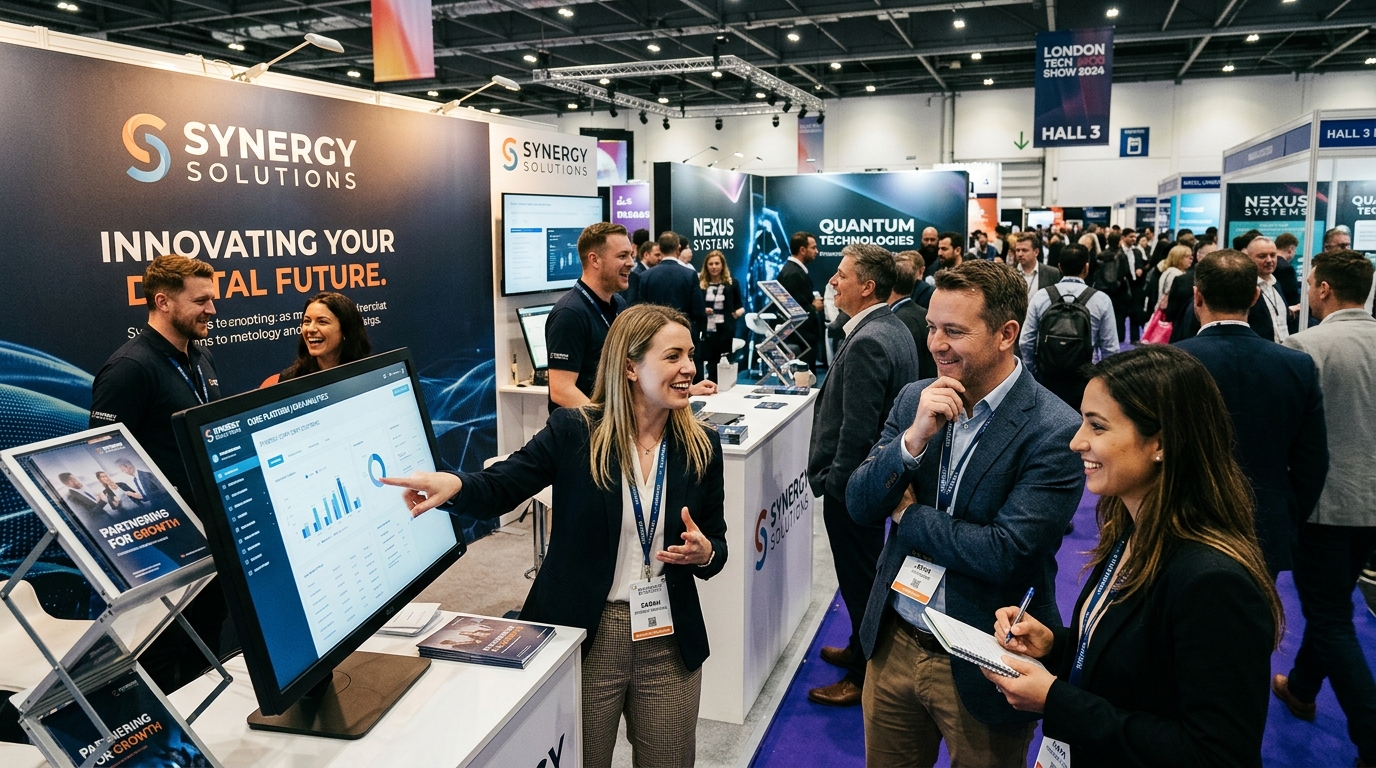
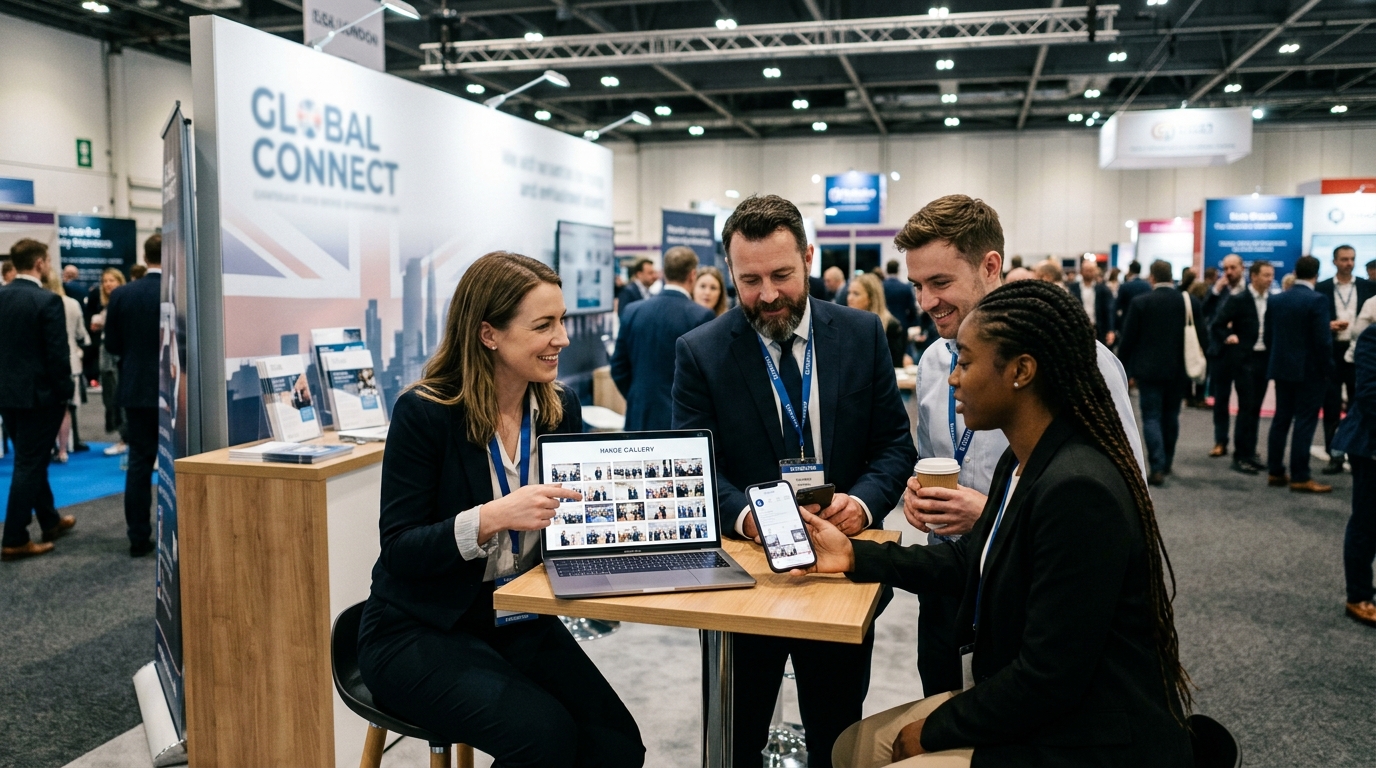
The strongest trade show photography normally comes from real activity. A visitor leaning into a product demonstration, a sales specialist explaining a feature, two people reviewing a screen together or a small group discussing a solution communicates far more than a posed handshake.
The photographer should look for several forms of engagement throughout the day:
- One-to-one conversations where both faces and the branded stand environment remain visible.
- Hands-on product demonstrations or software walkthroughs that make the offering understandable in a single frame.
- Small groups gathered around a presentation, screen, prototype or demonstration counter.
- Attendee reactions, questions and natural gestures that make the stand feel active rather than staged.
- Scheduled speaker, influencer, partner or VIP visits where those people are commercially important to the exhibitor.
- Moments of genuine footfall that show a busy stand without losing the identity of the brand in the crowd.
This is also where briefing matters. If there are customers, executives, partners or product specialists who must appear in the final library, provide names or a simple visual reference before the day. Expecting the photographer to identify an important person in a crowd without any briefing is avoidable risk.
If your exhibition sits inside a larger conference or summit, the Conference Photography London service can combine exhibitor-stand coverage with keynotes, panel sessions, networking and wider event storytelling.
Build an Exhibition Photo Library for Marketing Before, During and After the Show
Freeman’s exhibitor digital-marketing guidance7 recommends connecting pre-show, during-show and post-show marketing rather than treating the exhibition as a single isolated moment.
Cvent’s trade-show marketing guidance8 similarly recommends post-event follow-up and sharing event highlights on social media to extend the value of the show after the floor closes.
A photographer should therefore create images for different channels, not one generic aesthetic. Marketing teams need a mix of horizontal and vertical compositions, clean brand images, people-led photographs and frames with usable negative space for copy or design overlays.
Think about the image library in three phases.
Before the next show
Clean stand images can be used in exhibitor announcements, sales decks, event landing pages and future social posts. If the stand concept will be reused, the photographs become a visual reference for agencies and internal teams planning the next build.
During the current show
A small selection of fast-turnaround images can support LinkedIn updates, press activity, partner posts and invitations encouraging attendees to visit the stand. These images should show recognisable activity quickly: the stand, a strong interaction, a demonstration and one or two clear brand moments.
After the show
The full gallery can support recap posts, sales follow-up, case studies, internal presentations, recruitment content, sponsor reporting and future exhibition promotion. A single well-planned shoot can therefore feed multiple departments rather than living in a folder labelled with the event date.
If same-day or next-day images are important, agree that before the show. The photographer needs to know which moments are priorities and how many images the marketing team expects during the event rather than after full post-production.
For turnaround and package planning, review the Event Photography Pricing & Rates page before the brief is finalised.
Use Exhibition Photography to Support Follow-Up and ROI Reporting
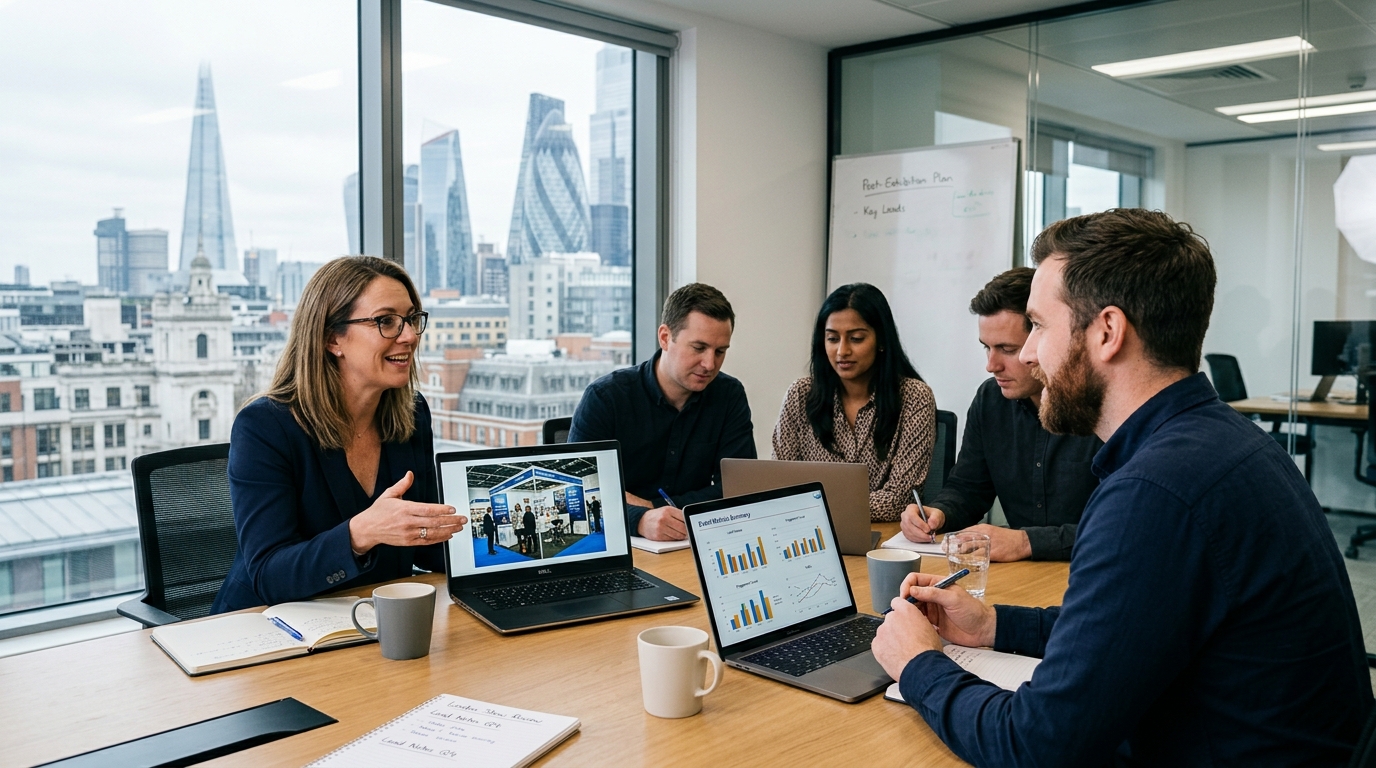
Freeman’s post-event follow-up guidance9 argues that show-floor conversations need consistent, thoughtful follow-up if they are going to progress toward business outcomes. Relevant event imagery can strengthen that follow-up by reminding prospects what they saw and who they met.
CEIR’s exhibitor outcome research10 reports that exhibitors use both real-time monitoring and post-show evaluation, which makes the photography library useful as supporting evidence alongside lead, meeting and engagement data.
Photography does not prove sales ROI on its own. It should not be presented as a substitute for lead data, pipeline tracking or post-event conversion analysis. Its value is different: it provides visual evidence of brand presence, audience interaction, product demonstrations, partner activity and the quality of the exhibition experience.
That evidence can be particularly useful when several internal teams need to understand what happened at the show. Senior stakeholders may never have visited the stand. A gallery that includes clean stand images, busy periods, staff conversations, product interaction and notable visitors gives them a much more complete picture than a spreadsheet of badge scans.
For sales teams, photographs can also make follow-up more specific. A message referencing a demonstration, product area or conversation is easier to personalise when the event has been properly documented. For marketing teams, the images can become the visual layer around case studies, recaps and next-show campaigns.
The best exhibition stand photography brief therefore connects three things before the day begins: what the business wants from the show, what moments can visually demonstrate that activity, and where the images will be used after delivery.
Frequently Asked Questions
What should exhibition stand photography include?
A useful gallery should include clean wide photographs of the stand, secondary angles, design details, branding, staff, visitor interactions, product demonstrations, busy periods and selected team or VIP photographs. The exact mix should follow the exhibitor’s marketing and sales priorities.
When is the best time to photograph an exhibition stand?
The clean stand should normally be photographed before visitors arrive, when the space is finished and uncluttered. Engagement photographs then need to be captured during active periods once attendees are on the floor. Both phases are important because they serve different purposes.
Do I need permission to photograph my stand at a London exhibition venue?
Venue and organiser rules vary. Excel London, for example, directs exhibitors to information about filming and photography permits. Check the current exhibitor manual, organiser terms and venue requirements before the event rather than assuming unrestricted access.
Can one photographer cover both the conference and our exhibition stand?
Often yes, if the schedules allow it. If keynote sessions, breakout rooms and important stand activity happen at the same time, a second photographer may be needed. The programme should be reviewed in advance so coverage gaps are identified before the day.
How many exhibition stand photos should we expect?
There is no useful universal number. A small stand with a short brief may need a concise selection, while a major exhibition activation with demonstrations, speakers and several days of activity may produce a much larger gallery. Define the required uses first and agree the deliverables in the quote.
Can we receive exhibition photos on the same day?
Yes, fast-turnaround selects can often be planned for social media, PR or internal communications. The number of same-day images and the delivery deadline should be agreed before the show so the photographer can prioritise the right moments while coverage is still underway.
Should our stand staff be photographed?
Yes, particularly if the company wants people-led marketing content. Natural conversations, demonstrations and selected team photographs make the gallery more useful for LinkedIn, recruitment, sales materials and future event promotion than stand-only photography.
How do you make exhibition branding visible without every photo looking staged?
The strongest approach is to position real interactions within branded sightlines. A conversation, demonstration or attendee reaction can remain candid while signage, screens or product displays establish context in the background. Not every image needs a logo facing directly toward the camera.
Can we use exhibition photographs for LinkedIn, PR and future marketing?
Usage depends on the photography licence agreed for the commission. Confirm the intended channels before booking, especially if images will be used for paid advertising, third-party partners or wider commercial campaigns. The eventphotographer.photos FAQ page explains the standard approach to image usage and licensing.
How far ahead should we book an exhibition photographer in London?
Once the show date, venue and approximate coverage requirements are confirmed, it is sensible to enquire. Large exhibitions, multi-day coverage and events requiring multiple photographers should be booked earlier because availability and planning become more important as complexity increases.
Make Your Exhibition Stand Work After the Show Has Finished
A trade show stand is temporary. The content created from it does not have to be. When exhibition photography is planned around the stand design, real visitor engagement and the marketing work that follows, one event can produce a useful visual library for months.
Joel Knight provides professional exhibition, conference and corporate event photography across London and the UK. Coverage can include clean stand photography before doors open, live visitor interaction, demonstrations, brand details, team images and fast-turnaround selects for social and PR teams.
If you are exhibiting in London and want the photography planned around how your business will actually use the images, confirm the venue, show dates, stand number, key activity and required delivery schedule before the event.
Ready to plan your exhibition coverage? Contact Joel Knight to check availability and build a shot list around your stand, visitors and marketing objectives.
REFERENCES & CITATIONS
- Center for Exhibition Industry Research (CEIR). How Exhibitors Evaluate Outcomes. CEIR reports that exhibitors commonly evaluate outcomes around lead generation, branding and relationship management, reinforcing the need to document more than the physical stand.
- International Association of Exhibitions and Events (IAEE). Where Exhibitor Marketing Budgets Really Go: Industry Benchmarks and Ways to Make Them Work Better. The August 2026 CEIR/IAEE session focuses on exhibitor investment, performance metrics, lead generation, brand building and face-to-face engagement.
- Olympia London. Planning & Exhibiting at Olympia. Olympia emphasises advance planning for exhibitor logistics and provides digital-media opportunities intended to strengthen brand visibility and visitor engagement.
- Excel London. Exhibiting at Excel London. Excel provides exhibitor-specific guidance covering logistics and applications for filming and photography permits, underlining the need to confirm venue requirements before a shoot.
- Cvent. How to Effectively Collect Leads at Trade Shows in 2026. Cvent stresses that exhibitors should define who they want to reach and connect booth experiences and conversations to lead quality and follow-up.
- Center for Exhibition Industry Research (CEIR). Tactics that Maximize Attendee and Exhibitor Engagement on the Exhibition Floor. CEIR highlights lead retrieval, onsite brand exposure, video recording, QR codes and other engagement tactics as useful tools for exhibitor goals.
- Freeman. Energize Your Exhibit Booth With Digital Marketing. Freeman recommends connecting pre-show, during-show and post-show marketing so the exhibit works across web, email, social and other digital touchpoints.
- Cvent. Trade Show Marketing: Strategies, Tips and Tricks. Cvent recommends post-show follow-up and sharing event highlights on social media to extend the value of trade-show participation.
- Freeman. From Leads to Customers: Best Practices for Post-Event Follow-Up. Freeman frames post-event follow-up as essential to keeping show-floor conversations moving toward business outcomes.
- Center for Exhibition Industry Research (CEIR). How Exhibitors Evaluate Outcomes. CEIR reports that many exhibitors use both real-time monitoring and post-show evaluation, supporting a structured approach to measuring exhibition performance.