
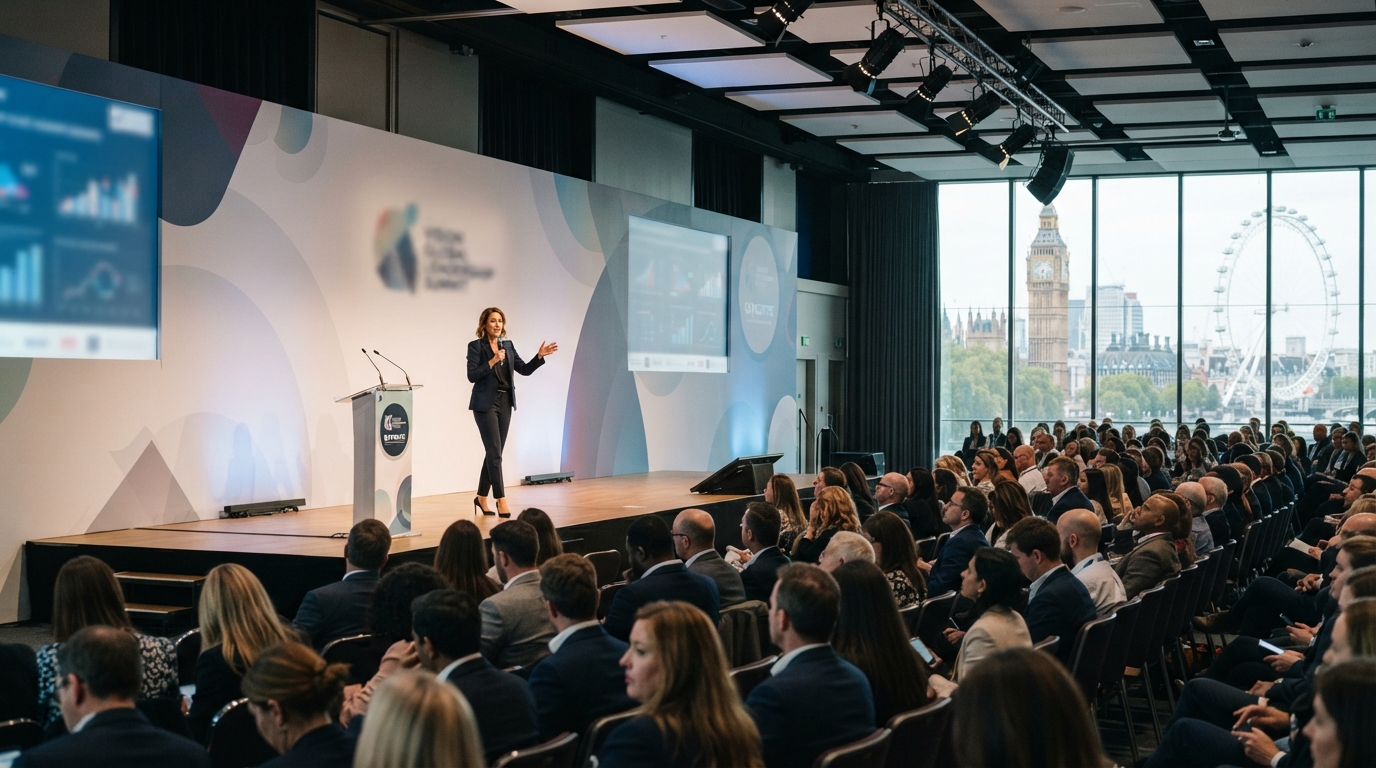
The QEII Centre is one of London’s most distinctive conference locations because the venue combines large-scale event capability with a central Westminster setting. For an organiser, that creates strong visual opportunities: keynote stages, panel sessions, receptions, sponsor activity, networking and views that immediately place the event in the heart of London.
It also means the photography needs to be planned around the event rather than treated as a generic record of the day. A professional QEII Centre event photographer should understand which rooms matter, when the programme moves between spaces, which speakers and stakeholders are priorities, and how the final photographs will be used by marketing, communications, sponsors and delegates.
If you are planning a conference, annual meeting, corporate reception, awards segment, press event or multi-room programme at the Queen Elizabeth II Centre, this guide explains the photographs worth planning for, the venue-specific considerations that affect coverage, and how to build a stronger brief before the event begins.
Why the QEII Centre Requires Venue-Specific Photography Planning
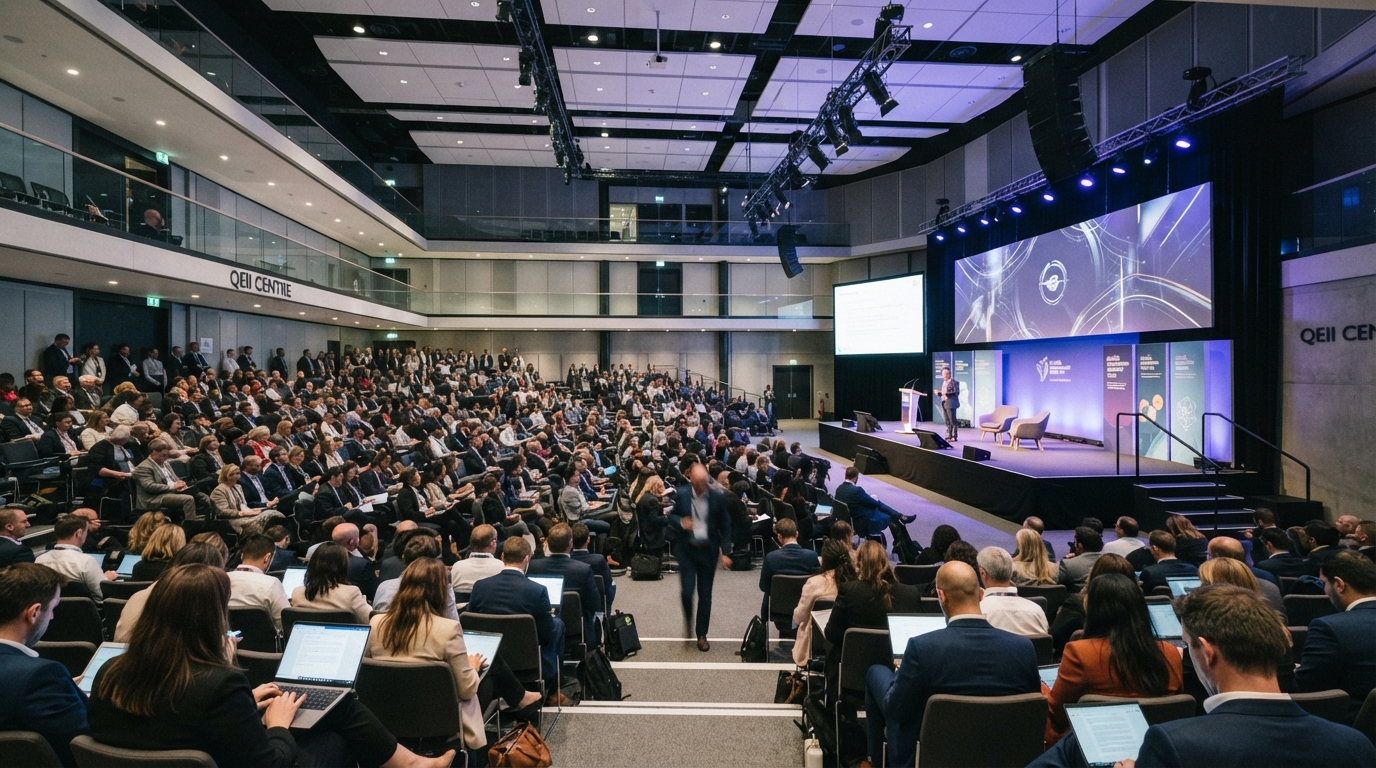
The QEII Centre’s official conference information1 states that the venue has 32 versatile rooms, can accommodate full-centre events for up to 2,500 people, and includes spaces ranging from smaller conference rooms to the 700-capacity Churchill auditorium and larger third-floor configurations. That flexibility is a major advantage for organisers, but it also affects the photography plan.
A single-room seminar is relatively straightforward. A multi-floor conference with keynote sessions, breakout rooms, catering, sponsor areas and an evening reception is not. The photographer may need to move between sessions while still protecting the moments that cannot be repeated: a CEO keynote, a ministerial appearance, an award presentation, a major sponsor activation or a group photograph with senior stakeholders.
The starting point should be a hierarchy of priorities. Which parts of the programme must be photographed? Which people must appear in the final gallery? Which sponsors have contractual image requirements? Which photographs need to be delivered on the same day? Those questions determine whether one photographer can realistically cover the event or whether a second photographer is justified.
For conference-led programmes, the site’s conference photography London service is the most relevant internal destination because it covers keynote sessions, panel discussions, networking, branding, venue documentation and multi-day events.
Venue-based SEO content works best when the article is genuinely useful to someone organising an event there. That is why this page should not simply repeat ‘event photographer Westminster’ throughout the copy. The venue, spaces, logistics and image priorities should shape the article naturally.
What Should a QEII Centre Event Photographer Capture?
The QEII Centre’s event spaces overview2 shows how the venue combines large conference spaces with medium and smaller rooms, many of them offering natural light and Westminster views. A useful photography plan should take advantage of that variety rather than producing the same frame repeatedly.
1. Establishing images that clearly identify the event
Start with clean images of the room before it becomes crowded: the stage, screen content, event branding, registration area, sponsor displays and wider room setup. These photographs help organisers document production quality and give future marketing material a sense of scale.
2. Keynote speakers and leadership
For senior speakers, the aim should be more than one safe podium photograph. Strong coverage includes clean expression, gestures, interaction with slides or screens, audience context and wider frames showing the stage branding. If the speaker is particularly important to PR or internal communications, that priority should be on the brief before the event.
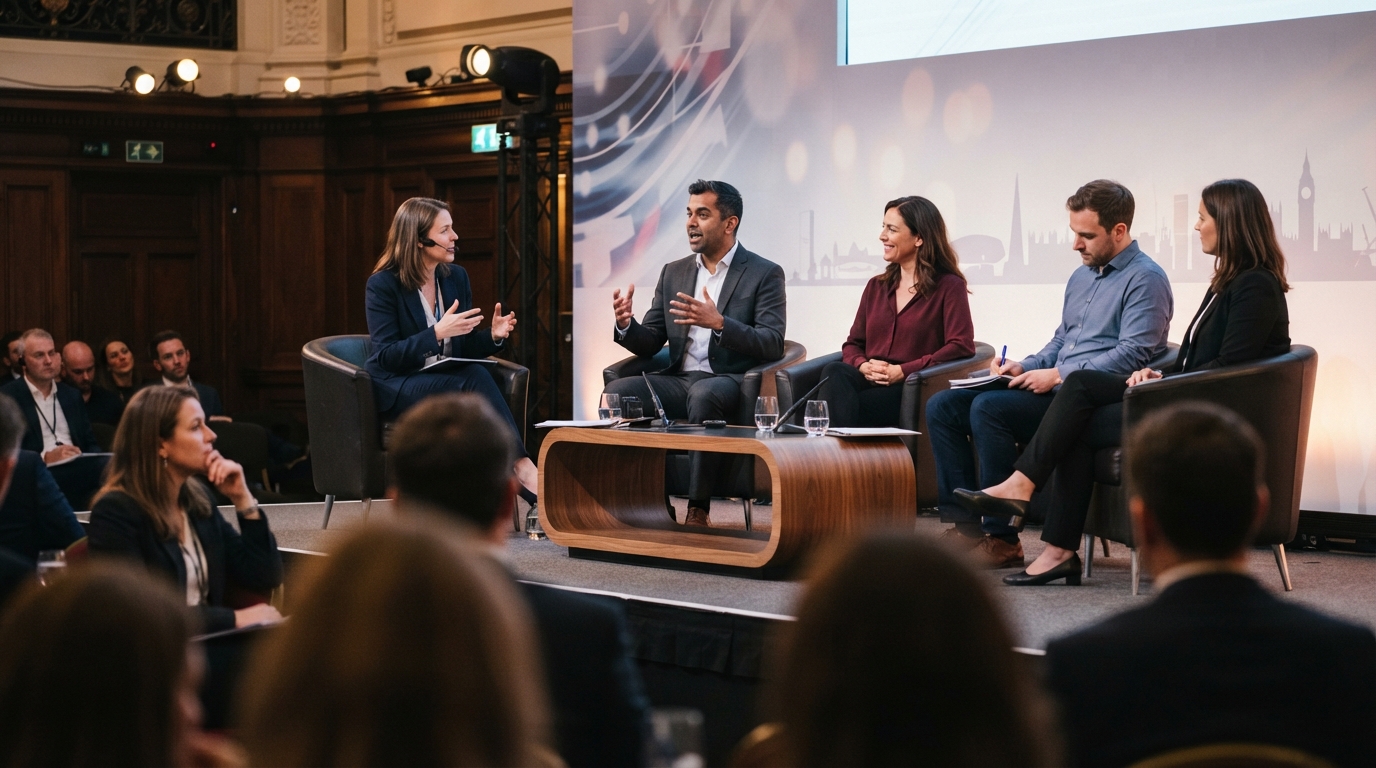
3. Panel discussions and audience participation
Panels need several types of frames: individual panellists speaking, two-person interaction, full-panel compositions, moderator reactions and audience questions. The best panel images feel conversational rather than static. A photographer should also avoid allowing microphones, water bottles or lecterns to dominate every frame.
4. Networking, receptions and stakeholder interaction
The formal programme explains what the event was about; the networking often shows why people attended. Candid conversations, introductions, VIP interactions, sponsor hospitality and informal groupings are important for LinkedIn, stakeholder reporting and future event promotion.
5. Branding, sponsors and event design
Event organisers and sponsors frequently need clear proof of brand visibility. This can include stage screens, lecterns, printed signage, exhibition areas, sponsor walls, digital displays and branded hospitality. These images should show both the identity and the human interaction around it.
If the programme moves into awards, formal recognition or an evening reception, link contextually to awards and corporate event photography so users can move from venue-specific research into the relevant service page.
Use the Westminster Setting Instead of Hiding It
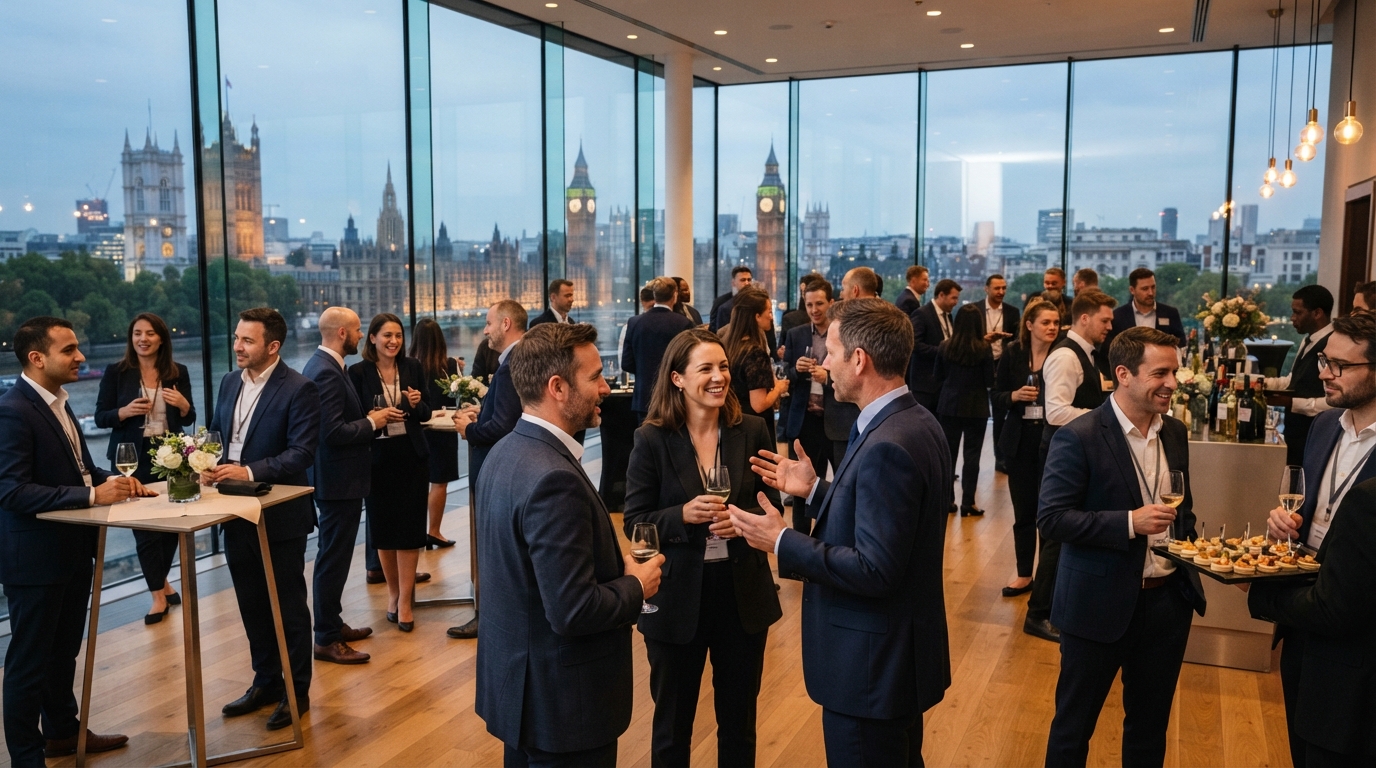
The venue’s Westminster room information3 highlights east-facing windows and views towards landmarks including Big Ben, the London Eye and the Shard. Other QEII spaces also make use of the surrounding Westminster setting.
Those views can become a useful part of the event’s visual identity, especially for international conferences, associations and brands that want the final gallery to feel recognisably London-based. A close speaker photograph could have been made almost anywhere. A well-composed reception or networking photograph with genuine Westminster context gives the event a stronger sense of place.
The mistake is forcing every photograph to include a landmark. That quickly becomes repetitive. Venue context works best as one layer of the gallery: a handful of establishing images, selected networking frames, room details and perhaps a closing image that reinforces the location.
Natural light is another advantage in suitable rooms. It can produce cleaner, softer networking and portrait-style photographs than windowless conference environments. However, mixed daylight and event lighting can also create colour and exposure challenges, so the photographer still needs to manage the space rather than assuming the windows will solve everything.
For event organisers, this is also where venue-based content has real SEO value. Someone searching for a QEII Centre photographer is not simply looking for a generic London photographer. They want confidence that the photographer understands the type of setting, scale and programme they are likely to be dealing with.
Access, Arrival and Photography Logistics in Westminster
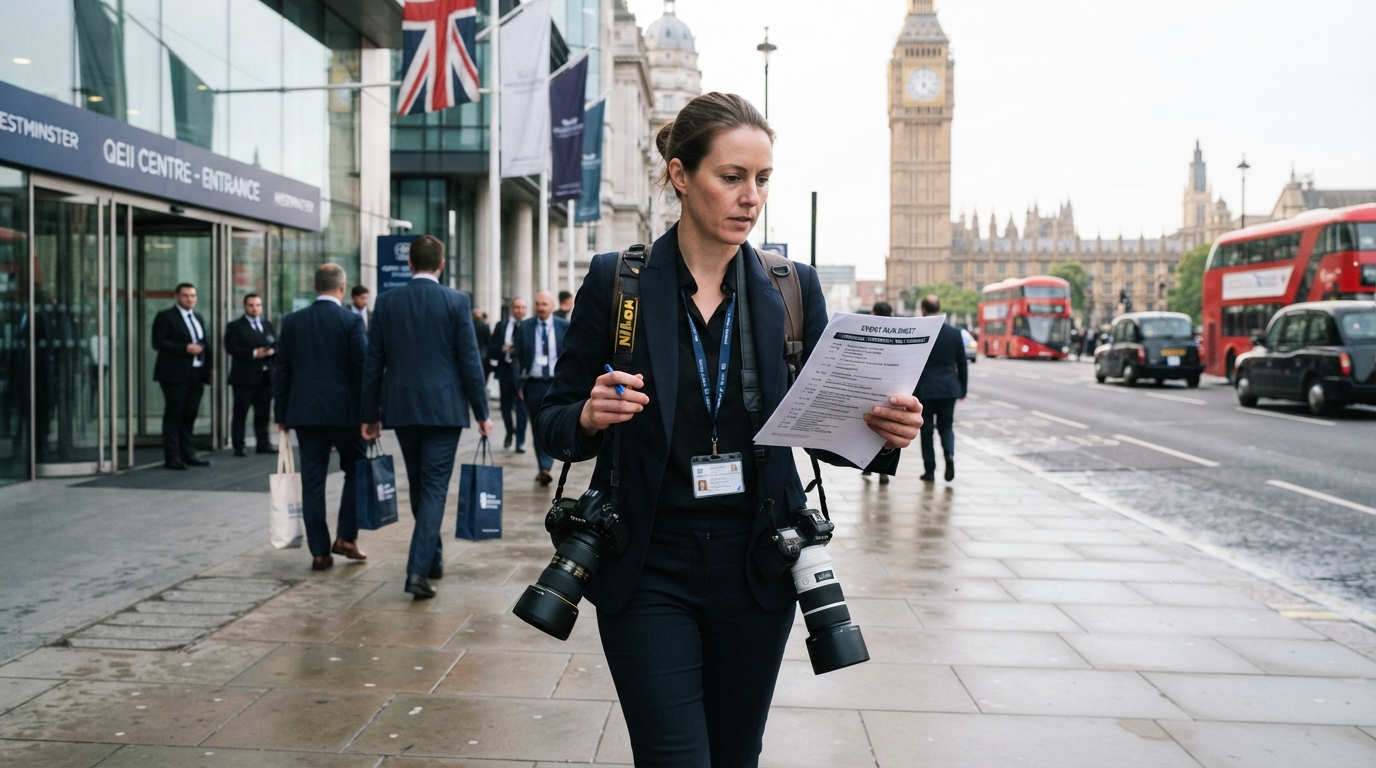
According to the QEII Centre’s official location guidance4, the venue is at Broad Sanctuary in Westminster, with St James’s Park and Westminster Underground stations within roughly a five-minute walk and several major rail stations also within walking distance. For photographers carrying equipment, those details matter when deciding arrival time and transport.
A photography brief should include the correct entrance, registration or accreditation process, contact person, room names and the time the photographer can enter the space before delegates arrive. Arriving only at the public start time can mean losing the clean room shots, signage details and production images that are easiest to capture before the audience enters.
If equipment delivery or collection is more complex, the organiser should confirm the relevant venue instructions in advance rather than leaving the photographer to solve access on arrival. Central Westminster also means parking should not be assumed.
The venue’s accessibility information confirms that the nearest step-free Underground station is Westminster and that the meeting and conference rooms have step-free access. That can matter when planning event coverage involving accessible stages, wheelchair delegates or mobility requirements.
The photography schedule should also allow movement time between floors and rooms. A speaker finishing in one space at 11:00 and another priority session starting somewhere else at exactly 11:00 is not a realistic one-photographer plan. If the run sheet creates repeated overlaps, the solution is to change priorities or increase the photography team.
Photography Permissions, Exterior Images and Event Rules
The QEII Centre’s published FAQs5 state that photographs of the exterior of the QEII Centre are permitted, while filming requests on the lawn should be discussed with the venue. Event organisers should still confirm any event-specific restrictions that apply inside their hired spaces.
From a photography perspective, permissions should be settled before the day if the brief includes unusual access, security-sensitive areas, high-profile guests, controlled sessions or exterior filming rather than straightforward event photography. It is much easier to work discreetly when the photographer knows what is permitted.
Organisers should also decide whether attendees need to be informed that professional photography is taking place and how opt-out requests will be handled. At large conferences, this is normally an event-management decision rather than something the photographer should be expected to invent on arrival.
A named on-site contact is particularly valuable. If a speaker changes, a session moves or a VIP arrives unexpectedly, the photographer needs one person who can quickly confirm the new priority.
How to Build a Strong QEII Centre Photography Brief
A good venue-specific brief does not need to be complicated. It needs to remove uncertainty. For a QEII Centre event, I would include the following:
- event date, organiser and event name
- exact rooms and floors being used
- photographer access and accreditation instructions
- full running order with priority sessions clearly marked
- names and titles of must-have speakers or VIPs
- sponsor and branding requirements
- planned group photographs and when participants will be available
- whether exterior or Westminster context shots are required
- same-day or rapid-delivery requirements
- intended image uses such as PR, LinkedIn, reports or future event marketing
- a named event-day contact with mobile number
For events with several simultaneous streams, the brief should explicitly identify what can be missed and what cannot. That is much more useful than giving the photographer a complete timetable with no hierarchy.
Budget and duration should be matched to the real coverage requirement. The site’s event photography pricing and rates page provides a useful starting point for planning coverage length, editing and rapid image delivery.
Frequently Asked Questions
What types of events can be photographed at the QEII Centre?
The venue is suitable for conferences, meetings, exhibitions, receptions, dinners, presentations and other corporate events. Photography can be planned around the specific format, from keynote-led conferences to multi-room programmes and evening receptions.
Is the QEII Centre good for conference photography?
Yes. The venue offers a mix of auditorium, large conference, medium and smaller spaces, which creates opportunities for stage photography, panels, audience coverage, networking, branding and venue context.
Can a photographer cover multiple rooms at the QEII Centre?
Yes, but the schedule needs to be realistic. If two must-have sessions happen at the same time in different rooms, one photographer cannot fully cover both. Multi-track programmes may require a second photographer.
Should we photograph the Westminster views?
Where the room and schedule make it practical, selected images using the Westminster setting can strengthen the sense of place. They should support the gallery rather than becoming a forced background in every photograph.
Can we take exterior photographs of the QEII Centre?
The venue’s published FAQs state that exterior photography is permitted. If the brief includes filming on the lawn or unusual exterior production, confirm the relevant venue requirements directly.
How early should the photographer arrive?
For most conferences, the photographer should arrive before delegates so they can photograph the clean room, stage, registration area and branding. The exact arrival time should be agreed from the run sheet and venue access arrangements.
Can we request same-day photographs?
Yes. Same-day selects can be planned for PR, social media, stakeholder communications or sponsor reporting. Make the requirement clear before the event so editing and delivery time can be built into the schedule.
What should we send the photographer before the event?
Send the full run sheet, room list, floor plan where available, speaker names, must-have shots, sponsor requirements, access instructions, delivery deadline and the contact details of the person managing photography on the day.
Do we need two photographers for a large QEII Centre event?
Not automatically. One photographer can cover many events successfully. A second photographer becomes useful when several important sessions overlap, the event spans multiple rooms, or conference coverage and sponsor/networking photography must happen simultaneously.
How do I book a photographer for an event at the QEII Centre?
Once the event date, approximate timings and rooms are known, send those details with the event type and required deliverables. The photography scope can then be quoted and refined as the final programme develops.
Book Event Photography for the QEII Centre Westminster
The QEII Centre offers something particularly valuable for event photography: the scale and infrastructure of a serious conference venue combined with a location that is immediately recognisable as central London. Used properly, those two elements can produce an image library that feels both professional and specific to the event.
The strongest coverage will usually combine clean venue and branding photographs, keynote and panel images, audience engagement, networking, sponsor visibility, details and selected Westminster context. The brief should then prioritise those categories according to how the organisation will actually use the images.
Joel Knight provides professional conference and corporate event photography across London. If you are organising an event at the QEII Centre, the photography can be planned around the room schedule, speaker programme, branding, stakeholder requirements and delivery deadlines.
To discuss availability and coverage, contact Joel Knight with your event date, QEII Centre rooms, approximate timings and the type of imagery your team needs.
REFERENCES & CITATIONS
- QEII Centre – Conferences – Used for the venue’s room count, conference capacity and examples of major conference spaces.
- QEII Centre – Event Spaces – Used for the venue’s mix of large, medium and small event spaces and natural-light/Westminster context.
- QEII Centre – Westminster Room – Used for room-specific information about natural light and landmark views.
- QEII Centre – Location – Used for address, transport and station proximity relevant to event-photography logistics.
- QEII Centre – Frequently Asked Questions – Used for published guidance on exterior photography and general venue access information.